
Hope Is Serious Work
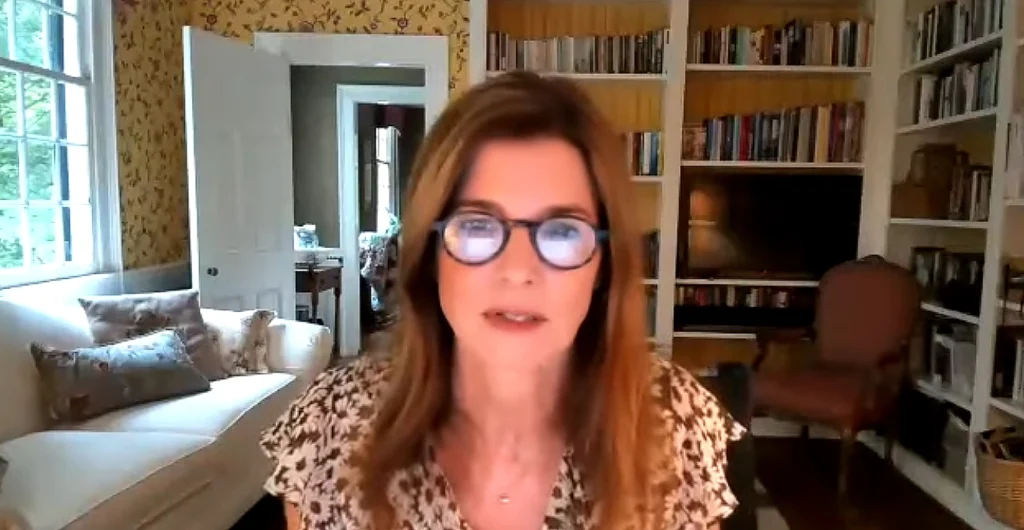
Paula Ehrlich, President & CEO of the E.O. Wilson Biodiversity Foundation, joined Shabreé Brown for a conversation in MobilizeGreen’s GreenHang Video Series – an online community and career hub designed to demystify green careers for students and early-career professionals. The GreenHang helps the next generation find tangible, relatable pathways into work at the intersection of conservation, policy, and business.
In this conversation, Paula reflects on what it means to hold moral urgency and scientific rigor together – not as opposing forces, but as the dual demands of work that is genuinely hopeful and genuinely hard.
Watch the full video below, or read the transcript of the conversation.
Core Conversation
What does your day-to-day look like working at the intersection of conservation, business, and policy?
The work that we do is both deeply scientific and driven by the moral imperative to protect the Earth – not only for its own sake but for the future of all life. What I find is most energizing is that tackling this is fundamentally creative. So much of what I do is about meeting people where they are. A scientist, a CEO, an educator, a community leader – they each bring a completely different frame to the question of why biodiversity matters and what to do about it.
“My job is to find the threads that connect people with nature — and weave that together in a way that inspires people to act.”
I love that moment – and you do get these moments – when information comes together in a way that suddenly clicks. When someone who has been thinking about biodiversity as a regulatory burden suddenly sees it as a design opportunity they can actually work with. Or when a policymaker realizes that the science we’ve built gives them a metric they can stand behind. It’s like a puzzle piece crisply falling into place with that satisfying snap. That’s what I’m chasing in most of my interactions.
But none of it works if you’re doing it alone or talking at people. The best outcomes I’ve seen come from genuinely honoring what everyone in the room brings – the local Indigenous land steward, the data scientist, the philanthropist, the student. E.O. Wilson believed deeply that the scale of this challenge requires the full range of human ingenuity, and I carry that with me. The synthesis – the moment when different forms of knowing converge into something none of us would have arrived at separately – that’s the real work, and honestly, the real joy of it.
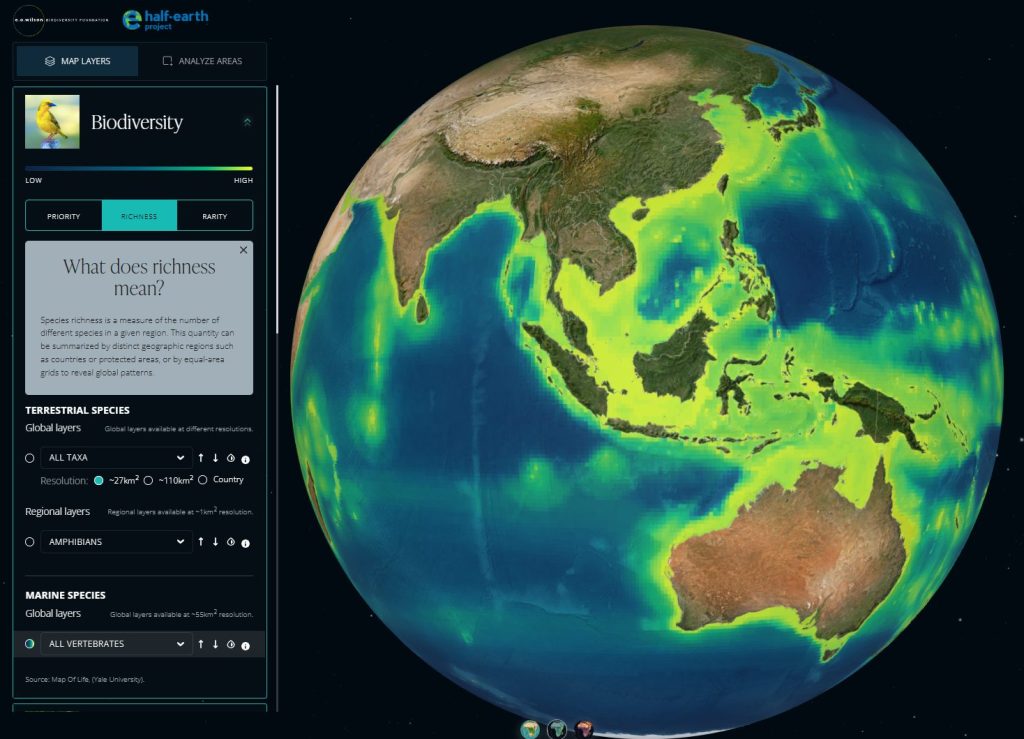
The Half-Earth Project Map is a connective thread through all of it – it’s a tool that speaks to scientists, to policymakers, and increasingly to the private sector, because it makes biodiversity visible and measurable in a way that hadn’t existed before. My job is really to be a translator between those worlds, making sure the science stays rigorous while also becoming accessible and actionable.
How did you find your way into this work - direct path or something that evolved?
E.O. Wilson once said: “You are capable of more than you know. Choose a goal that seems right for you and strive to be the best, however hard the path. The world needs all you can give.” He hadn’t written that quote when I was starting out, but looking back, it describes exactly the path I took – not a straight line, but a deliberate one.
I have a DVM and PhD – a scientific foundation that is unusual in the nonprofit leadership space – and a background spanning academic, corporate, and mission-driven organizations. Each part of my career – the science, the veterinary training, the corporate world, the nonprofit sector – has been about being the best that I could be in that role and then using the wisdom from that experience to inform the next challenge, and to create the opportunity for me to make a contribution that would made a difference in the world.
What I didn’t plan for was where that accumulation would lead me. Coming to this work with E.O. Wilson – co-founding the Half-Earth Project together – I realized that all of it had been preparation for something I couldn’t have named at the start. It became about the extraordinary privilege, the thrill, of helping bring an idea to life. The breadth of experience wasn’t a detour; it turned out to be exactly the preparation needed to bridge the worlds of science, philanthropy, and business, in order to bring an idea to life that Ed believed could make a difference in the world.
That’s not a career arc you design. It’s one you live by – showing up fully at every stage, and listening, and always being ready to learn. Ed didn’t write Half-Earth as a gesture. It was a precise scientific and moral argument – and fundamentally a book about hope; about bringing out the best in people. Everything I’d built turned out to be preparation for taking that argument seriously and making it real.
What's one skill you use all the time that you didn't expect to need?
Narrative. Or more precisely: the ability to translate complex, urgent science into a story that people feel rather than just understand. Scientists are trained to hedge, to qualify, to resist simplification. But Ed understood something that is easy to underestimate – that a bold, clear idea like “protect half the Earth” is not a reduction, it’s an invitation. Learning to work at that level of clarity and moral confidence, while keeping the science unimpeachable behind it, has been critical. Key.
“Communication is strategy.”
Industry Insight
Where do you see the biggest opportunity to better connect conservation with business or policy?
The Species Protection Index (SPI) and the Half-Earth Project Map represent something genuinely new: the ability to give any country, any company, any city a measurable score for how well they are protecting biodiversity – and to show them exactly where the highest-leverage opportunities lie. The opportunity is to make biodiversity as legible and actionable for decision-makers as carbon has become. Businesses increasingly understand that their value propositions are grounded in a functioning biosphere – but they’ve lacked the tools to act on that understanding with precision. That’s changing. The convergence of geospatial technology, machine learning, and the kind of taxonomically comprehensive species mapping we’ve been building for years is creating a moment where nature can finally be integrated into the core decision-making of institutions, not just their social responsibility reports.
What's one misconception about conservation that needs to change?
That conservation is in tension with human thriving. That protecting nature means sacrificing economic opportunity or community wellbeing. Ed used to push back on this with clarity: we are not separate from the biosphere; we belong to it. The misconception frames it as a tradeoff, when the reality is that degraded ecosystems are an existential economic and public health risk. The communities most harmed by biodiversity loss are often the same communities who have been systematically excluded from conservation decisions – which is why Half-Earth insists on justice, equity, and Indigenous partnership not as add-ons but as core to the science. We will not achieve the goal if we leave people behind, any more than if we leave species behind.
“We are not separate from the biosphere; we belong to it.”
Advice for Students
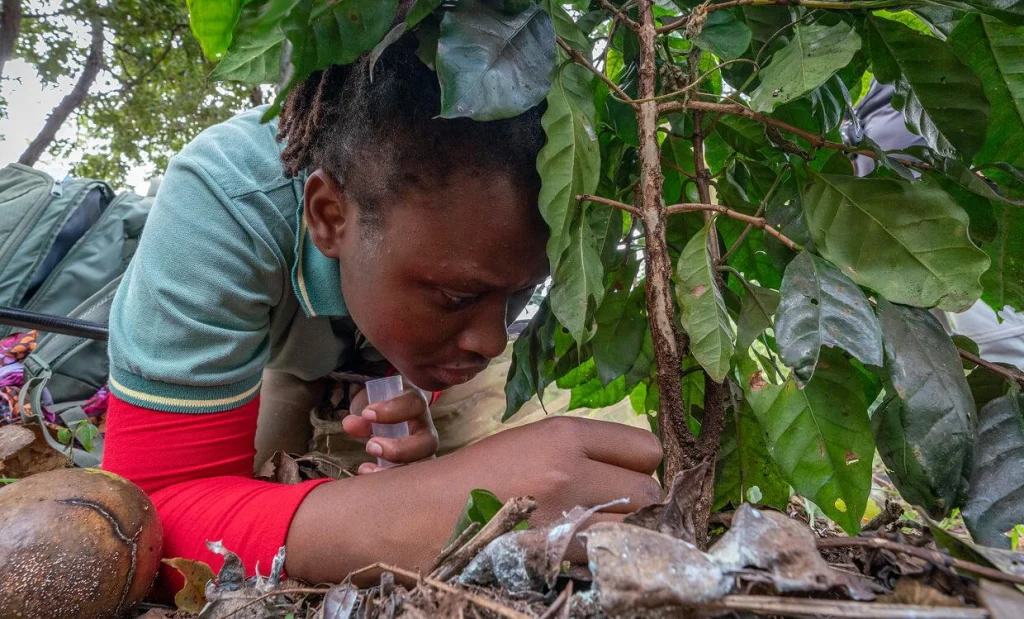
Photo Credit: Piotr Naskrecki
For someone trying to break into this space, what skills or experiences matter most?
I’d actually start with something E.O. Wilson wrote in Letters to a Young Scientist that I think is profoundly counter-intuitive in a world that pushes early specialization and credential-stacking. He said: put passion ahead of training. Find out what you most want to do and obey that passion as long as it lasts. Feed it with the knowledge the mind needs to grow. And then go deep – become a world-class expert in the thing that genuinely moves you.
That’s not the advice most career counselors give. But Ed lived it completely. He fell in love with ants as a boy in Alabama, and that singular devotion eventually cracked open entirely new fields – sociobiology, biodiversity theory, consilience itself. The depth of his passion for one thing gave him the standing and the confidence to reach across into everything else.
What I’ve observed – in building the Half-Earth Project and in watching the people who do this work most effectively – is that the cross-disciplinary collaboration we so urgently need doesn’t come from training yourself to be a generalist. It comes from people who are genuinely, even obsessively expert in their own domain, and who bring that depth into the room with enough intellectual humility and curiosity to genuinely honor what others bring. Ed called this consilience – the idea that knowledge from different disciplines, when it truly converges, produces something none of them could reach alone.
“Stay curious and generous enough that your passion becomes a bridge rather than a wall.”
So my advice isn’t “try to know a little about everything.” It’s: find the thing that stirs something deep in you, go as far into it as you can – and then stay curious and generous enough that your passion becomes a bridge rather than a wall. The Half-Earth Project Map exists because a field biologist, a geospatial engineer, a policy strategist, and a designer each brought their whole expertise to bear – and trusted each other enough to let those worlds collide. That’s consilience in practice. And it starts with each person having something real to bring.
What's one piece of advice you'd give your younger self starting out?
Trust the unconventional path. The combination of a veterinary degree, a PhD, corporate experience, and nonprofit leadership might have looked scattered from the outside – but every piece of it turned out to matter. The DVM gives you a systems view of living organisms. The corporate background gives you operational discipline and an understanding of how institutions actually make decisions. The science gives you credibility and rigor. The intersections are where the most interesting and impactful work lives.
“The intersections are where the most interesting and impactful work lives.”
Closing
Where can people learn more or follow what you're building?
The Half-Earth Project Map is freely available at map.half-earthproject.org – anyone can explore species distributions and conservation priorities for any place on Earth. Half-Earth Day brings together thinkers from across disciplines every year and those conversations are archived and accessible. The E.O. Wilson Biodiversity Foundation’s work is at eowilsonfoundation.org. And I’m active on LinkedIn, where I share the science, the policy moments, and the larger conversation about what it means to protect the web of life. Ultimately what we’re building is the infrastructure for hope – tools rigorous enough to act on, at a scale the moment demands.