
Priority Place 1316
At the forest floor near Manu Biological Station, the air is thick and buzzing with life. Screams of red howler monkeys echo through the canopy, and white-lipped peccary tracks mark the damp trails. Blue morpho butterflies flash along sunlit gaps, while hoatzins hiss and shuffle near oxbow lakes.
Places for a Half-Earth Future
In this episode of Places for a Half-Earth Future, we dive into Priority Place 1316 in Cusco, Peru, on the Half-Earth Project Map, where the high, rugged peaks of the Andes mountains descend into the Amazon basin. Places for a Half-Earth Future highlights the areas where conservation actions can have the most significant impact on the species most needing protection by showcasing the research, education, and conservation activities inspiring the successful stewardship of these unique places.
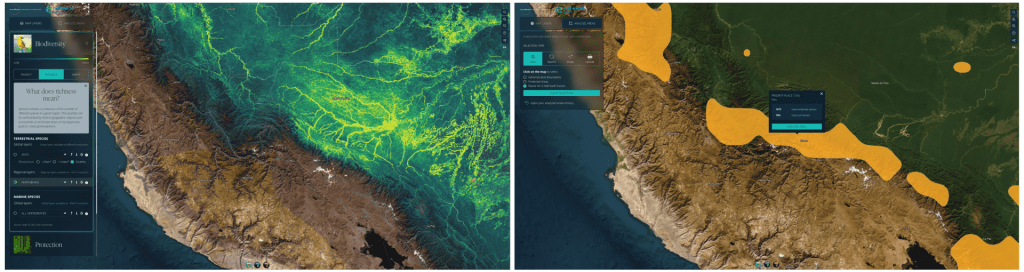
Making Your Way from Manu to Wayqecha
As you make your way up the foothills, the forest begins to shift. The heat eases. Palms give way to tree ferns, and golden-headed quetzals flash red and green in the dappled midstory. A family of brown capuchins rustles the branches above, scattering fruit and leaves. In a shaded bend, a glasswing butterfly rests with near-invisible wings, and along the trail, bright Sira poison frogs (Ranitomeya sirensis) cling to dripping leaves.
Further up, in the transition zone, a male Andean cock-of-the-rock explodes into view, his electric-orange crest pulsing as he courts unseen females in the forest gloom. The vegetation thickens with moss, tree trunks become velvet with liverworts, and the air carries the chill of altitude.
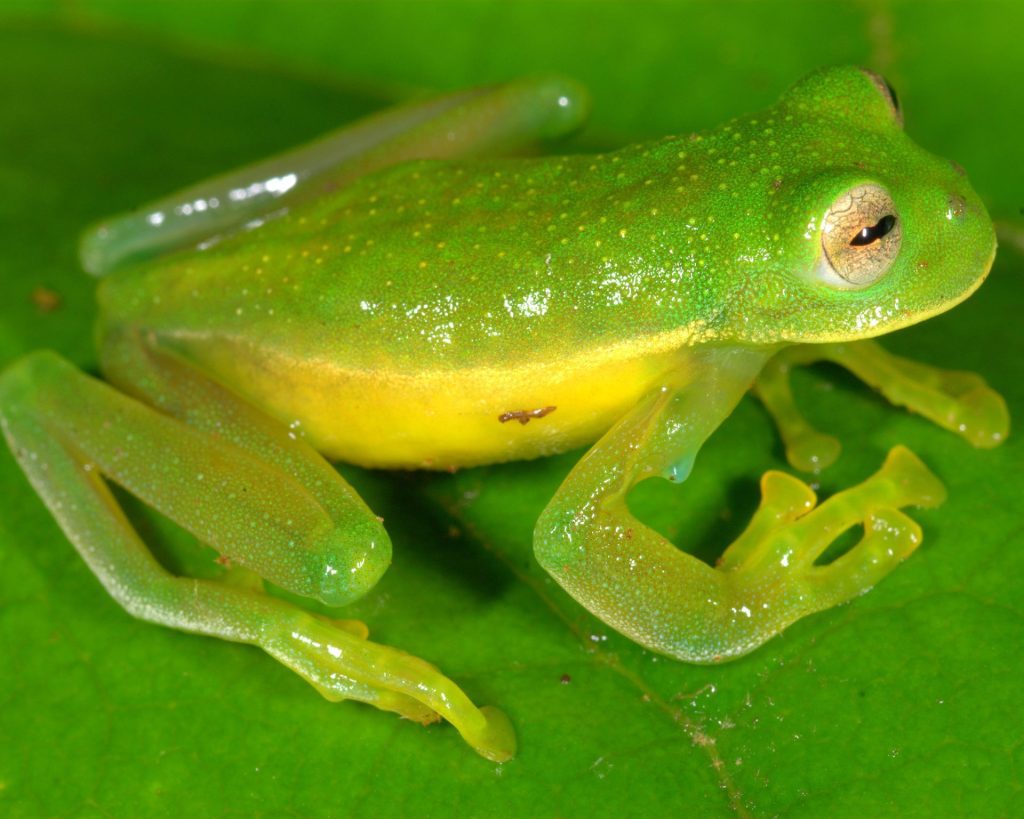
Approaching the Wayqecha Cloud Forest Biological Field Station, the cloud forest takes hold. The forest hushes. A chestnut-breasted coronet hums at eye level, sipping from tubular flowers, while the haunting call of a grey-breasted mountain-toucan echoes in the fog. Tiny glass frogs (Centrolene sabini) call from under ferns, a species relatively new to science, first described by Half-Earth Chair Alessandro Catenazzi in 2012. Click the photo to listen to the frog’s call
Each step upward is a passage through elevation zones that compress thousands of vertical meters of biodiversity into a single winding trail. From the foothills of the Amazon rainforest to cloud-drenched mountainsides, the route offers not just a change in scenery but a living portrait of evolution in motion, and there is still much to be understood.
Who is ACCA?
ACCA (Asociación para la Conservación de la Cuenca Amazónica) is a Peruvian conservation organization working to protect the rich biodiversity of the Andes–Amazon transition zone. With headquarters in Cusco, ACCA manages several key conservation hubs, including the Wayqecha Cloud Forest Biological Station and the Manu Biological Station. By integrating cutting-edge science, community partnerships, and environmental education, ACCA plays a leading role in safeguarding critical wildlife corridors, monitoring forest health with satellite technology, and building conservation capacity among young scientists, local leaders, and Indigenous communities. ACCA is also the in-country partner of the U.S.-based Amazon Conservation Association (ACA), forming a powerful binational collaboration for tropical conservation.
Research in the Clouds
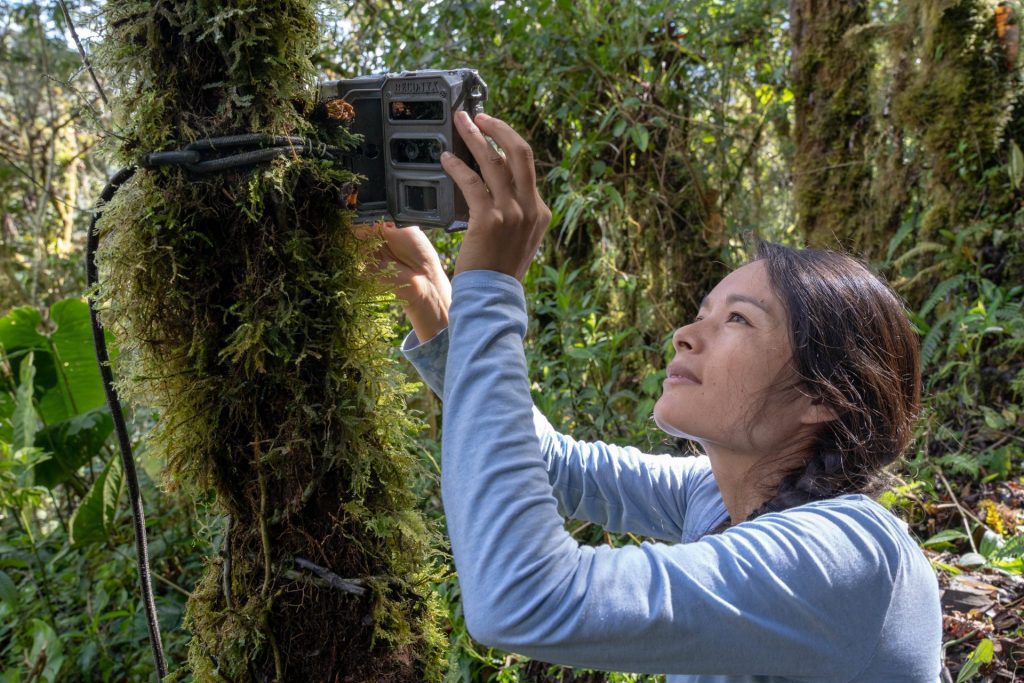
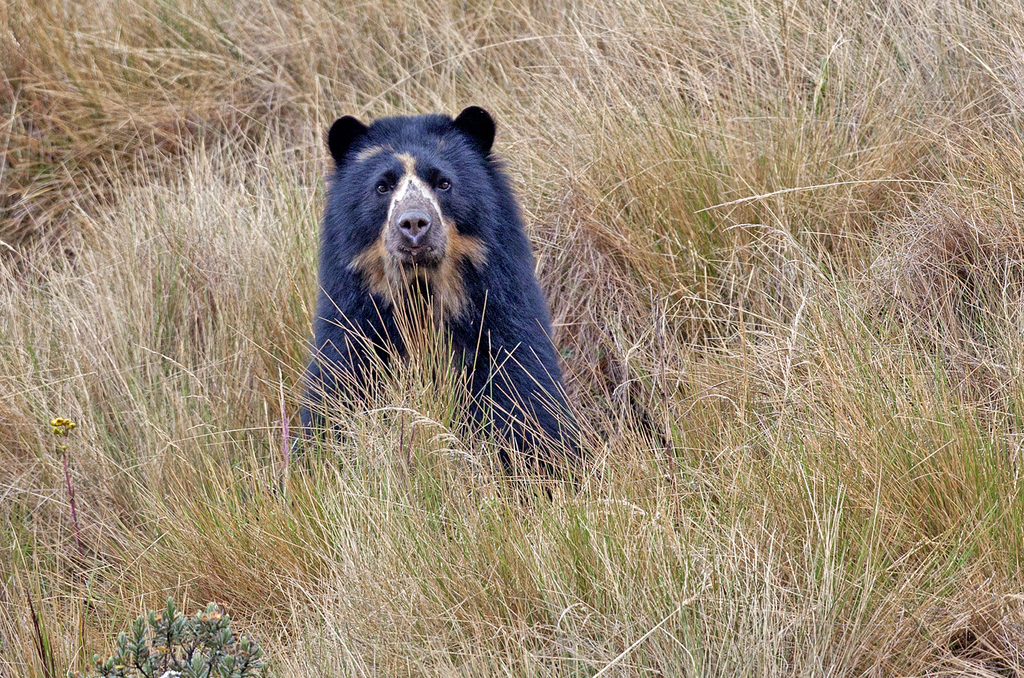
Ruthmery Pillco Huarcaya is a Peruvian conservation biologist and one of the leading experts on the Andean bear (Tremarctos ornatus)—a threatened species known for its elusive behavior and vital role in Andean ecosystems. Based at the Wayqecha, Pillco has spent years studying the behavior, habitat use, and population health of these shy cloud forest bears. Her research combines modern tools, such as camera traps and GIS-based habitat modeling, with field-based tracking and local ecological knowledge to gain a deeper understanding of how bears navigate through fragmented forest landscapes in the eastern Andes. By identifying key movement corridors between protected areas like Manu National Park, Indigenous reserves, and surrounding forests within Priority Area 1316, her work helps inform regional conservation planning and biodiversity corridor strategies.
In addition to her scientific contributions, Pillco is a dedicated advocate for community-based conservation. She engages local landowners, farmers, and Indigenous communities through education programs that blend traditional knowledge with science, fostering coexistence strategies that reduce human-bear conflict, such as protecting crops or creating wildlife-friendly buffer zones. Pillco also leads workshops and mentorship programs for students and young professionals, particularly women from rural Andean communities, to increase representation and opportunity in conservation science. As an Indigenous woman and a respected voice in the field, she’s helping to reshape who leads conservation in the Andes—and how it’s done—with a focus on equity, local stewardship, and long-term resilience.
Another leading Peruvian scientist, Alessandro Catenazzi, is a herpetologist and tropical ecologist renowned for his work on amphibian diversity, disease ecology, and conservation in the cloud forests and lowlands of this region of Peru. He was also named the newest Half-Earth Chair as part of the E.O. Wilson Biodiversity Foundation’s Half-Earth Chairs and Scholars program. For over two decades, Catenazzi has led long-term research projects in the region surrounding the Wayqecha and Manu Biological Stations, documenting one of the richest assemblages of amphibians on Earth. His work has been especially influential in understanding the impacts of chytridiomycosis, “Chytrid fungus,” a fungal disease that has decimated frog populations worldwide.

Through rigorous field surveys, acoustic monitoring, and population modeling, he has tracked the decline—and in some cases the recovery—of dozens of species, while describing more than 100 species of amphibians and reptiles new to science. His research not only reveals how elevation, climate, and habitat shape species survival, but also provides critical guidance for amphibian conservation strategies under climate change.
The Next Generation
Beyond biodiversity inventories, Catenazzi is deeply involved in training and mentorship of the next generation of tropical biologists. He mentors Peruvian students through field courses and collaborative projects. The most recent field course in May this year brought together 22 university students from various parts of the Andean region and educators to the biodiverse Kosñipata Valley, spanning altitudes from 1,700ft at Manu Biological Field Station to 9,500ft at Wayqecha.
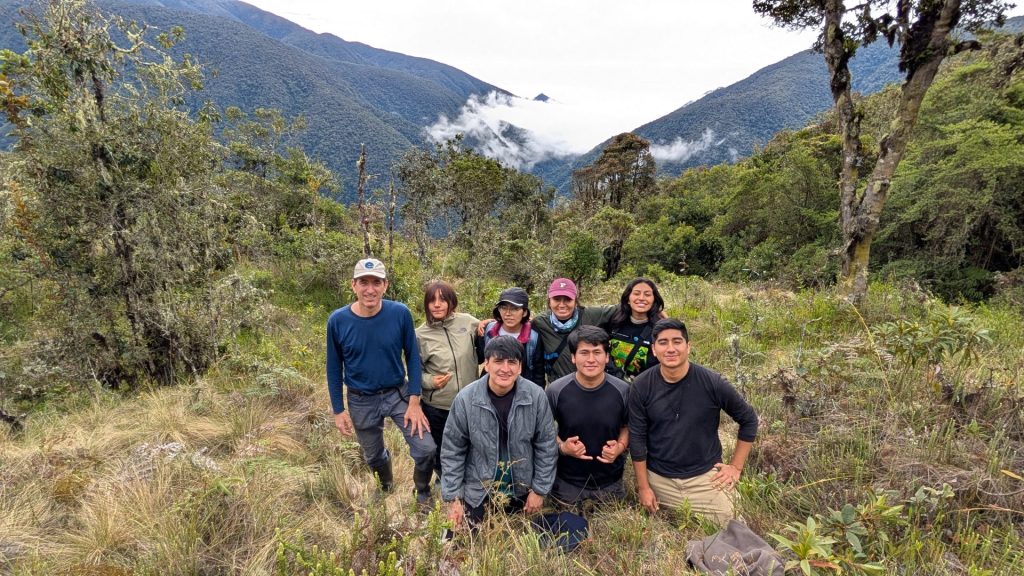
Participants gained hands-on experience in essential field methods—wildlife observation, capture, ethical handling, habitat assessment, and species identification across mammals, birds, reptiles, and amphibians. They also learned precise data collection and analysis techniques, from population monitoring to habitat evaluation, under the guidance of experienced researchers like the previously mentioned Ruthmery Pillco (Andean bears), Alejandro Lopera (insects), Emerson Medina (birds), Half-Earth Scholar Luis Mamani (Andean lizards), and Catenazzi himself (amphibians). The course’s educational mission was clear: equip students with both practical skills and conservation frameworks, addressing real-world challenges in the field while fostering connections among emerging conservationists in this priority area for biodiversity stewardship.
A Landscape Still Revealing Secrets
From the misty heights of Wayqecha to the lush lowlands of Manu, this region pulses with incredible biodiversity—from glass frogs and Andean bears to the communities and researchers who dedicate their lives to understanding them. As a living laboratory, it offers vital insights into biodiversity, climate adaptation, and ecosystem connectivity. Through programs like the Half-Earth Chairs and Scholars, emerging leaders gain opportunities to engage in deep, hands-on research and stewardship here. By weaving academic rigor, local insights, and global collaboration, the initiative not only trains a new generation of conservationists—it ensures that science and education work hand in hand to protect the region’s unparalleled natural heritage.
Preserving this landscape isn’t just about saving species—it’s about strengthening the bridge between knowledge and nature, ensuring a future where both can thrive in harmony.
To learn more, visit the Amazon Conservation website or explore research programs at ACCA Peru. To read more about Alessandro Catenazzi and the Half-Earth Chairs and Scholars program, visit the program page.
If you or your organization has an idea for a story like this or a question, please contact Brooks Bonner, Program Director of the Half-Earth Project at the E.O. Wilson Biodiversity Foundation, at bbonner@eowilsonfoundation.org.