
By: Paula J. Ehrlich
A century ago, the American chestnut was reduced to near extinction by a fungal blight. Then seven moth species whose caterpillars depended on its vegetation vanished. And then the last of the passenger pigeons plunged to extinction.
What causes the extinction of any particular species? “Biologists are likely to give the Murder on the Orient Express answer,” E.O. Wilson once said, “They all did it.”
Species occupy precise niches that are locked in symbiosis with other species. They need certain places, arrayed in correct configurations, to survive. As species vanish or drop to near extinction, the rate of extinction for the survivors accelerates. Many human activities contribute to species extinction, but habitat destruction is the most devastating. For all habitats, a reduction in area results in species extinction. If 90 percent of a forest is cut, for example, about half of the species will disappear that would have otherwise endured.
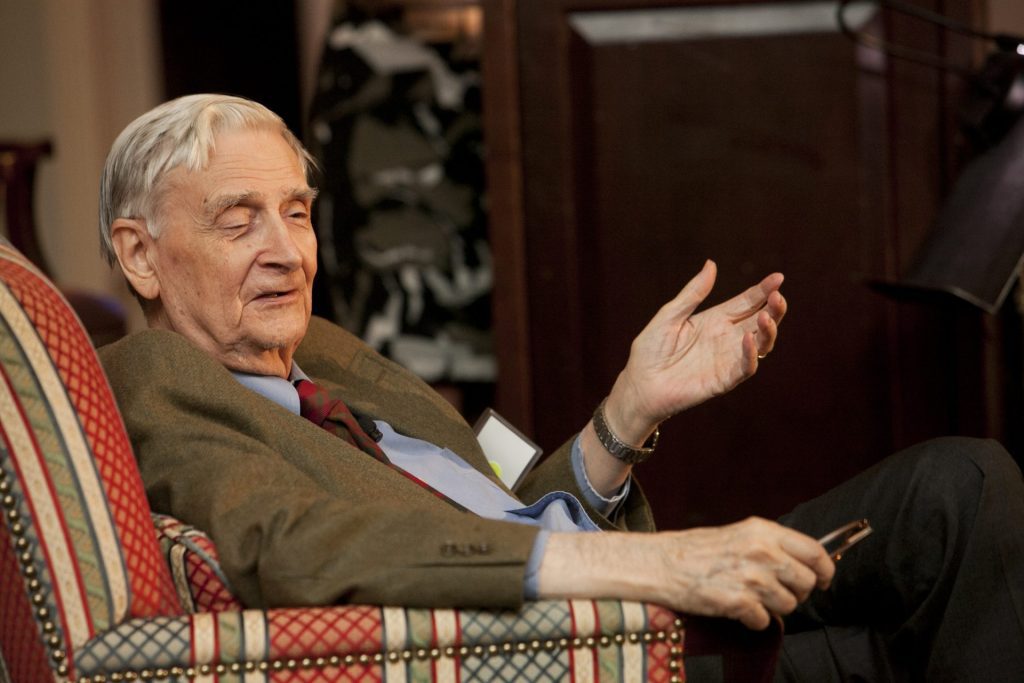
The Endangered Species Act emerged in 1973 as a response to the alarming rate at which species were disappearing. One of its primary goals was to ensure that there was no harm to the places that are most important for species. A critical source of scientific counsel over many years, E.O. Wilson emphasized that proper attention to the environment can be unifying.
“Both “conservatism” and “conservation” are derived from the Latin conservare because each is meant to convey the ideal of saving and treasuring that which has, over time, proved best for humanity,” he said.
We depend on species in functioning ecosystems to cleanse our water, enrich our soil, and create the very air we breathe. To the extent that we care for the rest of life, we also care for humanity.
“Critics of the Endangered Species Act see it as keeping resources from people when it prevents a logging operation or the drilling of an oil well to protect a species. It’s better understood as maintaining biodiversity for people, and for the health and safety of the planet,” said Marcy Houle recently in the LA Times.
This is important to remember, as there is no simple fix for the loss of biodiversity. Following the extinction of dinosaurs 65 million years ago, it took 10 million years to restore the pre-disaster levels of biodiversity. The best way to care for our planet is to remember that biodiversity holds the world steady. By making knowledge about biodiversity accessible and actionable, the E.O. Wilson Biodiversity Foundation ensures that anyone, anywhere can help shape a future where people and nature can thrive together.
Aligned with the Hippocratic Oath we must, above all, “do no harm” and commit to the well-being of living things and the responsibility to act ethically in their care.
The alternative to using this precautionary principle? As E.O. Wilson once said, “With such a long waiting time, and aware that we inflicted so much damage in a single lifetime, our descendants are going to be – how best to say it? – peeved.”
Paula J. Ehrlich is the President and CEO of the E.O. Wilson Biodiversity Foundation and co-founder of the Half-Earth Project.