
By: Brooks Bonner
Peru is a country with everything: breathtaking coastlines, jagged peaks, dense jungles, and arid deserts, and I know it well. Earlier in my career, I spent two and a half years living and working on community-based conservation, primarily in the thick, remote lowland Amazon forests of Loreto, in northeast Peru. Working together with local and Indigenous communities on the front lines of conservation fostered a unique bond. From this, Peru became part of my identity.
So, when the opportunity arose to revisit Peru, to see the Half-Earth Chairs and Scholars program that I oversee in action, I couldn’t pack fast enough.
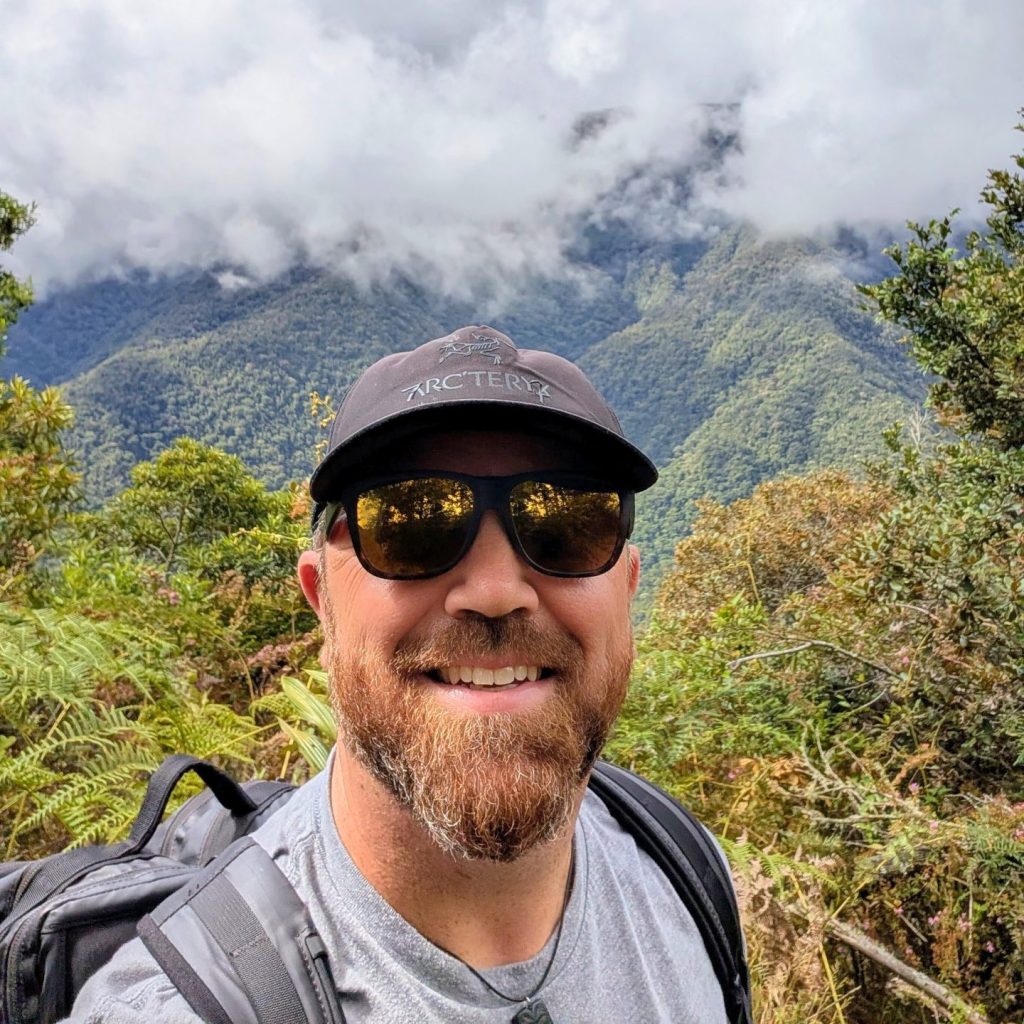
As a refresher, the Half-Earth Chairs and Scholars program supports research and education in some of the planet’s most important regions for biodiversity. It was an opportunity to personally see the impact of the E.O. Wilson Biodiversity Foundation’s Half-Earth Project from a new perspective, the eyes of the next generation of Peruvian scientists and conservationists.
It was also my first chance to see Half-Earth Chair, Alessandro Catenazzi, who is arguably the world’s leading Latin American expert on amphibians, at work in the field. And we were in an area he knew like the back of his hand, the Kosñipata Valley, where he’s been conducting research for almost three decades. The area is just northeast of the city of Cusco, and was the base for the inaugural Curso de Campo en Biología de la Fauna (Field Course in Wildlife Biology).
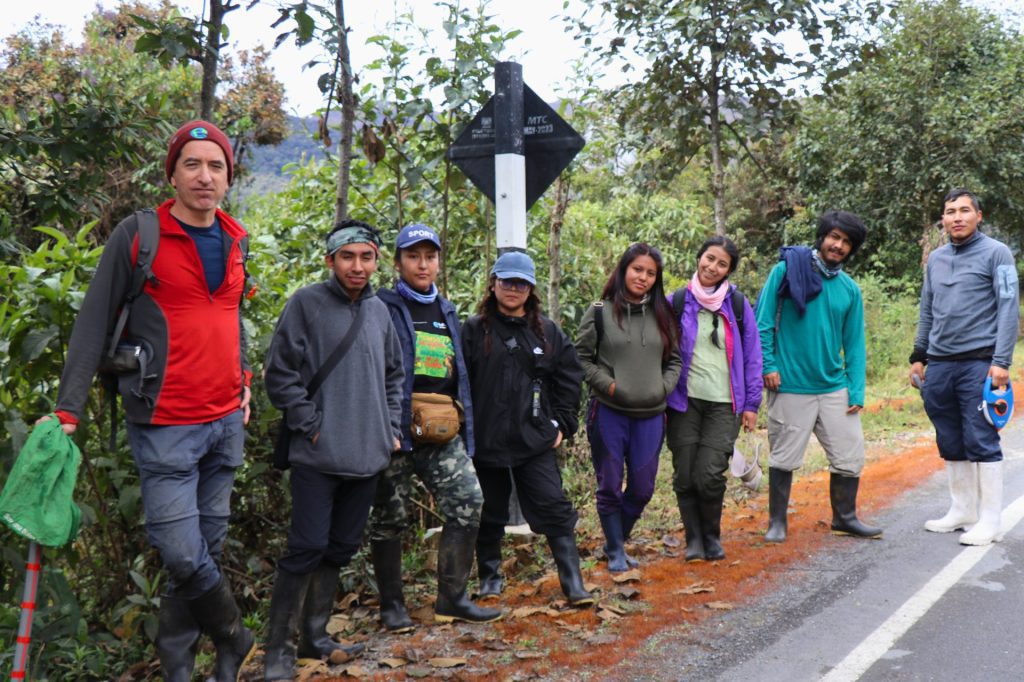
Beyond species counts and biodiversity inventories, the Curso de Campo en Biología de la Fauna showed Catenazzi’s commitment to mentoring the next generation of conservation scientists. University students from across the Andean region gathered for an intensive hands-on experience that spanned ecosystems from the Amazonian lowlands to the cloud forests of Wayqecha, under the guidance of experienced researchers, including National Geographic Explorer Ruthmery Pillco Huarcaya, Alejandro Lopera, Emerson Medina, Half-Earth Scholar Luis Mamani, and Catenazzi himself.
From Manu to Wayqecha
The course started out at the Manu Biological Station, near the border of the famous Manu National Park. Students were divided into three clusters and would spend the next three days rotating between three taxonomic groups: Ornithology (birds), Entomology (insects), and Amphibians (frogs). Students were immersed in field collection methodologies, species identification, ethical handling, habitat assessment, and data analysis, spending time in both the field and the laboratory. After the 3 days were up, the group piled into vans and headed up, more than 7,000 feet up in elevation, to the cloud forests surrounding the Wayqecha Biological Field Station.
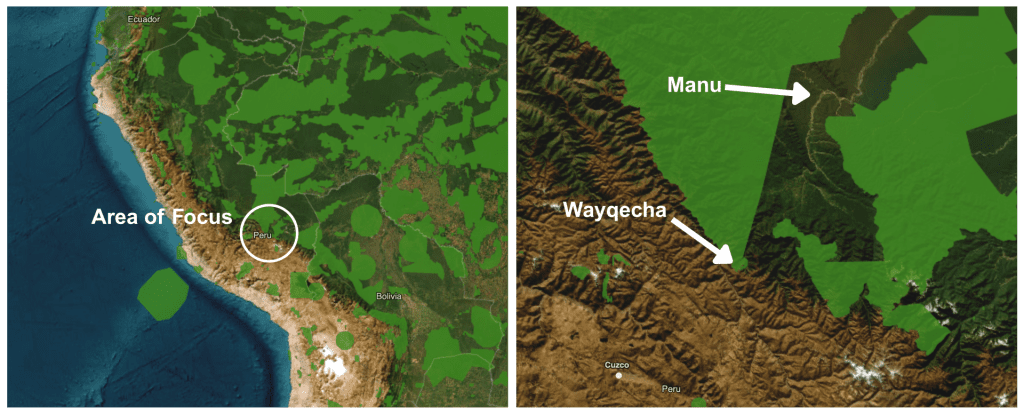

Perched high in the Andes, the group spent the rest of the course focusing on three additional wildlife groups: Mammalogy (mammals), Saurology (lizards), and Amphibians (frogs). Noteworthy to this location was the instruction of Half-Earth Scholar, Luis Mamani. Mamani is pursuing his Ph.D. and is a leading expert in how lizards adapt to environmental conditions, most notably temperature changes. He led students on field expeditions into the mountains and then guided them through experiments on the lizards’ resistance to increases in their body temperature, which can indicate how lizards adapt to changing environments due to climate change and other causes.
Ruthmery Pillco, a Peruvian biologist, also served as an instructor at Wayqecha, leading sessions on mammal ecology with a focus on the Andean bear—South America’s only native bear species. Using camera trap data, tracking techniques, and case studies on human-wildlife interactions, she and her team introduced students to the challenges of studying large mammals in remote Andean landscapes. Her teaching blended scientific training with a strong commitment to local leadership and inclusive conservation.
During the field course, I had the opportunity to present the work of the E.O. Wilson Biodiversity Foundation and the Half-Earth Project to the students, many of whom were engaging with the concept for the first time. Sharing the Foundation’s work through products like the Half-Earth Project Map and the Half-Earth Chairs and Scholars program helped frame why we were working in Peru. For the students, it offered both context and motivation, reinforcing that their efforts in the Andes-Amazon region are not only valuable locally but essential to global conservation efforts.
Returning to Peru for this course stirred something deeply personal for me. It was powerful to come back with not just more years of experience under my belt, but as someone witnessing the next generation of biodiversity scientists begin their journeys. Watching young researchers gain confidence, ask bold questions, and find their path in the field where I once stood was both humbling and inspiring. It reminded me not only of how far I’ve come, but also of the incredible potential rising within these future leaders. Their passion and curiosity left me with a renewed sense of purpose and deep gratitude for being part of a program that helps light the way forward.
Thinking of the Future
One of the most striking takeaways from my conversations with students at the end of the course was how profoundly it expanded their perspectives. Many were particularly captivated by the sessions on insects and entomology—a field that often receives far less attention and funding than mammals or birds. Students expressed awe at the complexity and importance of insects, recognizing them as a diverse and largely unexplored group essential to ecosystem function. It truly felt like a new world had opened up for them—one full of scientific possibility. I couldn’t help but think that E.O. Wilson, a lifelong champion of invertebrates, would have been thrilled. Another theme that emerged was a forward-looking mindset: students were already asking what comes next. They were eager to explore new opportunities, connect with others working in the field, and consider how they might build on this experience and grow into leaders in biodiversity science.
Having scientific mentors who share their cultural background, language, or place of origin can be profoundly empowering. They offer not only technical guidance but also lived experience that validates their identity and ambitions. When students see mentors who look like them and come from the same region, it expands their sense of what’s possible and helps break down barriers of access, confidence, and inclusion in science. These connections build trust, cultivate a sense of belonging, and strengthen local leadership in conservation.
What struck me most about this course was its embodiment of the core goals of the Half-Earth Chairs and Scholars program: to support global biodiversity research and scholarship, champion a deeper understanding of our world, and foster future biodiversity stewardship by supporting emerging scientists in priority conservation areas, thereby strengthening local representation. It wasn’t just a course; it was a turning point in many of these students’ lives and a powerful reminder of why investing in people is a key aspect of the Half-Earth Project.
Student Voices
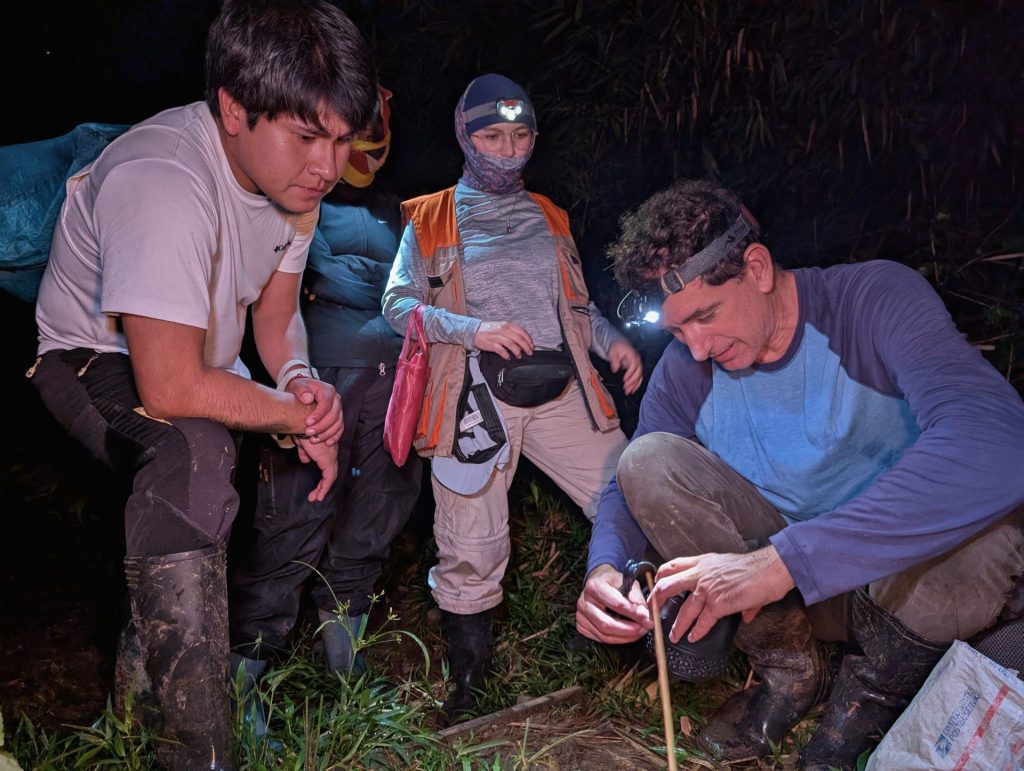
“Dr. Alessandro Catenazzi has been an academic and professional inspiration to me. His work on amphibians here in the Kosñipata Valley is something I deeply admire, and I hope to one day be part of a project he leads. I was also impressed by Half-Earth Scholar Luis Mamani and his research on reptiles, particularly how climate change is directly affecting them. I’m truly grateful to both for sharing their knowledge and expertise with us.”
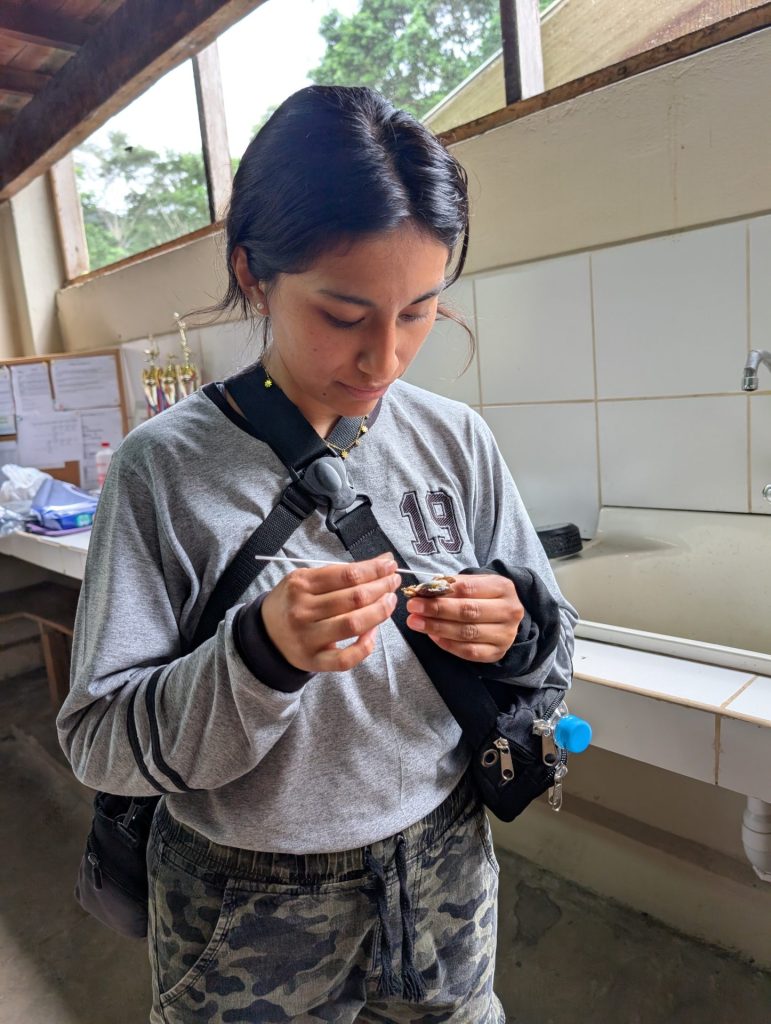
“This course has shaped both my personal and professional goals by giving me a clear starting point—a path toward realizing one of my dreams: to contribute to the conservation of the Amazon, the Puna highlands, or even the coastal ecosystems of Peru… I had never participated in anything of this scale, especially not in ecosystems like these. It opened my eyes to new perspectives and areas of study.”
One of the most potent parts of the Half-Earth Chairs and Scholars program, and this field course in particular, is the way mentorship happens at every level. Of course, students learned a great deal from Half-Earth Chair Catenazzi. Still, they also had the opportunity to be guided by Half-Earth Scholar Luis Mamani, along with experienced instructors like Pillco and Lopera. This layered mentorship made the experience feel more personal and relatable. It wasn’t just top-down teaching; it was an honest exchange of knowledge, support, and inspiration where students felt encouraged and guided by mentors who not only understood the science but also their stories.
Looking ahead, Catenazzi plans to offer this field course annually for the next three years, continuing to build a strong foundation for experiential learning in the region. His focus will center on leading these courses, mentoring Half-Earth Scholars Isabel Diaz and Luis Mamani, and advancing his critical research on the impacts of the deadly chytrid fungus on amphibians in the Andes-Amazon. Together, these efforts will strengthen local capacity and deepen our understanding of one of the world’s most biodiverse regions.
Brooks Bonner is the Program Director of the E.O. Wilson Biodiversity Foundation. He leads the Half-Earth Chairs & Scholars Program and the Places for a Half-Earth Future Program.