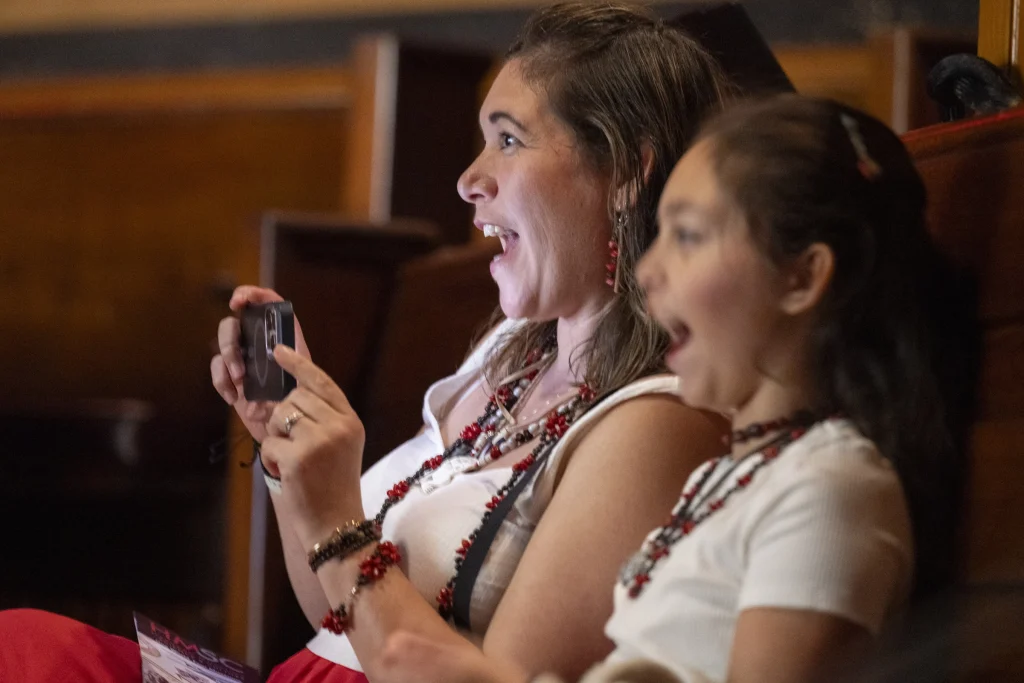
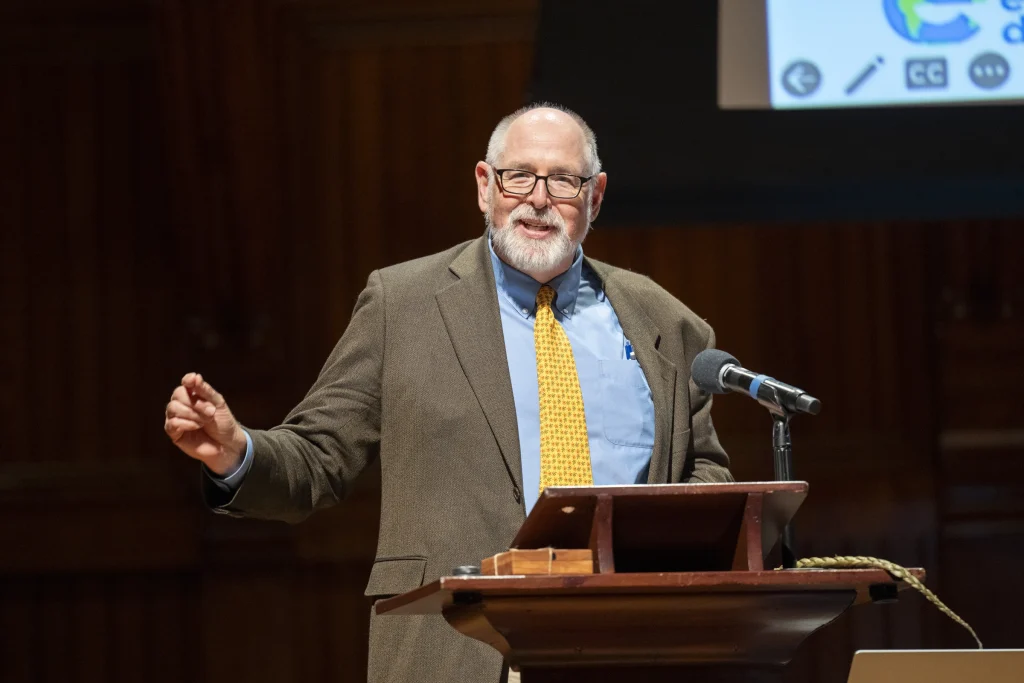
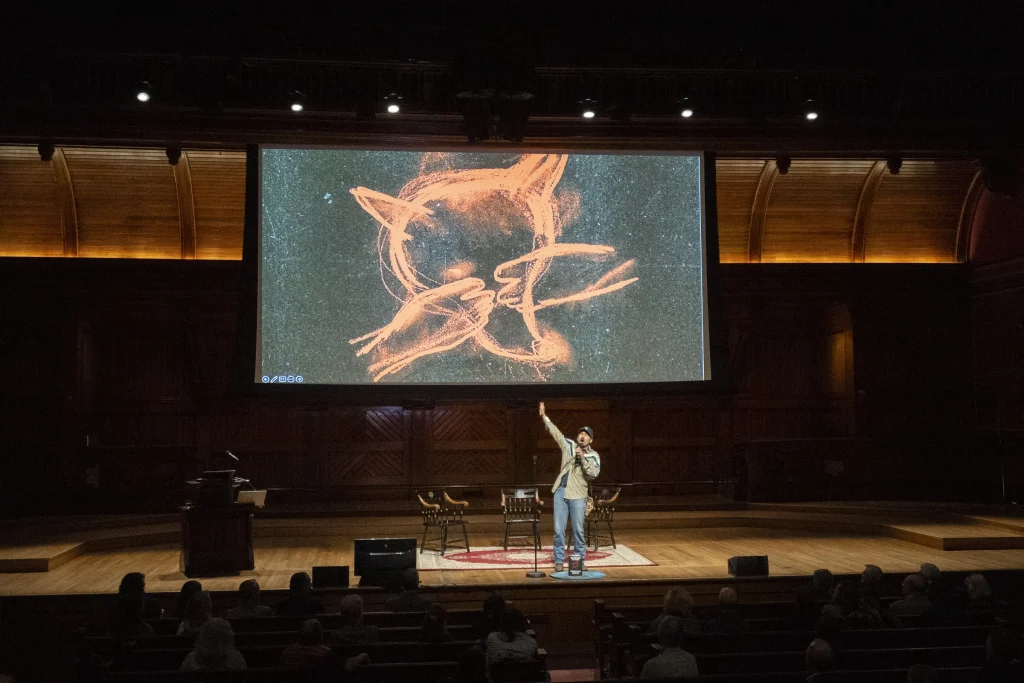
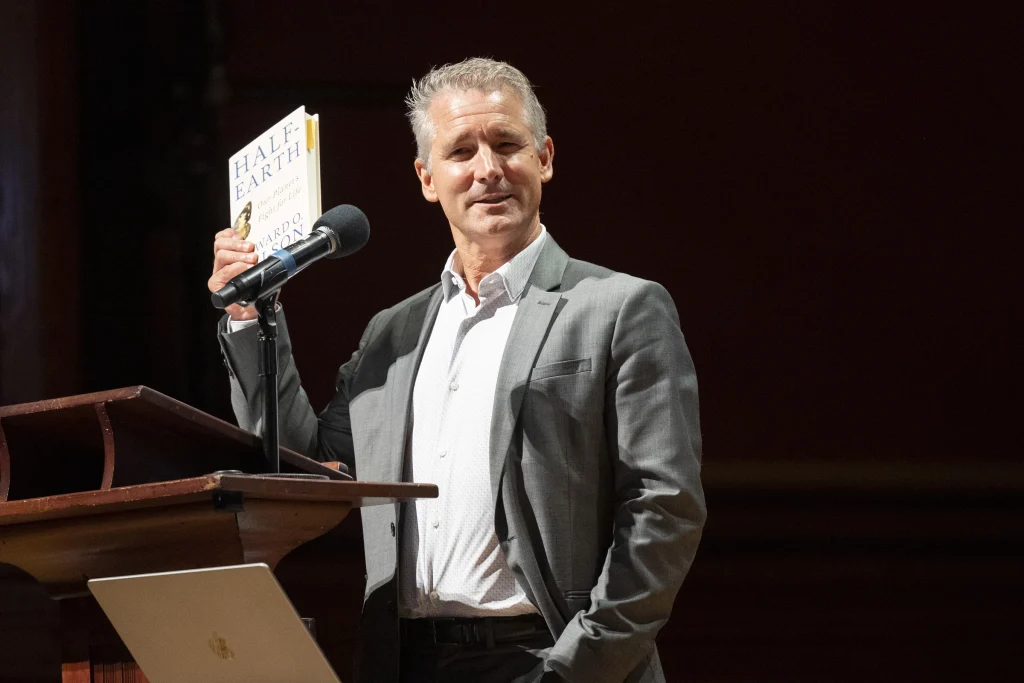
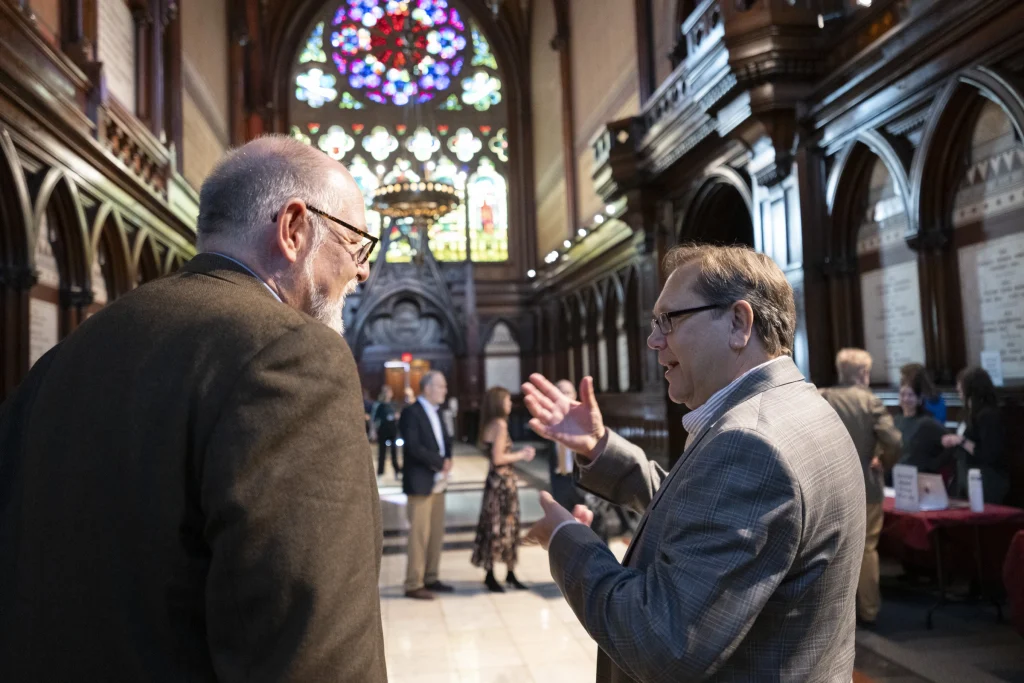
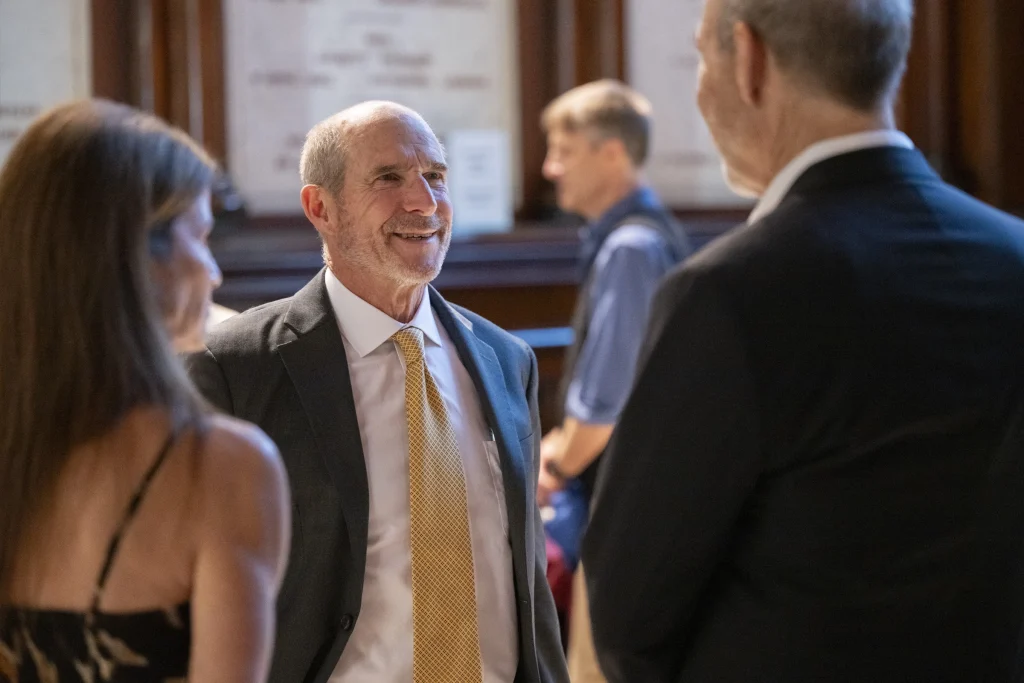
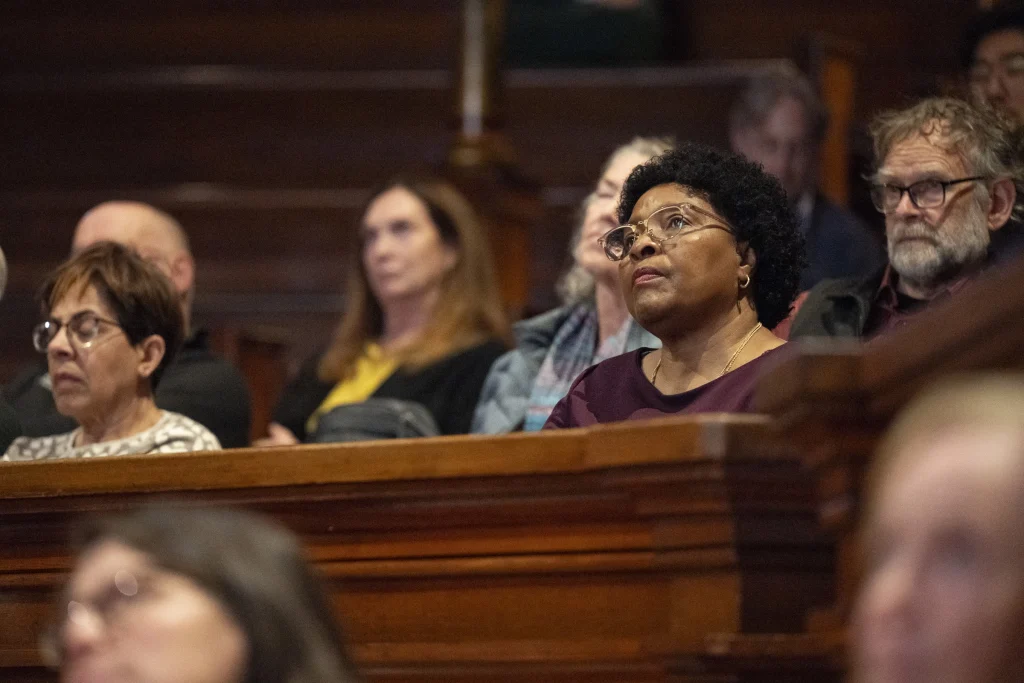
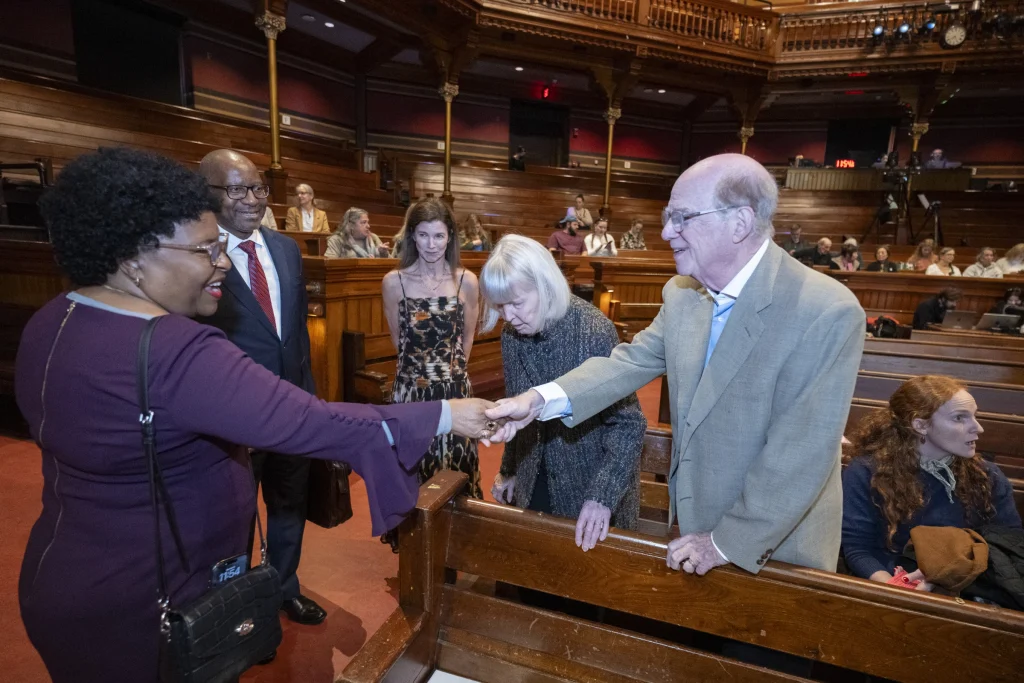
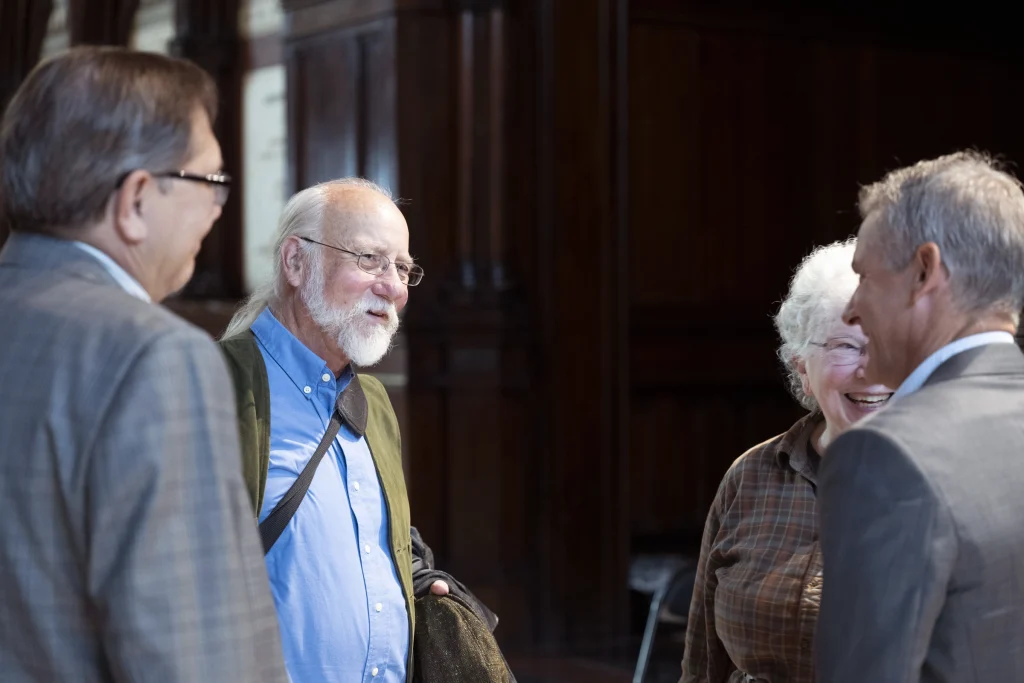
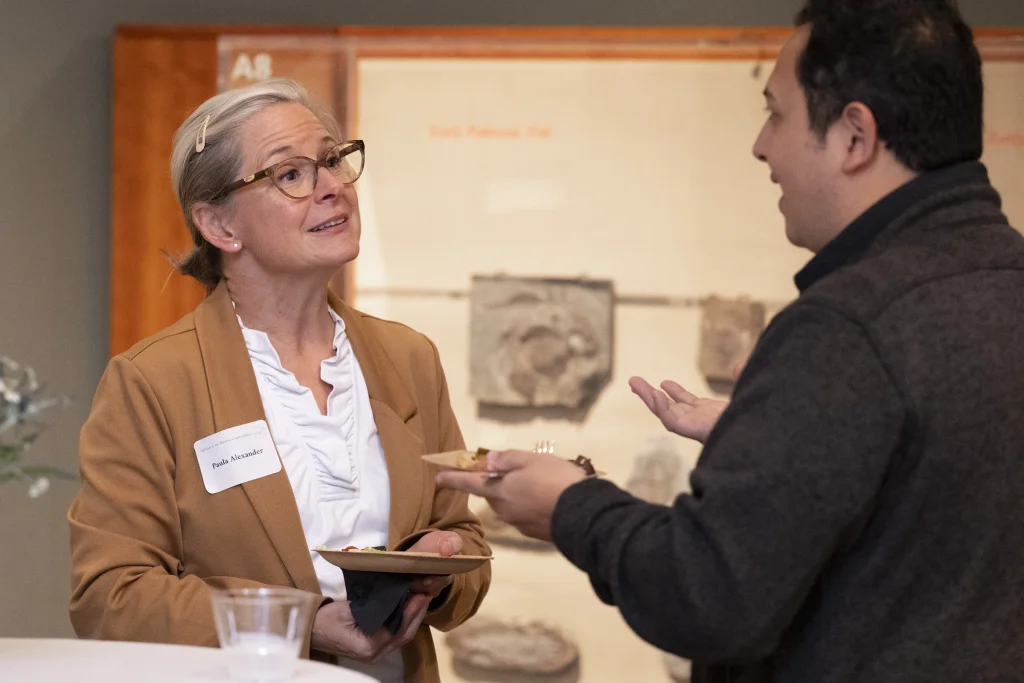
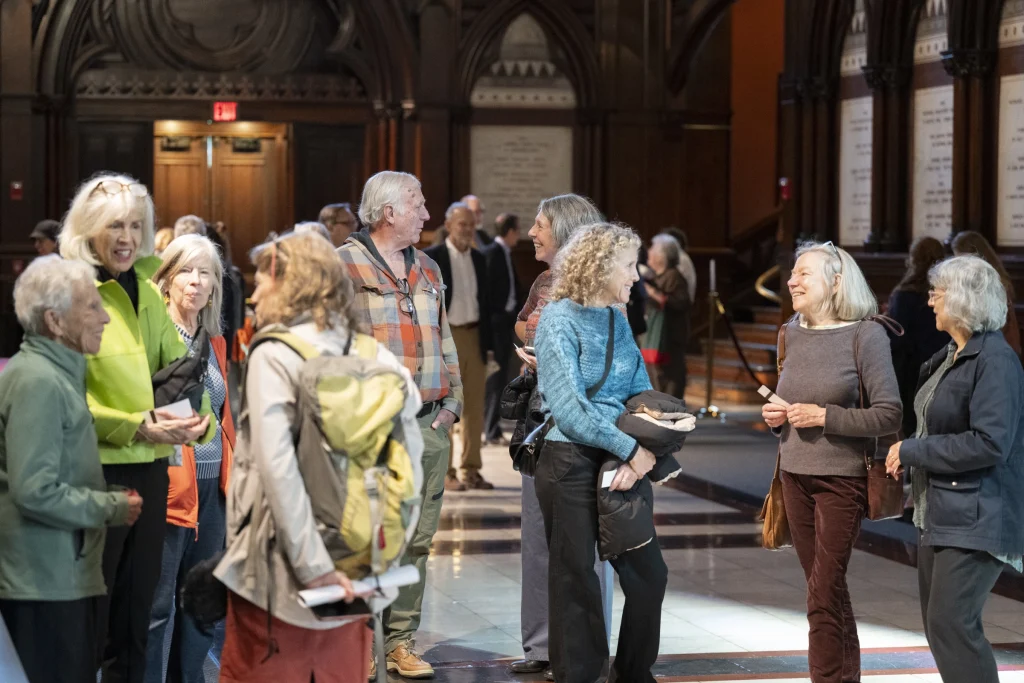
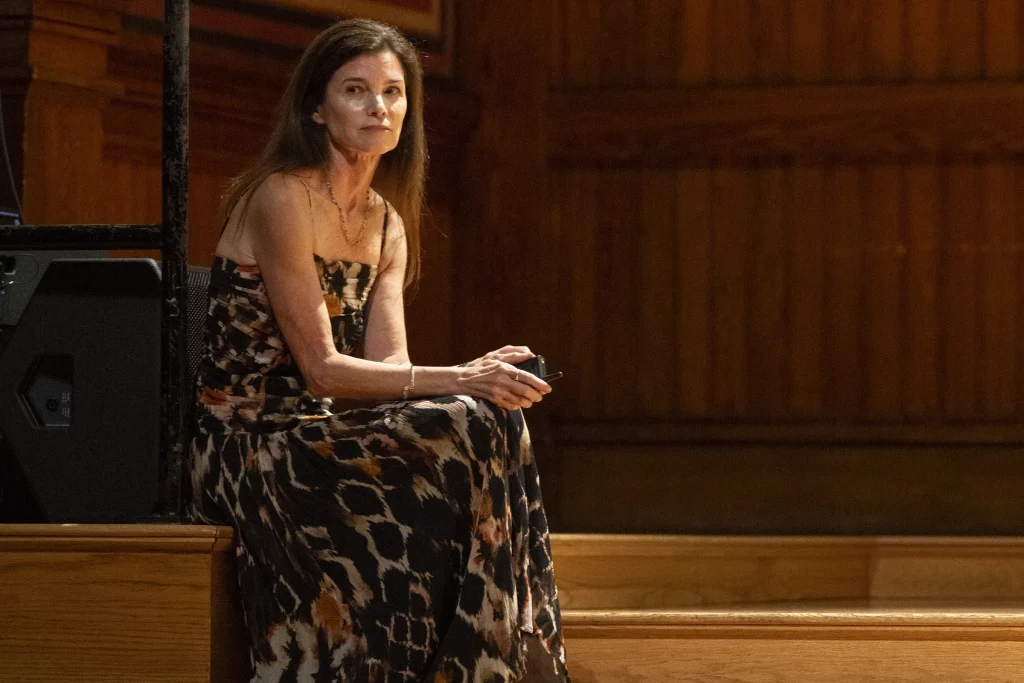
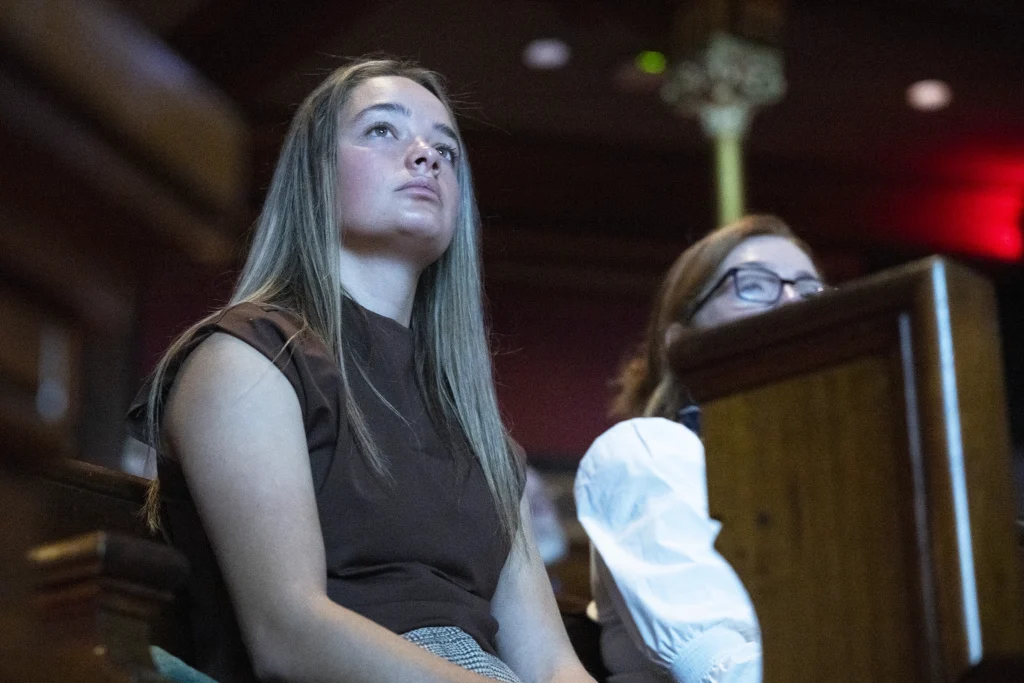
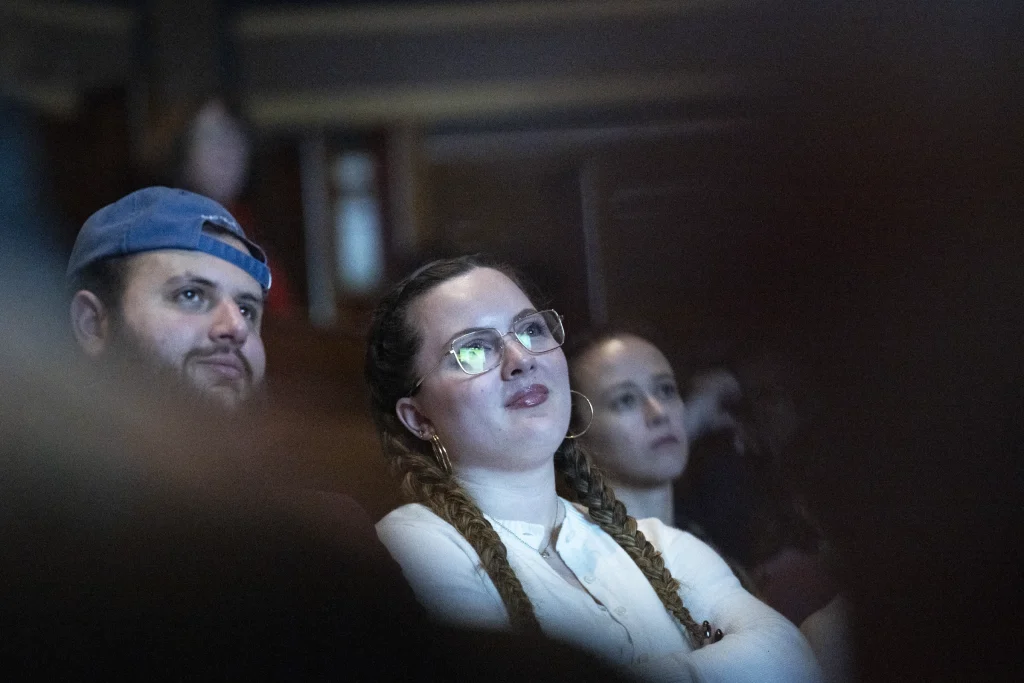
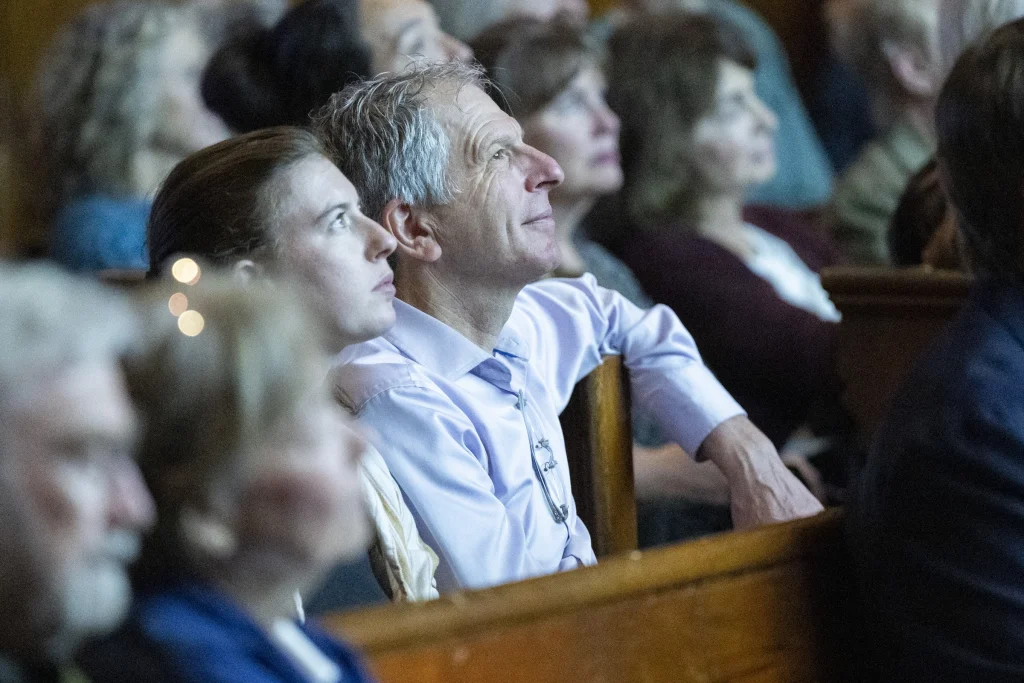
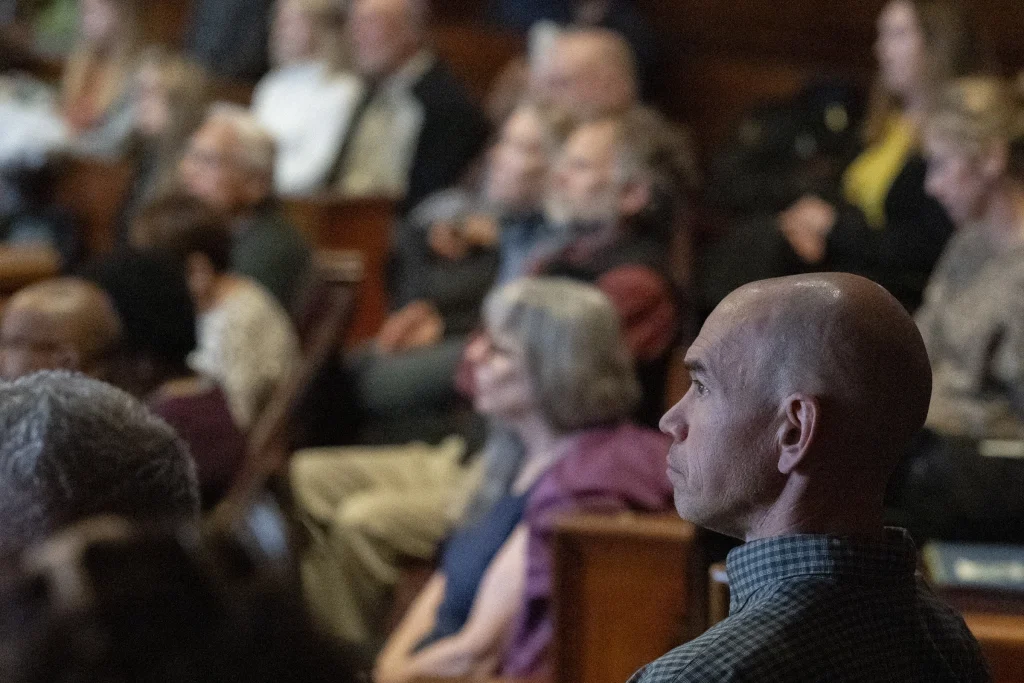
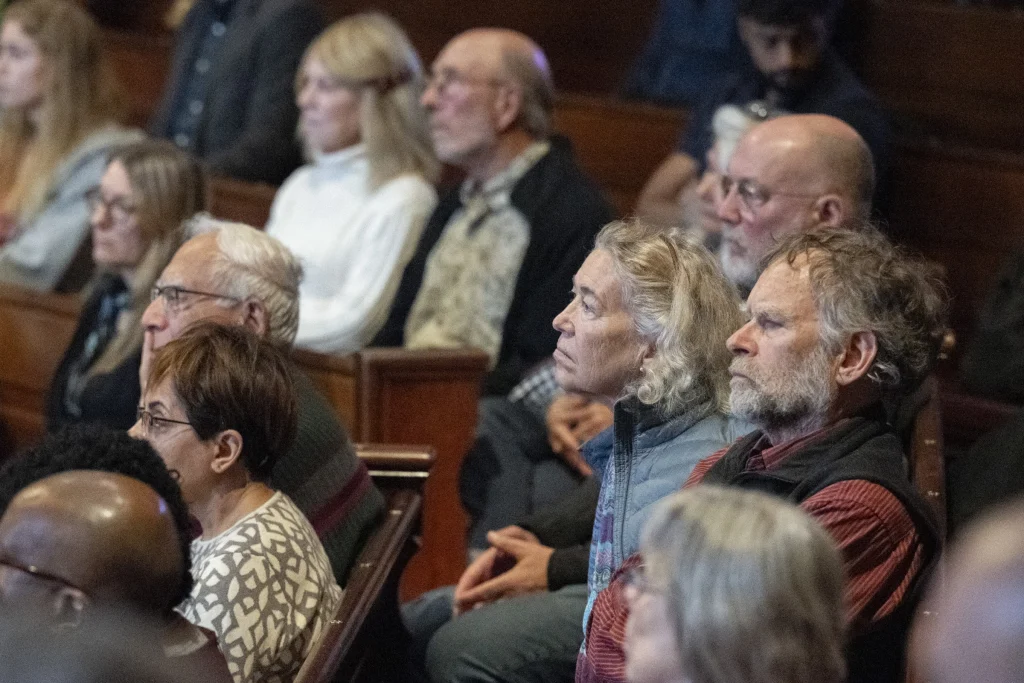
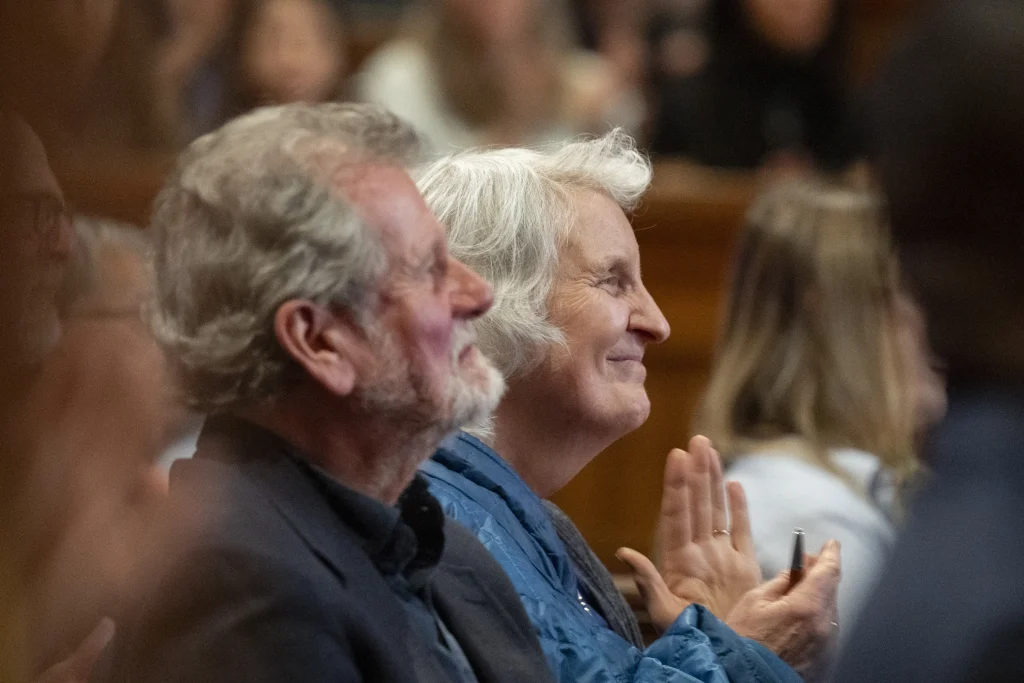
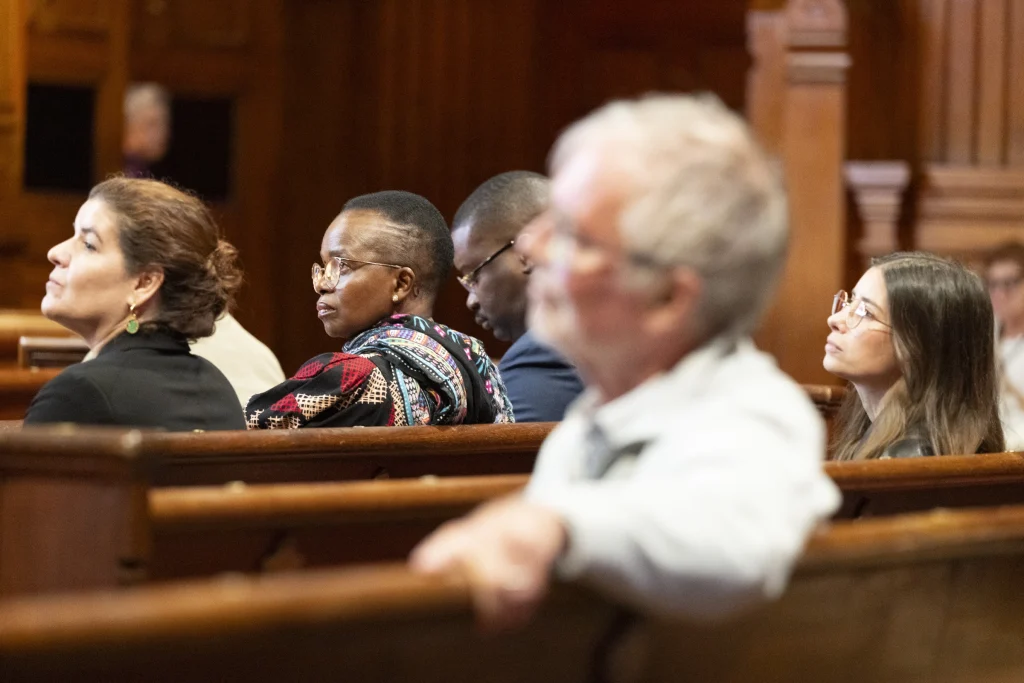
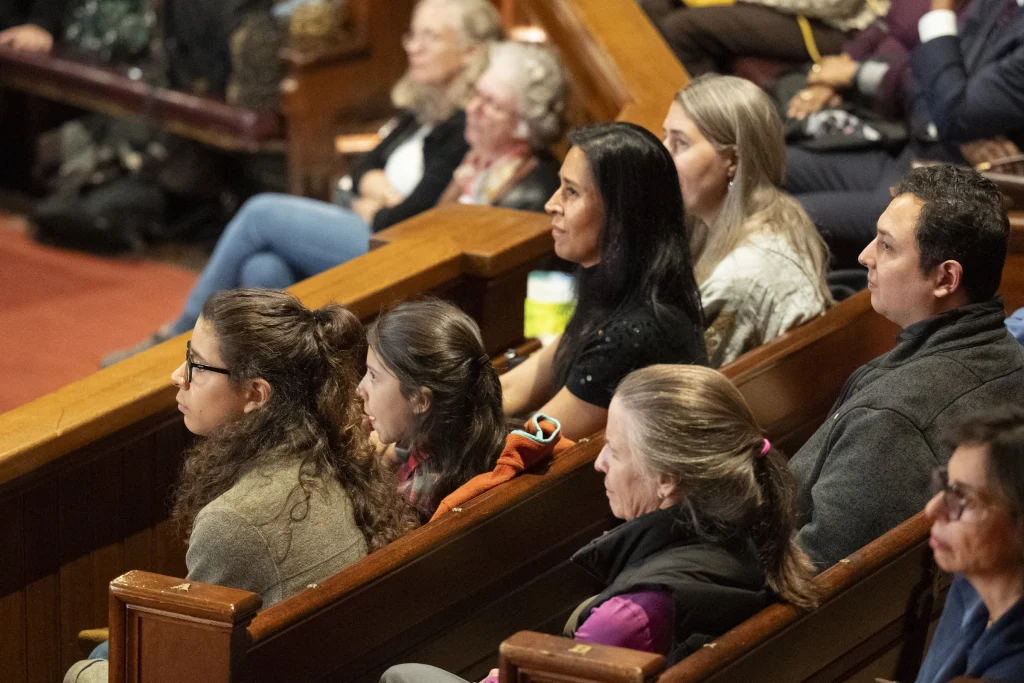
A decade after Half-Earth inspired a global movement, we celebrated a legacy of discovery, exploration, and hope. From E.O. Wilson’s vision to the work of naturalists past and present, and enriched by insights from art, literature, the humanities, and Indigenous communities, Half-Earth Day honored the legacy held in nature’s treasures and the bold efforts to understand, protect, and sustain the living world.
Half-Earth Day 2026 marked the tenth anniversary of both E.O. Wilson’s book and of Half-Earth Day itself, and took up the question his work always pointed toward: how do courage, imagination, and wisdom pass from one generation to the next?
On October 12 — Indigenous Peoples Day — we gathered at Sanders Theatre under the theme Half-Earth at Ten: Honoring a Legacy of Hope, presented by the E.O. Wilson Biodiversity Foundation together with Harvard’s Museum of Comparative Zoology, the Harvard University Herbaria, the Salata Institute for Climate and Sustainability, and the Harvard University Native American Program, with additional support from the James M. and Cathleen D. Stone Foundation and Andrew Saunders.
The day moved between science, art, and testimony: wild places brought to life through film and photography, Indigenous voices renewing our relationship to land, a tribute to E.O. Wilson through the people who knew him best, poetry and music that carried what data alone cannot, and the presentation of the E.O. Wilson Legacy Award for Transformative Conservation Leadership to the Gorongosa Restoration Project. The voice of Henry David Thoreau moved through it all — opening the day, bridging sessions, and offering the closing word. Scholar, writer, and artist Adrienne Keene (Cherokee Nation) guided guests through it all as emcee.
All photography by Tony Rinaldo
Gorongosa Restoration Project Receives the E.O. Wilson Legacy Award for Transformative Conservation Leadership
Harrison Ford passes the award forward – first laureate to the second.
The E.O. Wilson Legacy Award for Transformative Conservation Leadership honors those who carry E.O. Wilson’s vision forward through scientific insight, public engagement, and the kind of movement-building that changes what people believe is possible.
Congratulations to the Gorongosa Restoration Project.
Watch the full E.O. Wilson Legacy Award presentation – along with other videos from Half-Earth Day – below.
A Look Back at the Day
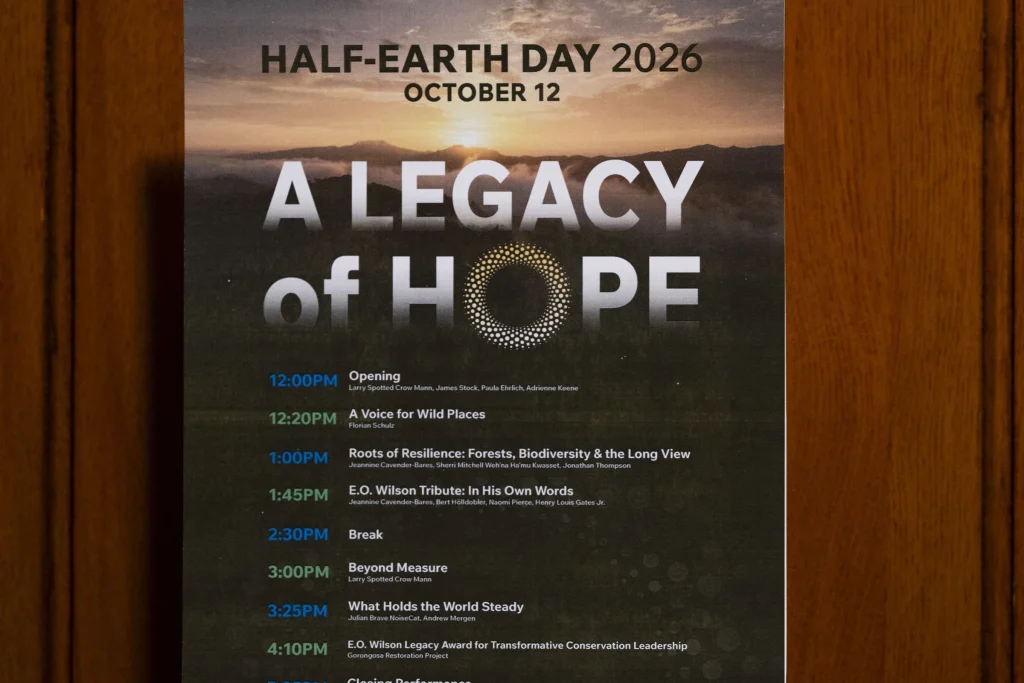
Opening
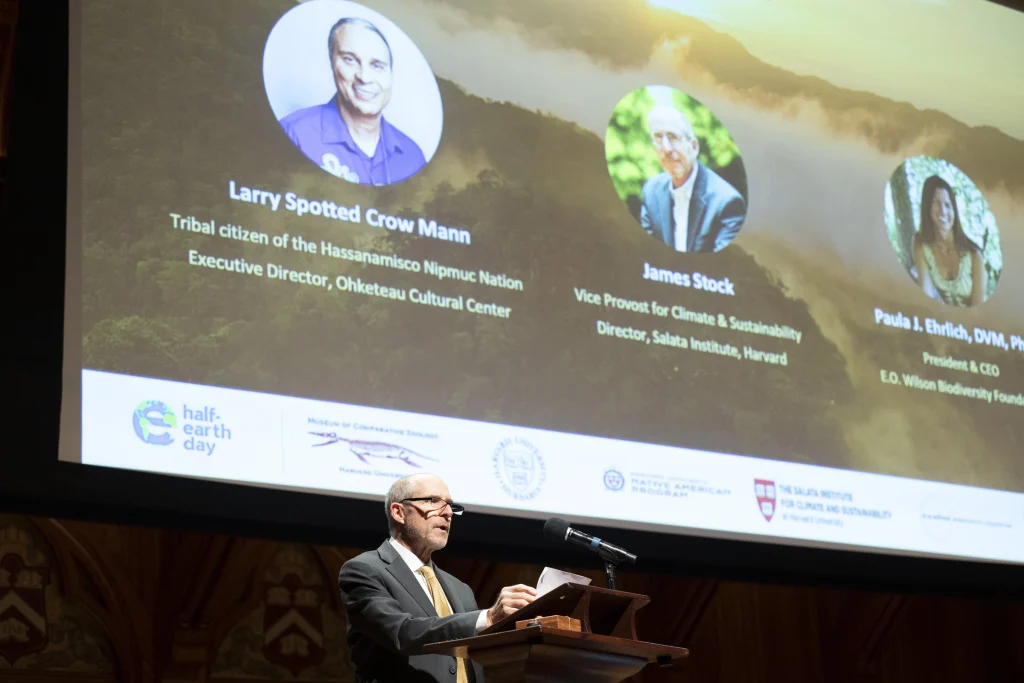
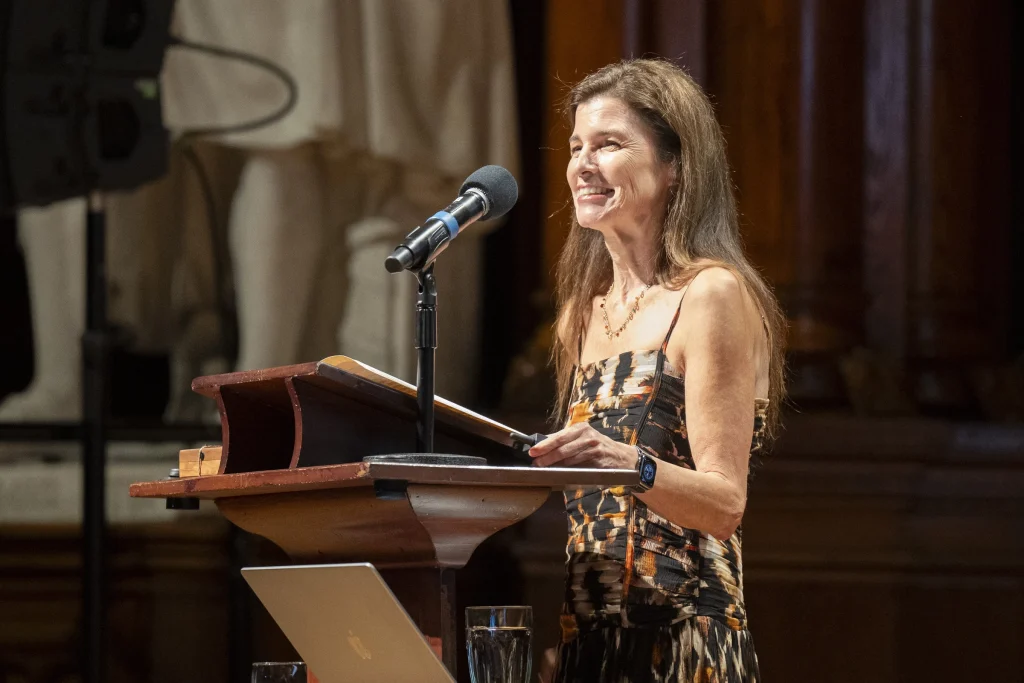
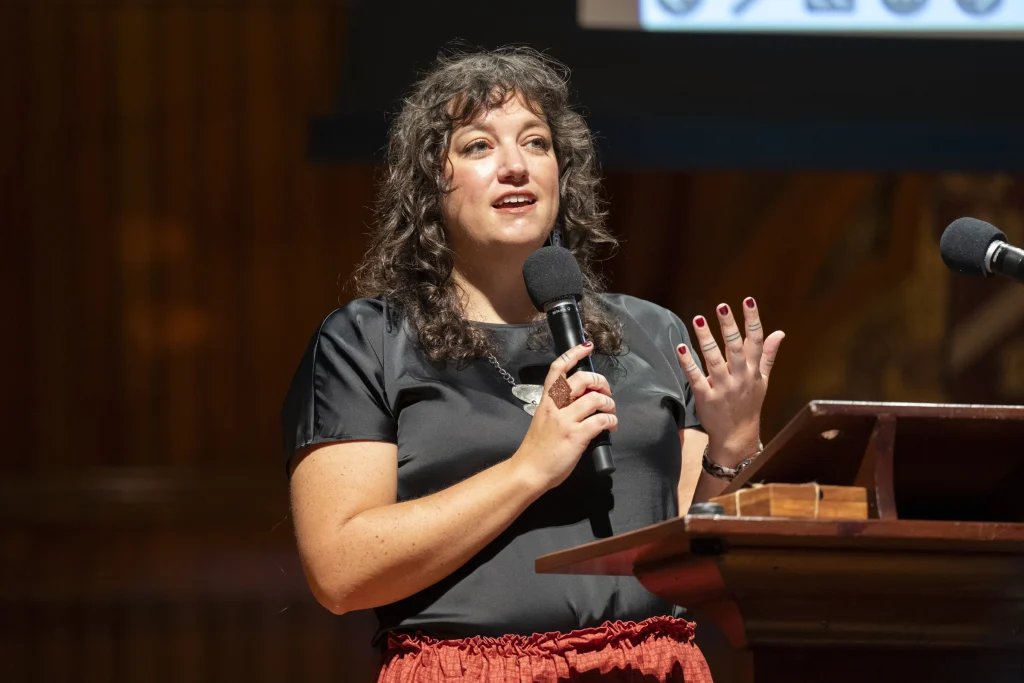
The day opened with a land acknowledgment from Larry Spotted Crow Mann (Hassanamisco Nipmuc Nation), followed by welcome remarks from James Stock and Paula Ehrlich. Scholar, writer, and artist Adrienne Keene (Cherokee Nation) introduced her role as emcee, guiding guests through the program ahead.
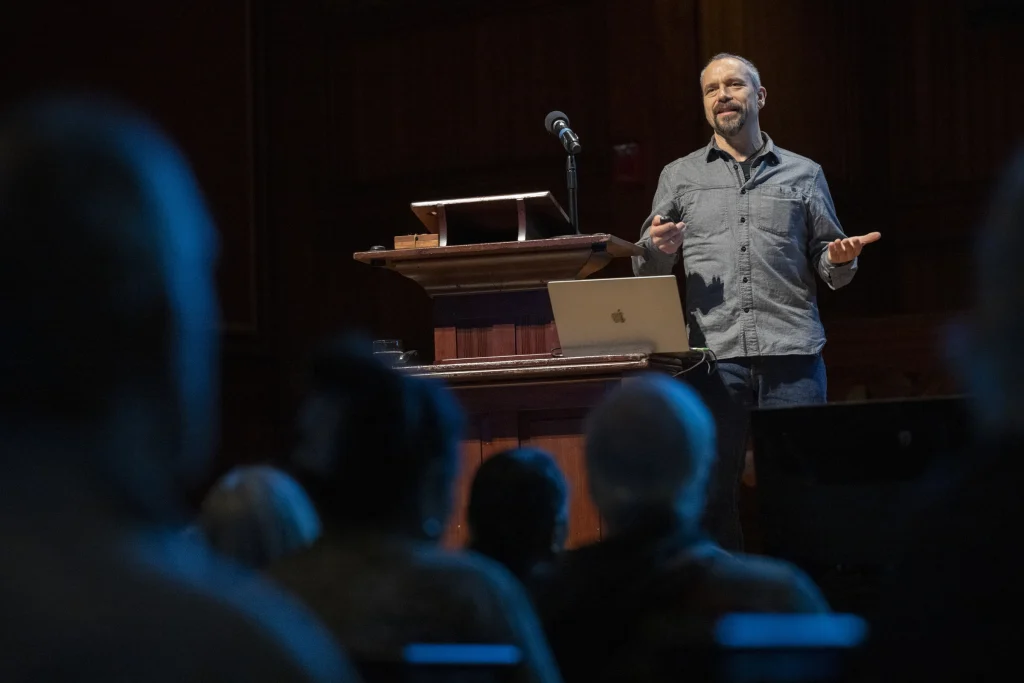
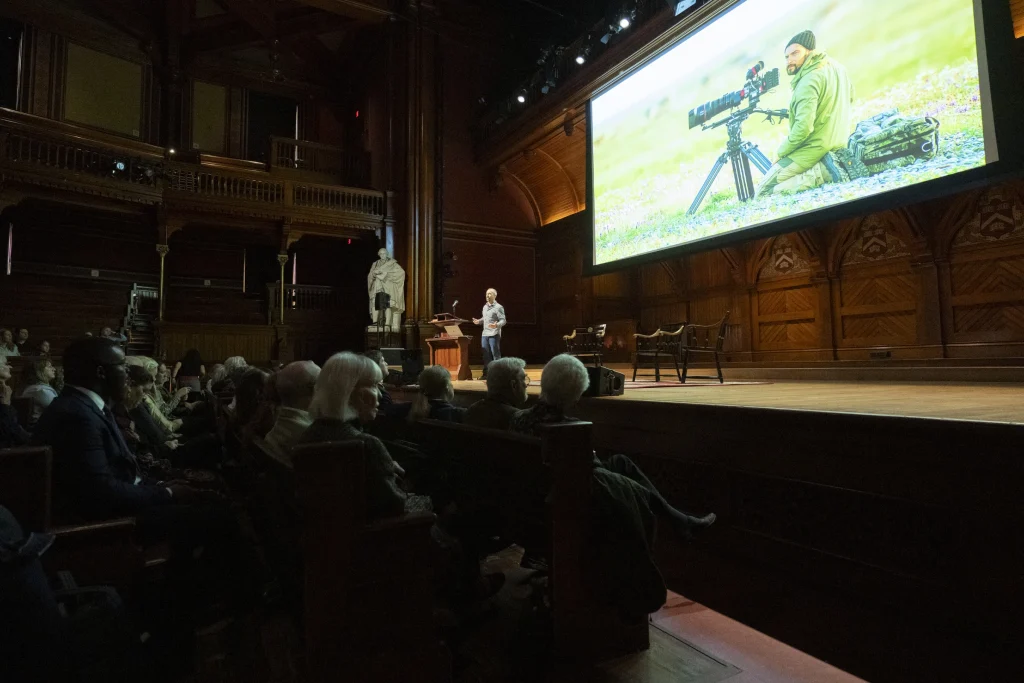
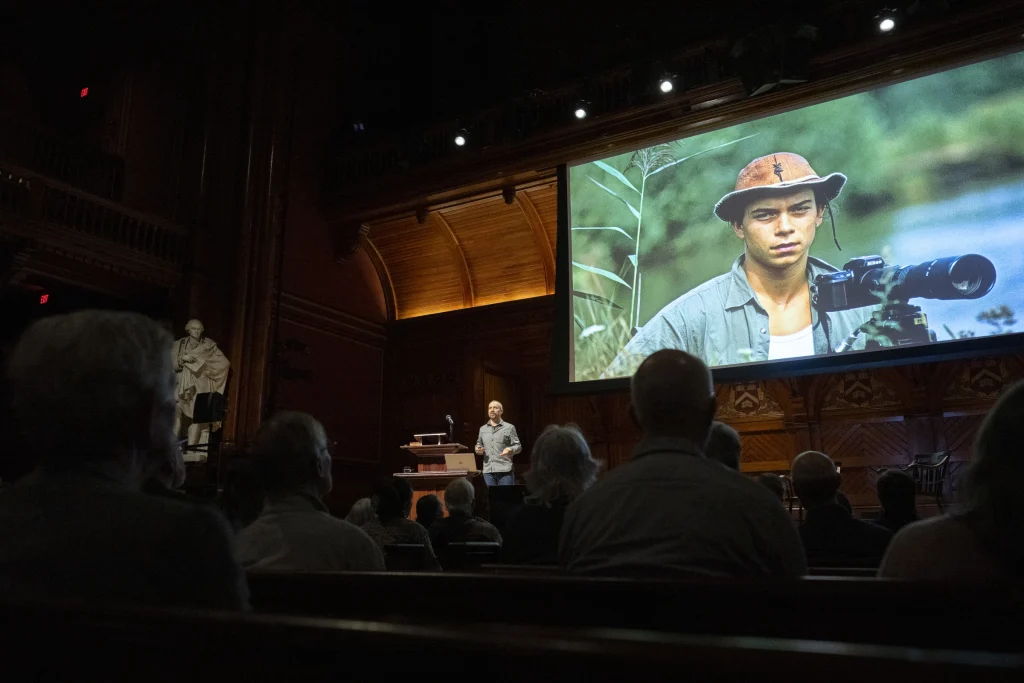
It began with a boy from southern Germany who longed for wide-open wilderness. More than 25 years later, filmmaker and National Geographic photographer Florian Schulz has made Alaska his home — living as close as possible to one of the last great functioning wilderness systems on Earth.
In this visually immersive presentation, Schulz shared a window into the health of an entire ecosystem — caribou, polar bears, wolves, migratory birds, and Indigenous communities — through spectacular images and films alongside the personal stories behind them: long expeditions; years spent pursuing a single image; exhilarating encounters with wildlife; and the moments of fear, patience, and profound wonder that define a life in the field.
His work is driven by a simple belief: people protect what they know, and they care for what they can feel. A Voice for Wild Places was an invitation to recognize biodiversity as the living fabric that connects us all.
Roots of Resilience: Forests, Biodiversity & the Long View
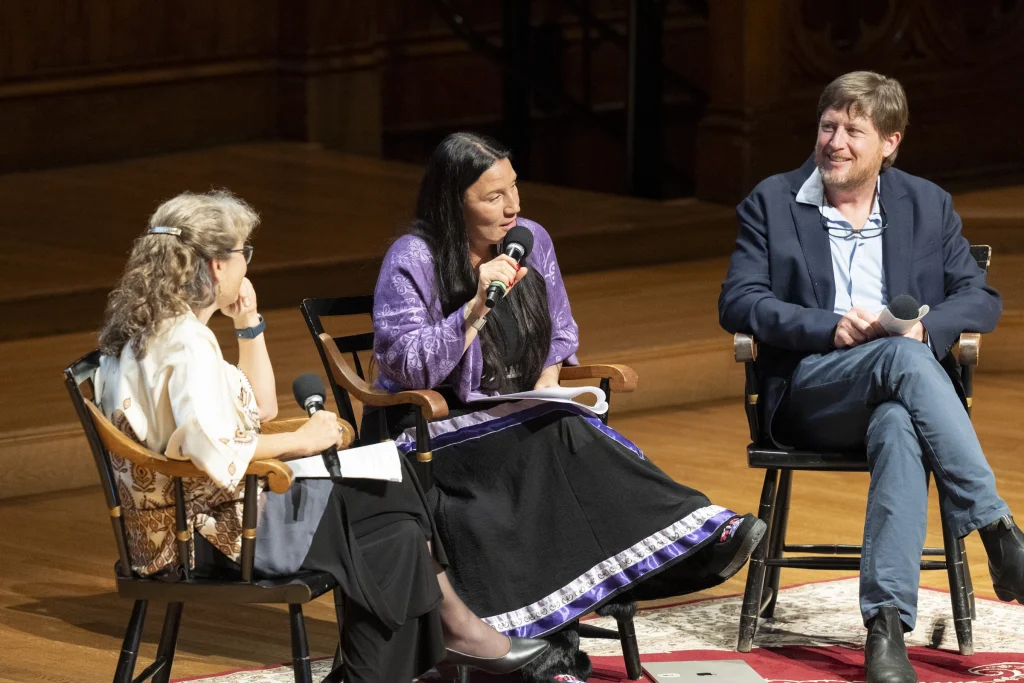
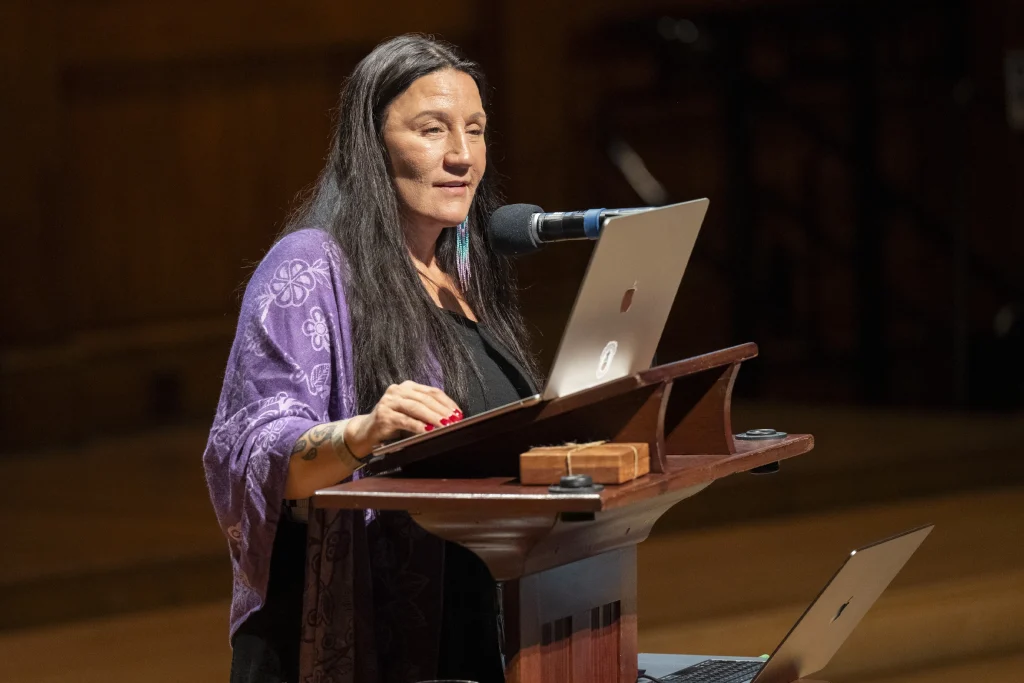
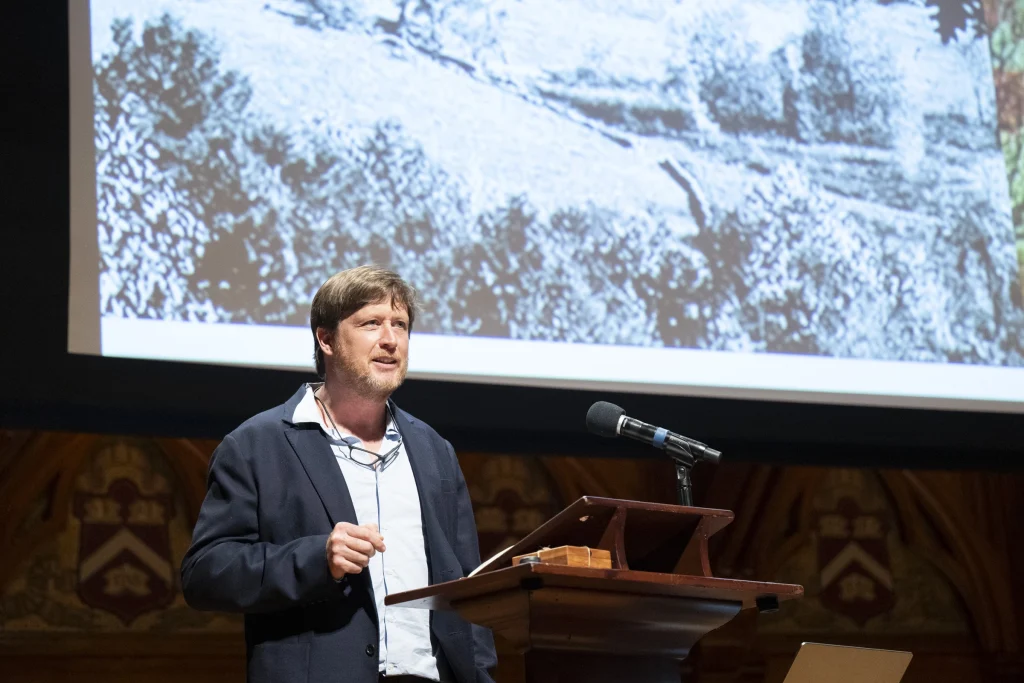
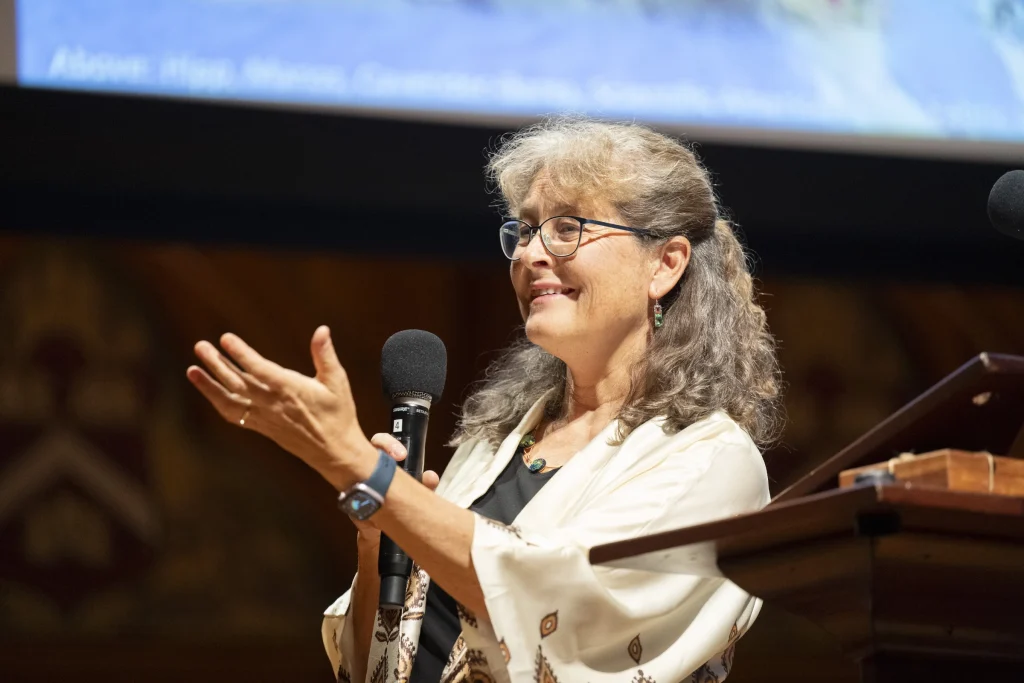
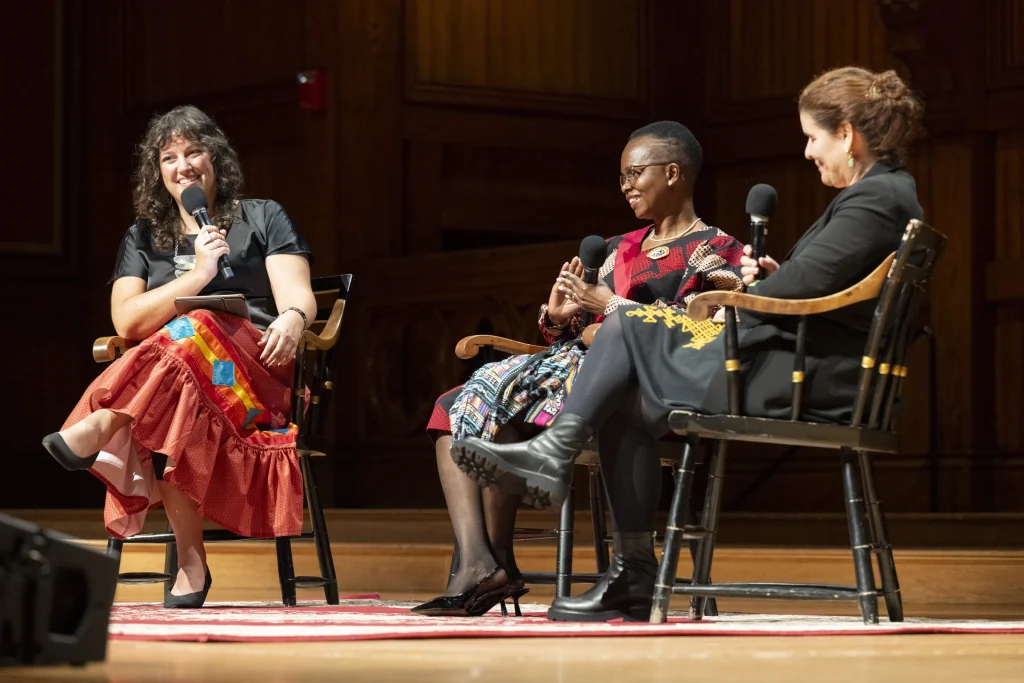
In a conversation moderated by Jeannine Cavender-Bares, Jonathan Thompson opened, tracing how land use across New England changed through early- and late-stage colonization, and what that history means for the region’s forests today. Sherri Mitchell followed with the long history of disruption to Indigenous relationships with the land — how survival is no longer certain for our species or countless others — and how that relationship might be renewed through rematriation, weaving science together with other ways of knowing.
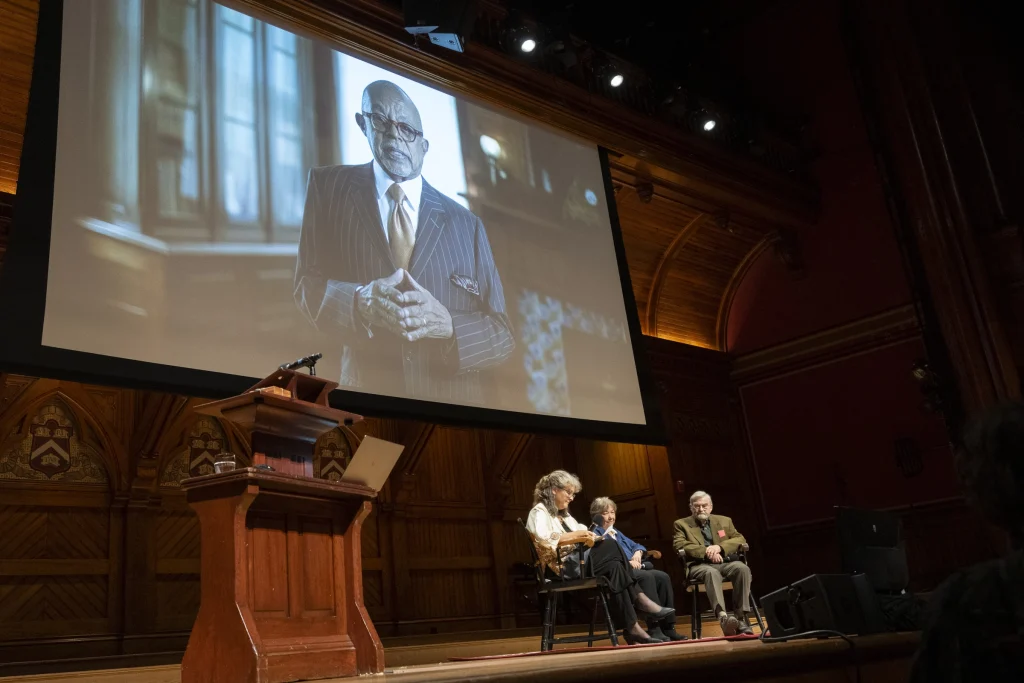
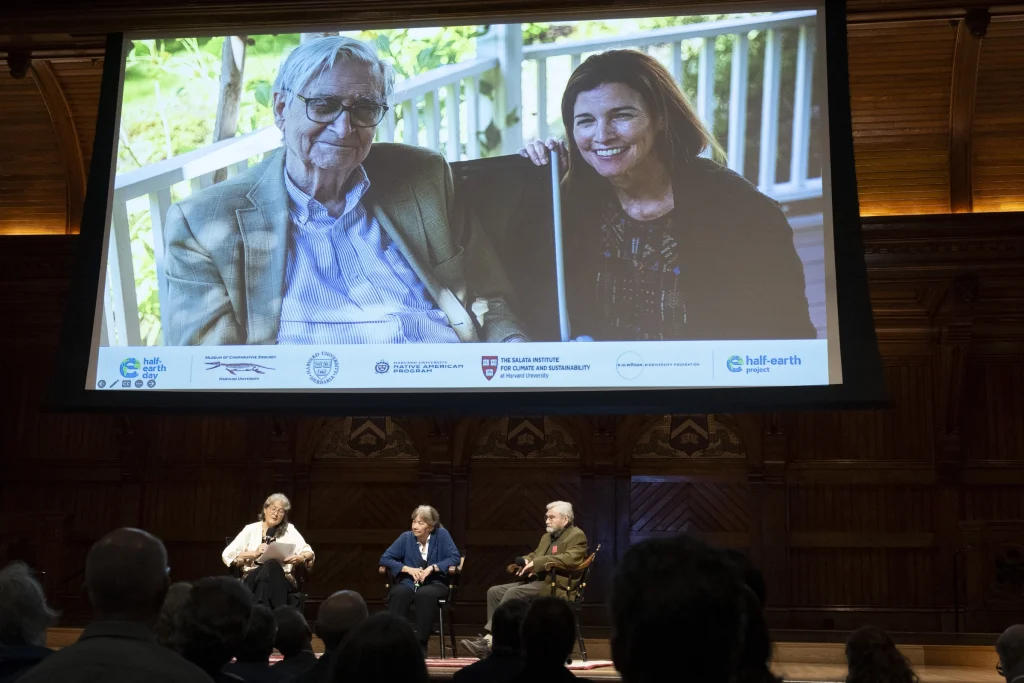
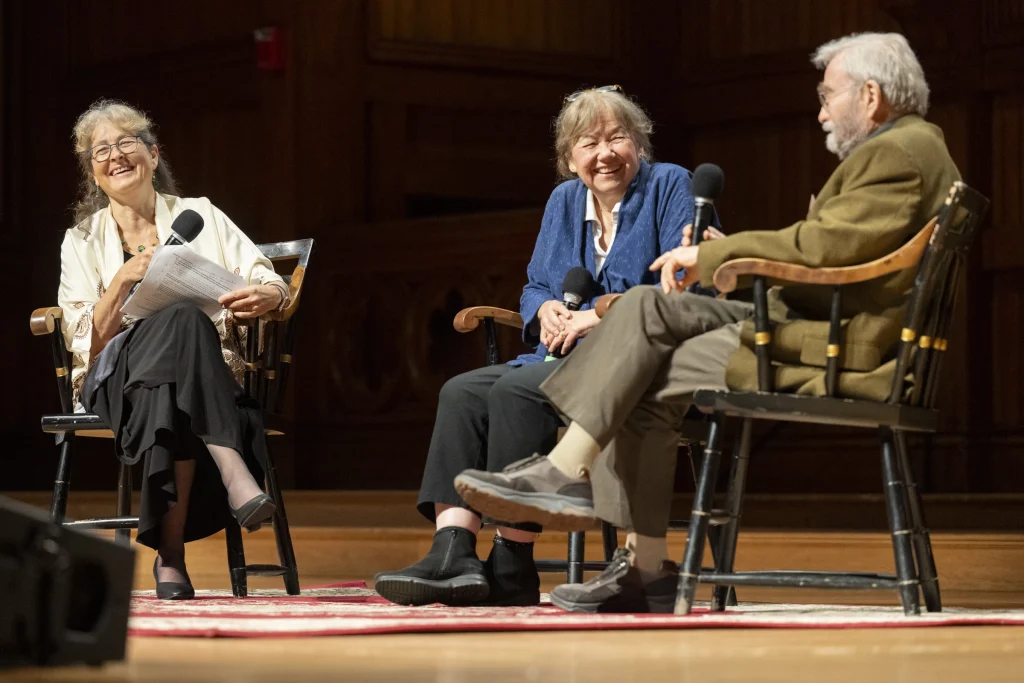
A rare gathering: Bert Hölldobler — who shared the Pulitzer Prize with E.O. Wilson for The Ants and was among his closest scientific collaborators — joined Naomi Pierce, with a reflection from Henry Louis Gates Jr., in a conversation moderated by Jeannine Cavender-Bares that remembered E.O. Wilson through his own words, archival footage, and the testimony of those who knew him best.
Award-Winning Author, Playwright, Musician, Cultural Educator, Storyteller & Citizen of the Hassanamisco Nipmuc Tribe
What Holds the World Steady
For decades, “harm” under the Endangered Species Act meant more than killing an animal outright. It meant habitat, too. This year, that definition was rescinded. Andrew Mergen of Harvard Law School delivered a keynote on what the ESA loses when habitat destruction is written out of the definition of harm, and on what endures when the language of protection falls away.
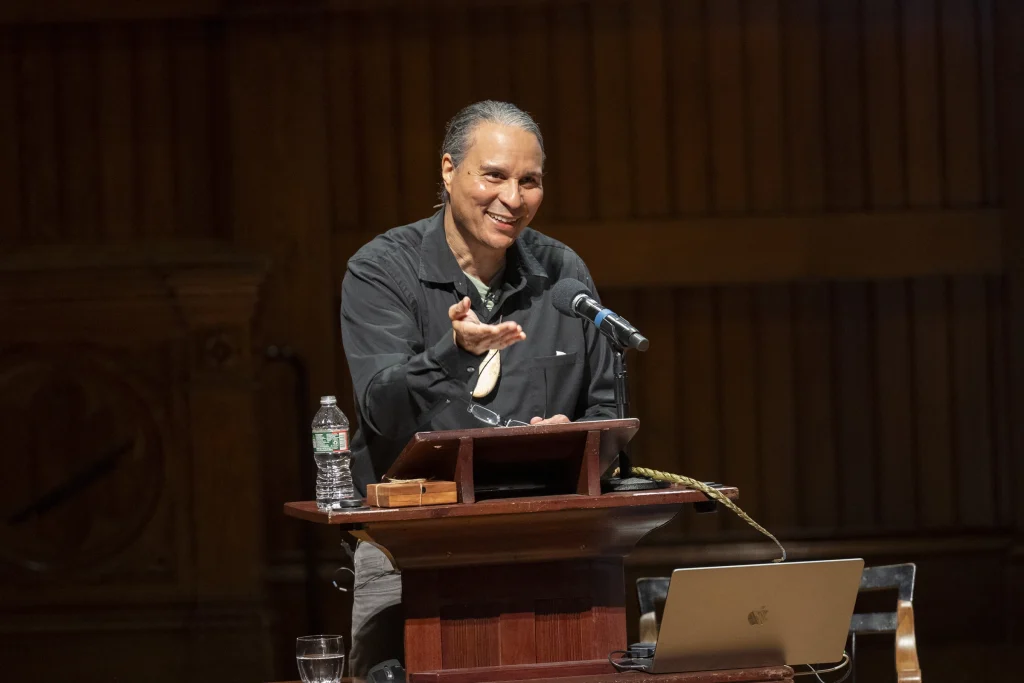
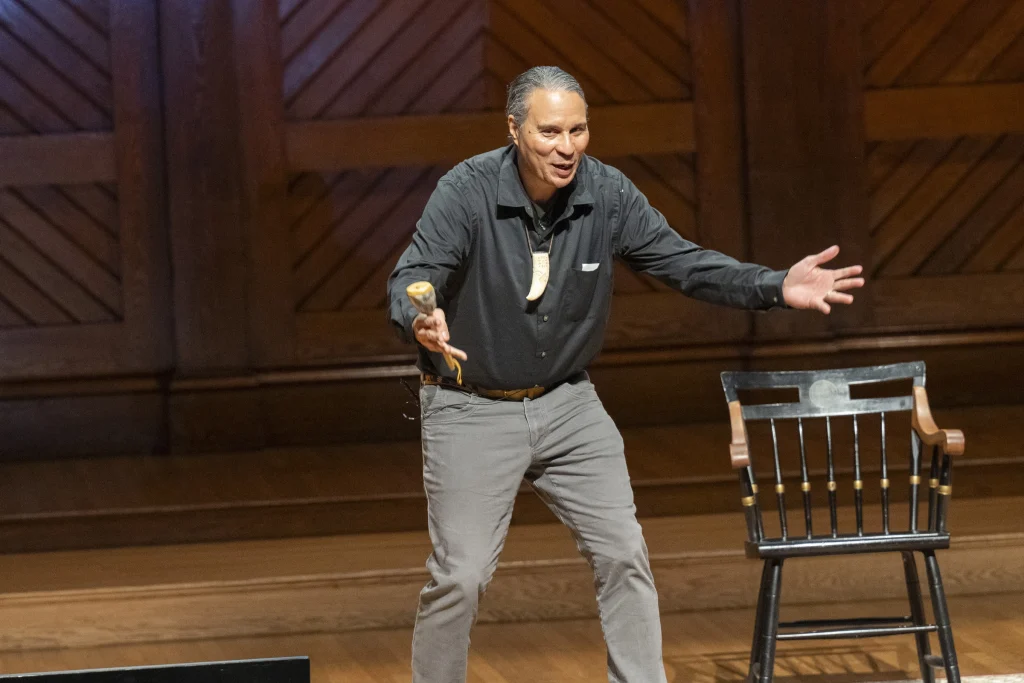
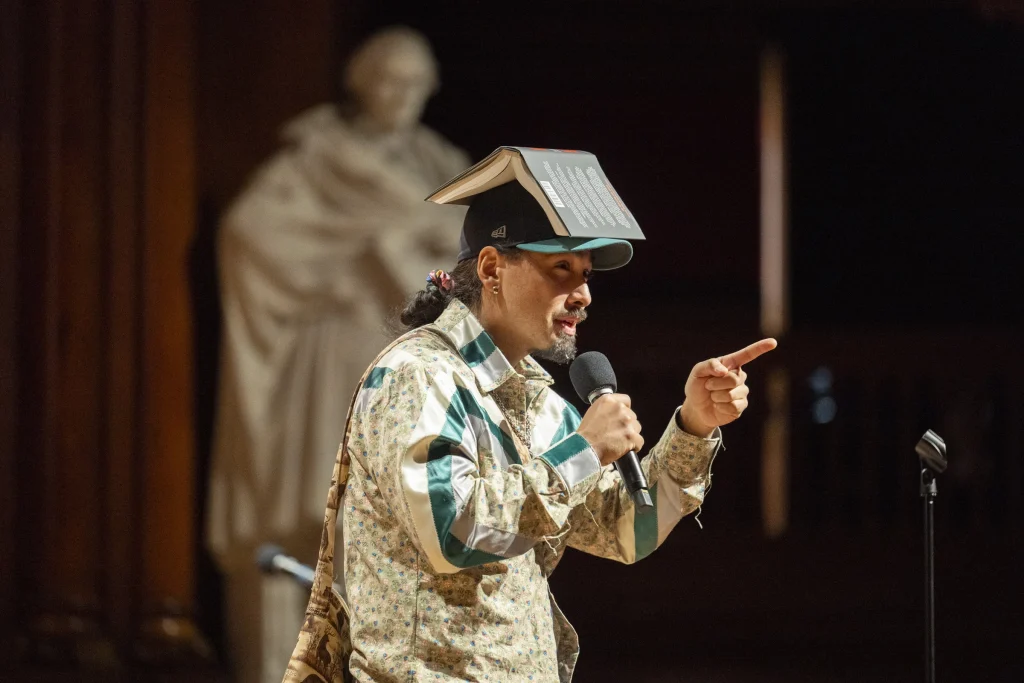
Julian Brave NoiseCat followed with a one-man show built from traditional oral history: the trickster Coyote, traveling up the river systems he filled with salmon and populated with people for the first time, articulating the most ancient and important laws of the river. We are all related, and don’t catch all the fish.
E.O. Wilson Legacy Award for Transformative Conservation Leadership
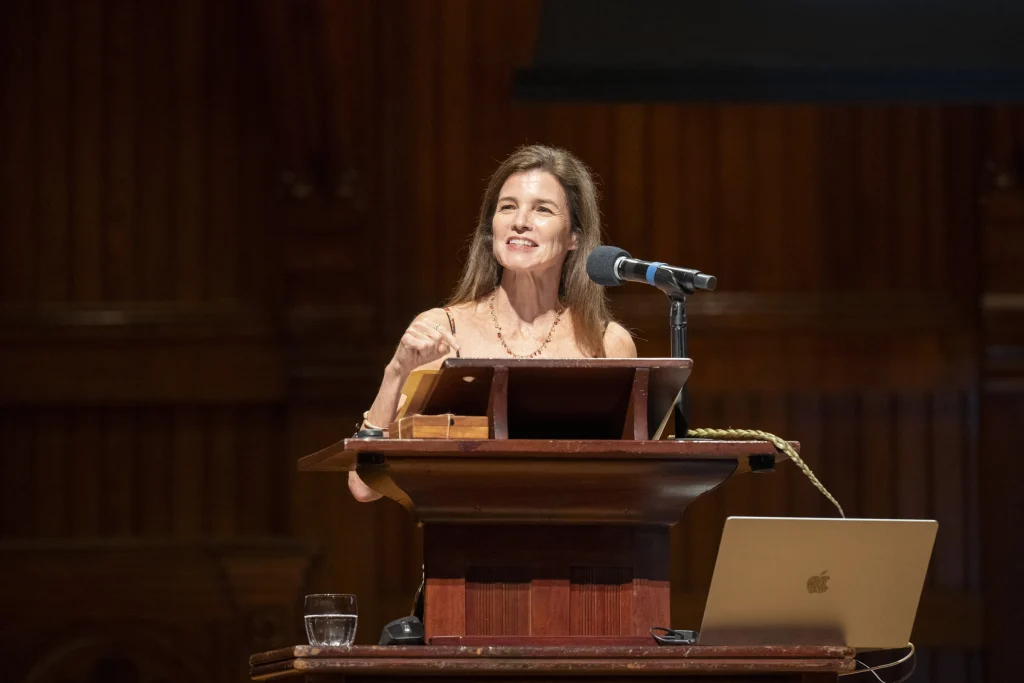
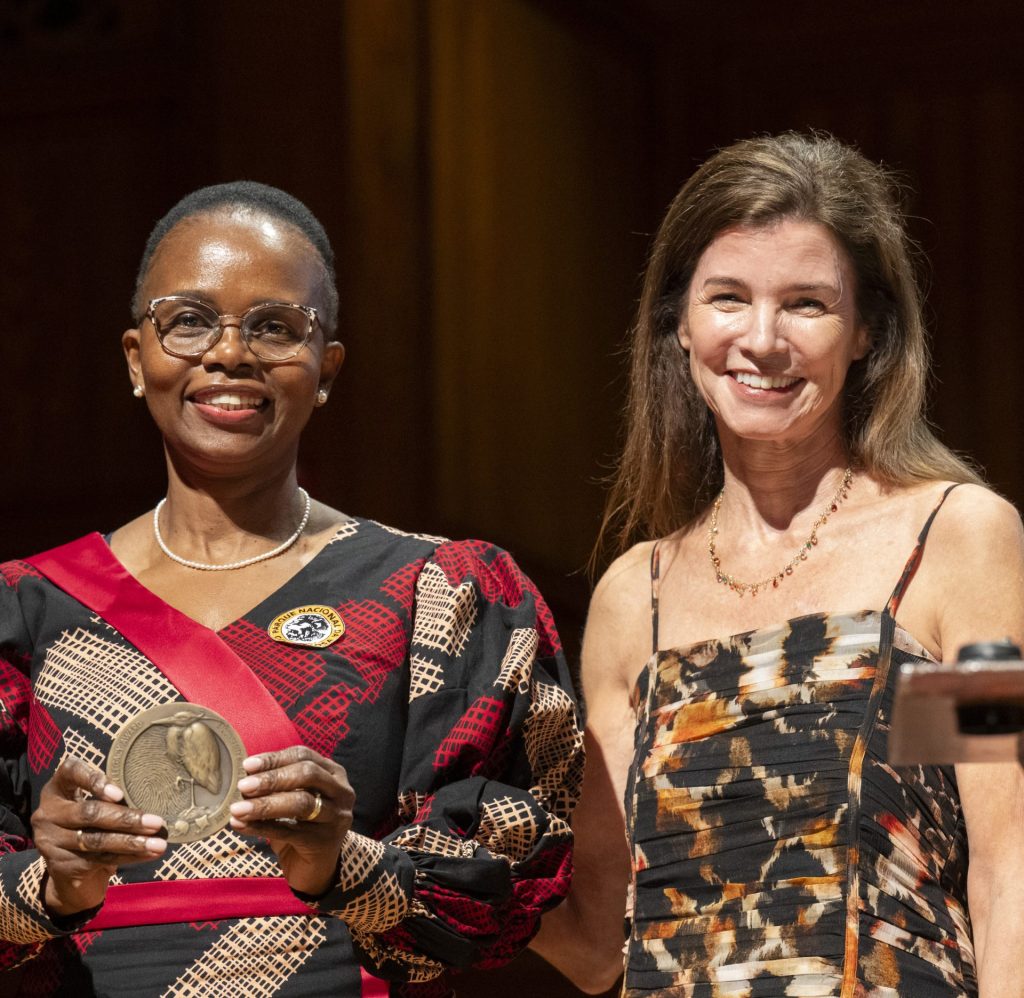
The day built to this moment: the presentation of the E.O. Wilson Legacy Award for Transformative Conservation Leadership to the Gorongosa Restoration Project — a living model of everything E.O. Wilson believed the world needed: wildlife recovery and human flourishing braided into a single effort, with science as its beating heart. A short film introduced E.O. Wilson’s sense of Gorongosa’s importance, alongside the young Mozambican scientists carrying his hopes forward there. Paula Ehrlich presented the award — and Harrison Ford, the award’s inaugural recipient, passed it forward by video — to Aurora Malene. Malene delivered a keynote, followed by a conversation with Susana Carvalho and emcee Adrienne Keene to close out the award presentation.
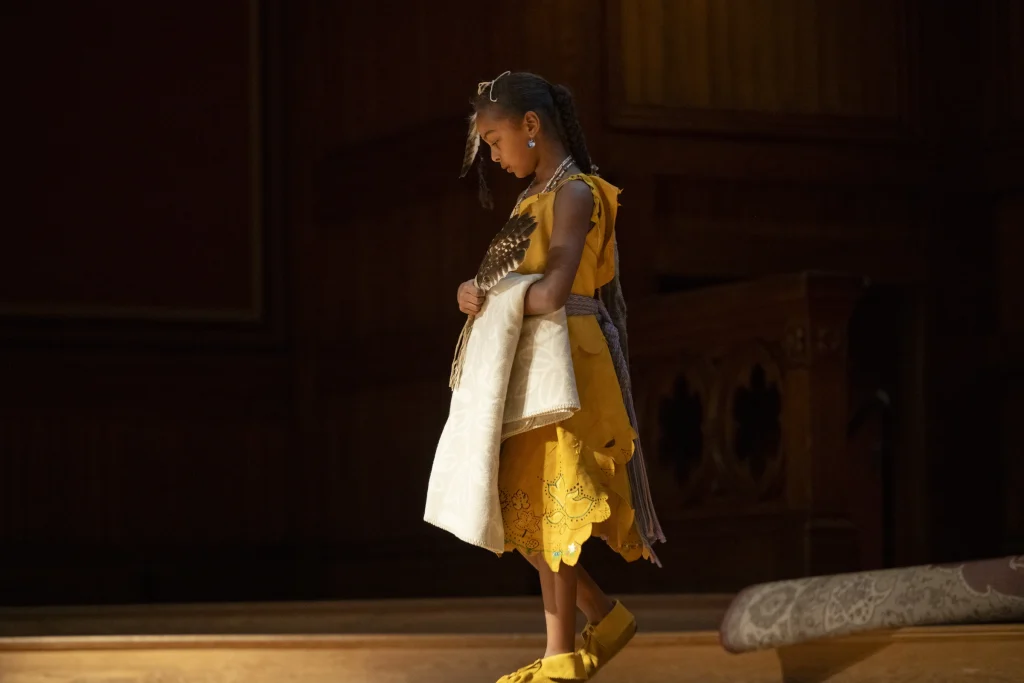
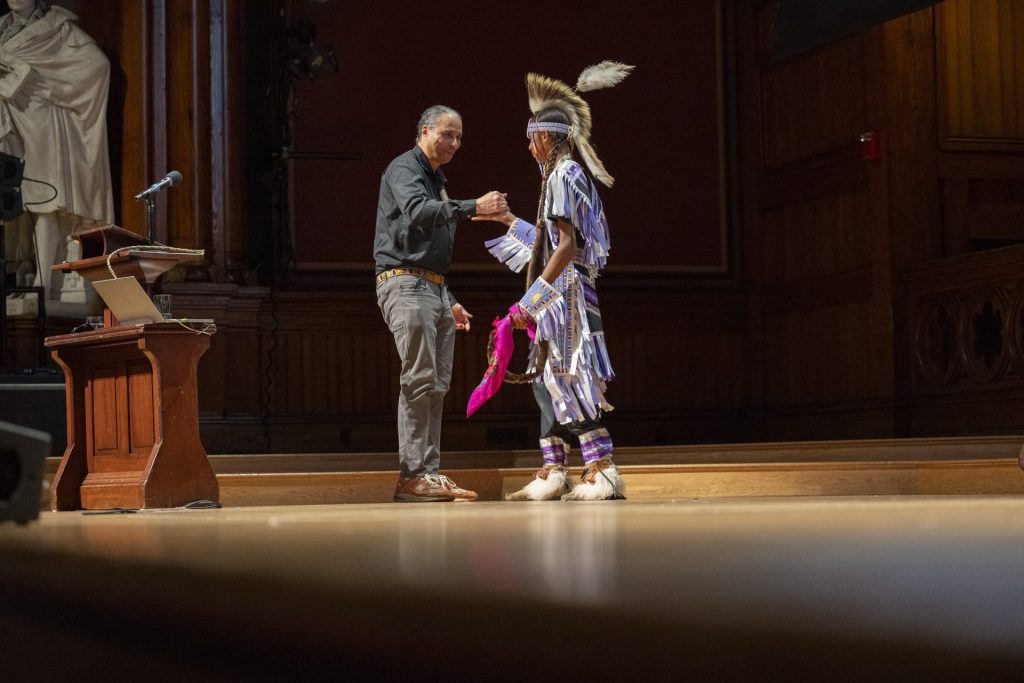
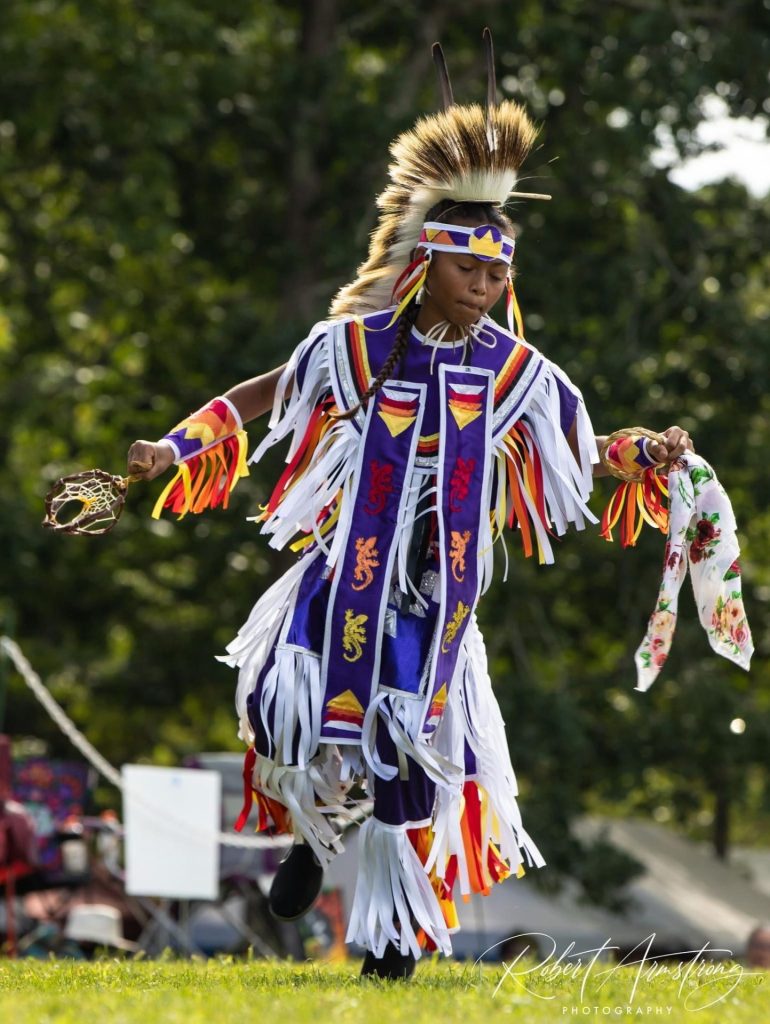
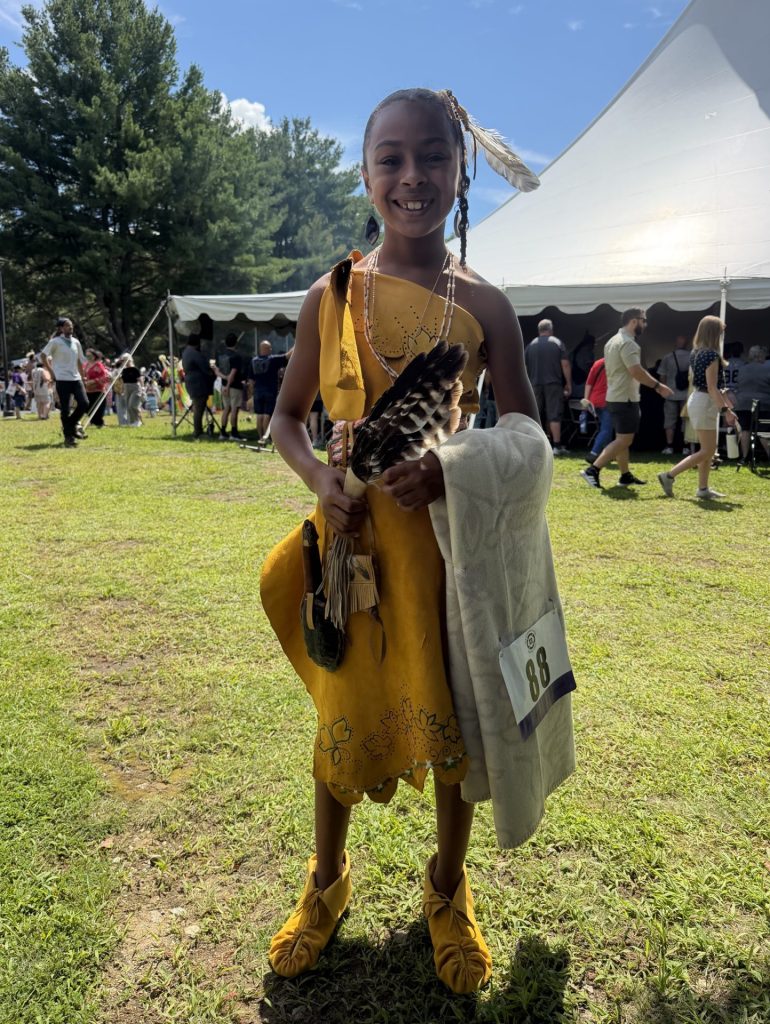
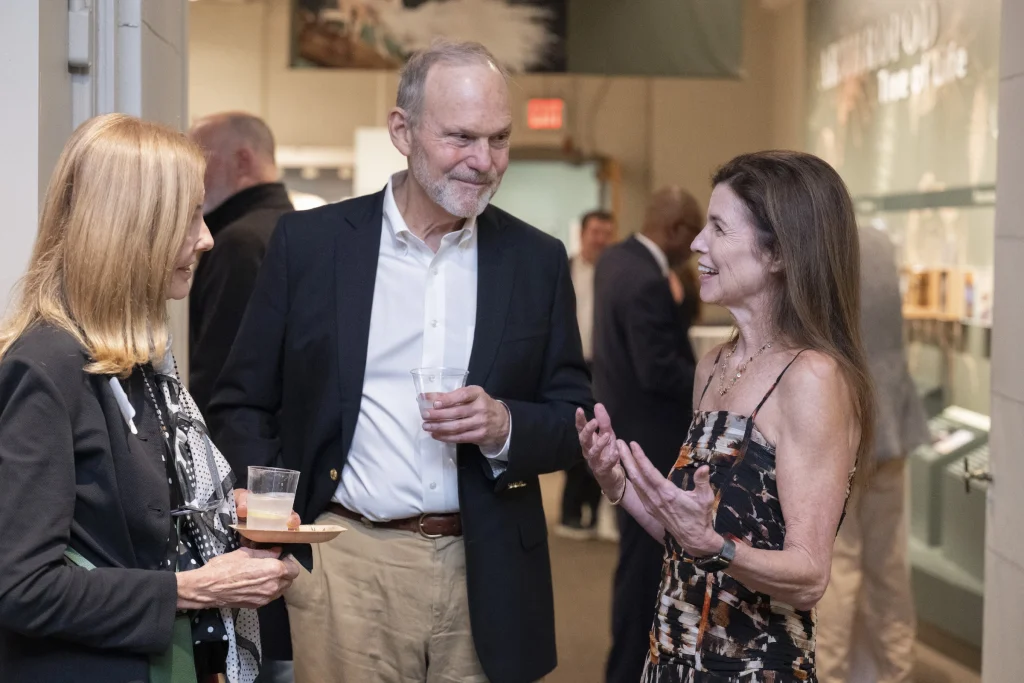
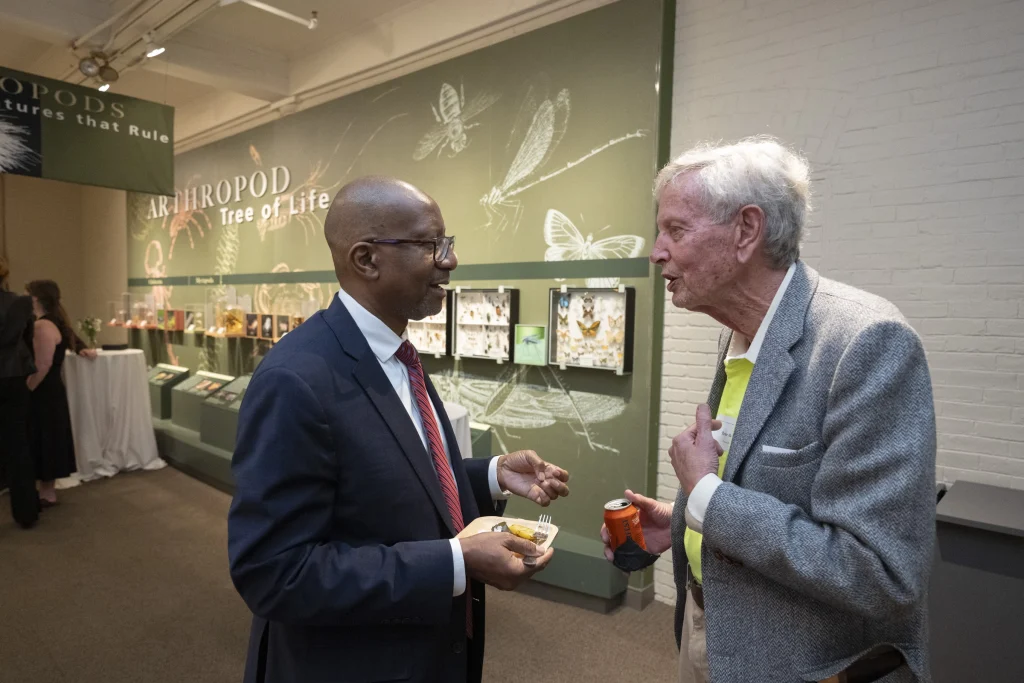
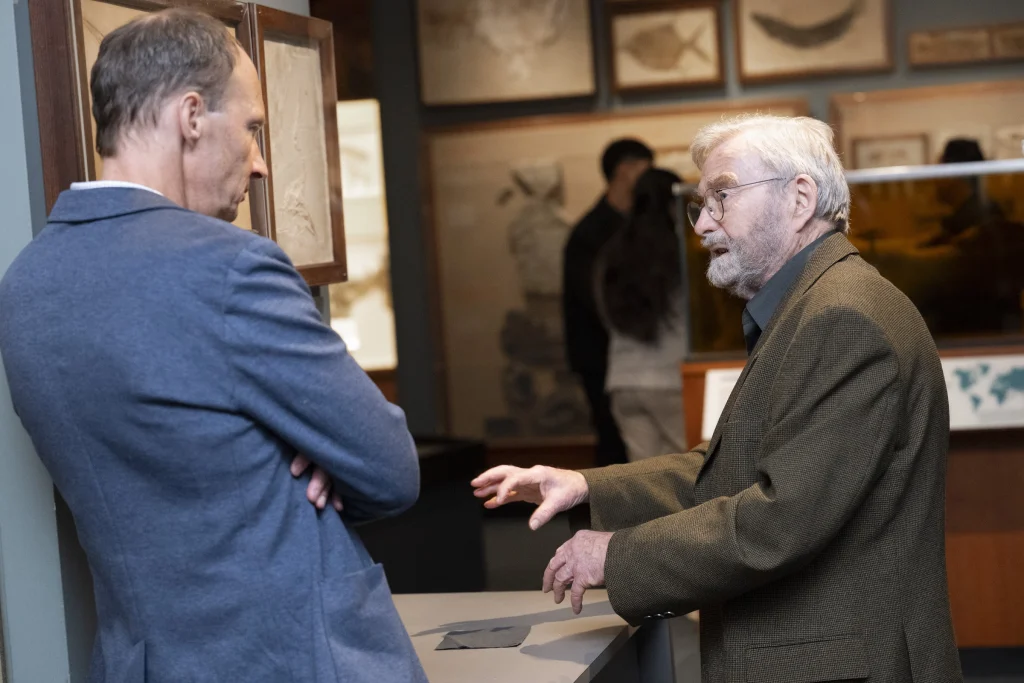
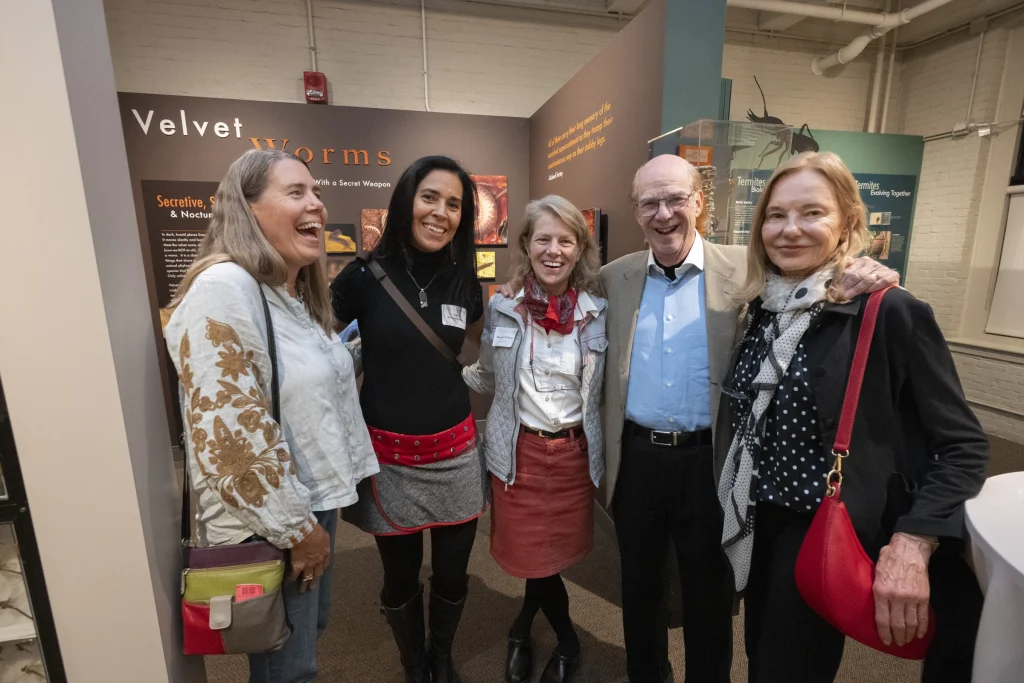
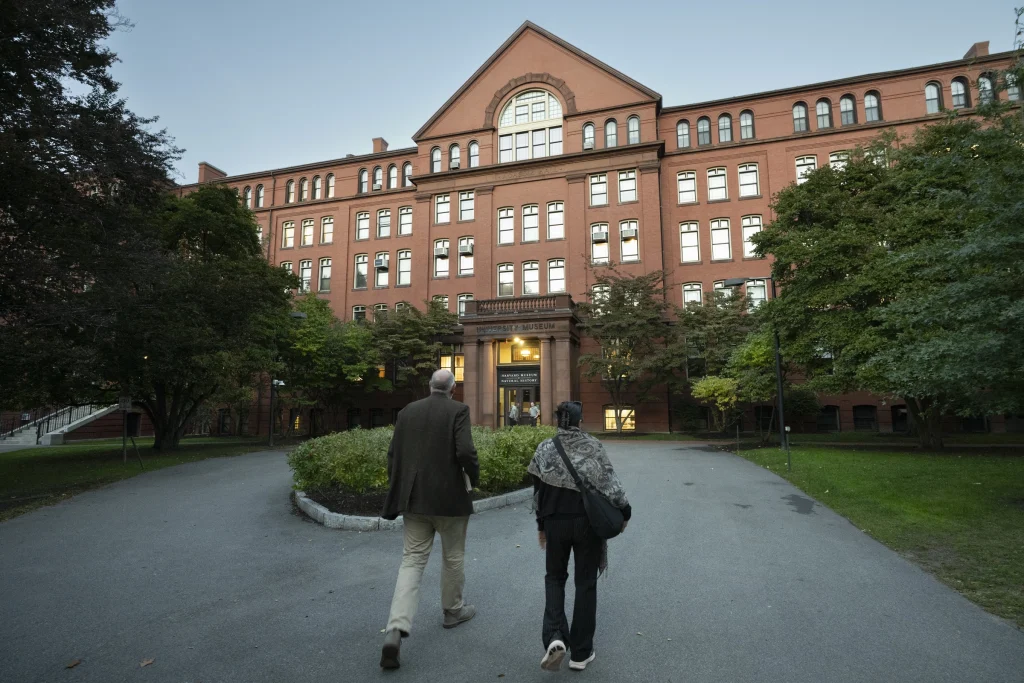
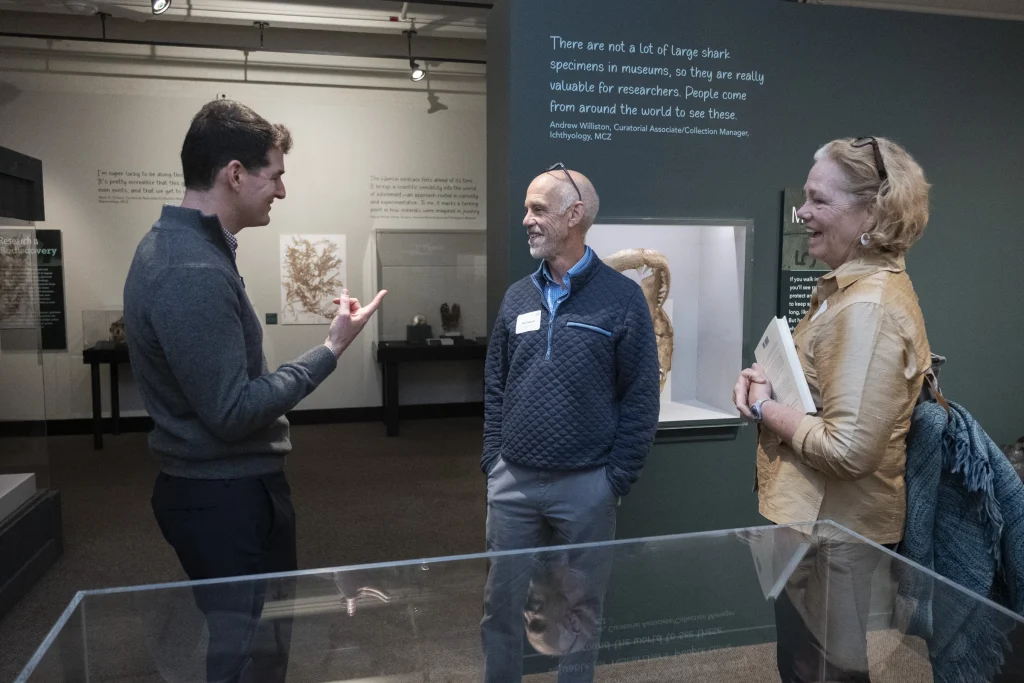
Larry Spotted Crow Mann closed the day in performance with young people from the Ohketeau Cultural Center. Gonzalo Giribet offered brief closing remarks before an evening VIP reception at the Harvard Museum of Natural History.
Youth dancers from the Ohketeau Cultural Center and citizens of the Narragansett Tribe of Rhode Island
Aurora Malene accepts the 2026 E.O. Wilson Legacy Award on behalf of the Gorongosa Restoration Project
About the E.O. Wilson Legacy Award
The E.O. Wilson Legacy Award for Transformative Conservation Leadership honors individuals and organizations who embody E.O. Wilson’s legacy in conservation science, passion for biodiversity, and action on behalf of all species. It celebrates exceptional leadership in one or more of three areas: scientific contribution to biodiversity conservation, public engagement that brings visibility and awareness to conservation issues, and movement mobilization that inspires collective, measurable conservation outcomes.
The award reflects E.O. Wilson’s profound conviction that “To strive against odds on behalf of all life would be humanity at its most noble,” and honors those working courageously to encourage and inform collective action to safeguard nature.
Throughout Half-Earth Day 2026, the voice of Henry David Thoreau moved through the program — opening the day, bridging sessions, and offering the closing word.
Eight passages drawn from Thoreau’s journals, lectures, and books — Walden, The Maine Woods, Cape Cod, A Week on the Concord and Merrimack Rivers, and Autumnal Tints — traveled the emotional arc of the day: from a call into wildness, through science and Indigenous knowledge, tribute to E.O. Wilson, art and music, the law and future of protection, and finally into hope and legacy.
The clips were drawn from Henry David Thoreau, a three-hour PBS documentary directed by Chris and Erik Ewers and executive produced by Ken Burns and Don Henley, with Thoreau’s words voiced by Jeff Goldblum and music by David Cieri. The full documentary is available to stream at pbs.org.
The Words of Henry David Thoreau
A Community of Hope
Co-Hosts
Additional Sponsors
Andrew Saunders
With Thanks To
Half-Earth Day® convenes people from around the world and across disciplines to share their perspectives and provide thought leadership on how we can work together to safeguard biodiversity and ensure the health of our planet for future generations. Half-Earth Day showcases scientific advances while addressing the cultural moment, empowering conversation around diverse topics, including crucial habitat restoration projects, the intersection of climate change and biodiversity loss, and community wisdom that informs conservation success. Half-Earth Day celebrates exceptional conservation efforts through the annual presentation of the E.O. Wilson Legacy Award for Transformative Conservation Leadership.
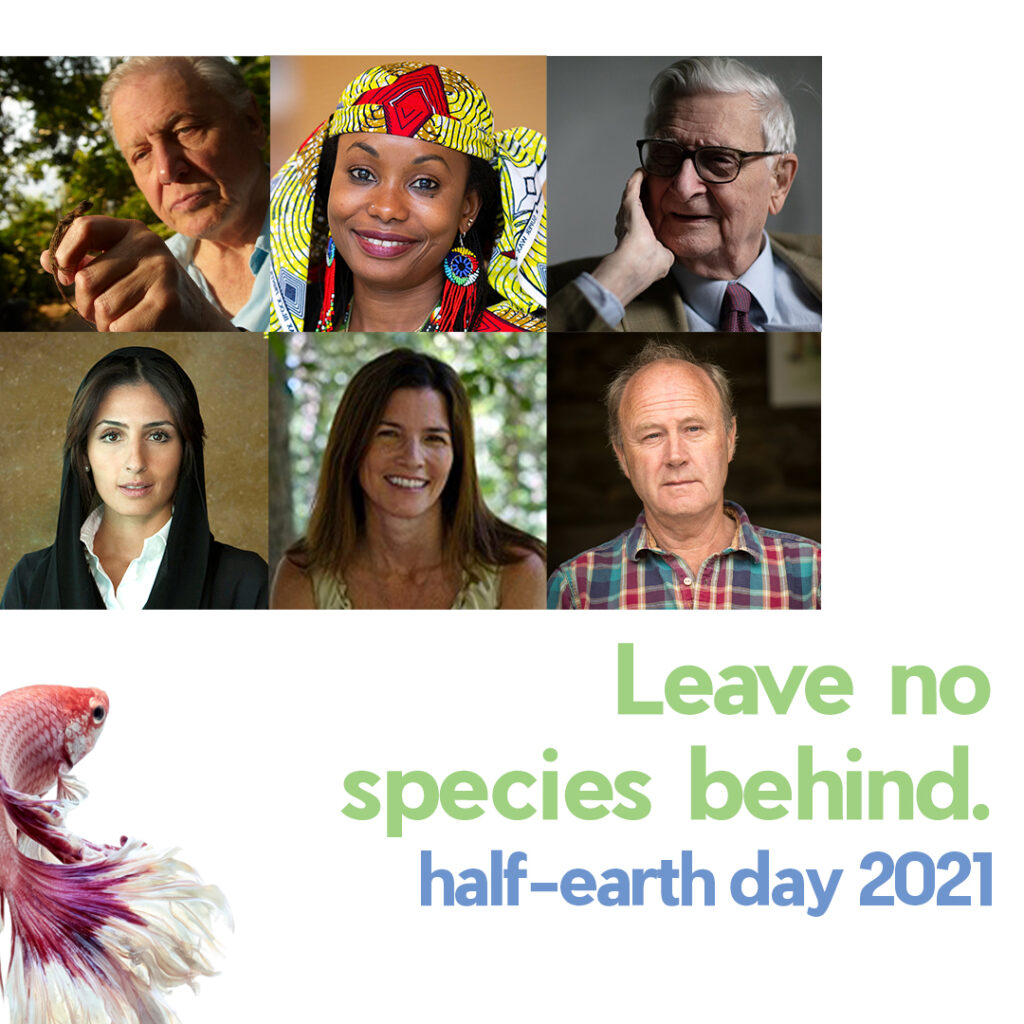
Previous speakers have included influential voices like E.O. Wilson, Johan Rockström, Sir David Attenborough, Razan Al Mubarak, Sally Jewell, Cristián Samper, Tom Friedman, Dawn Wright, Paul Simon, Hansjörg Wyss, Hindou Oumarou Ibrahim, Queen Quet, Wade Davis, Elizabeth Gray, Harrison Ford, and many more.
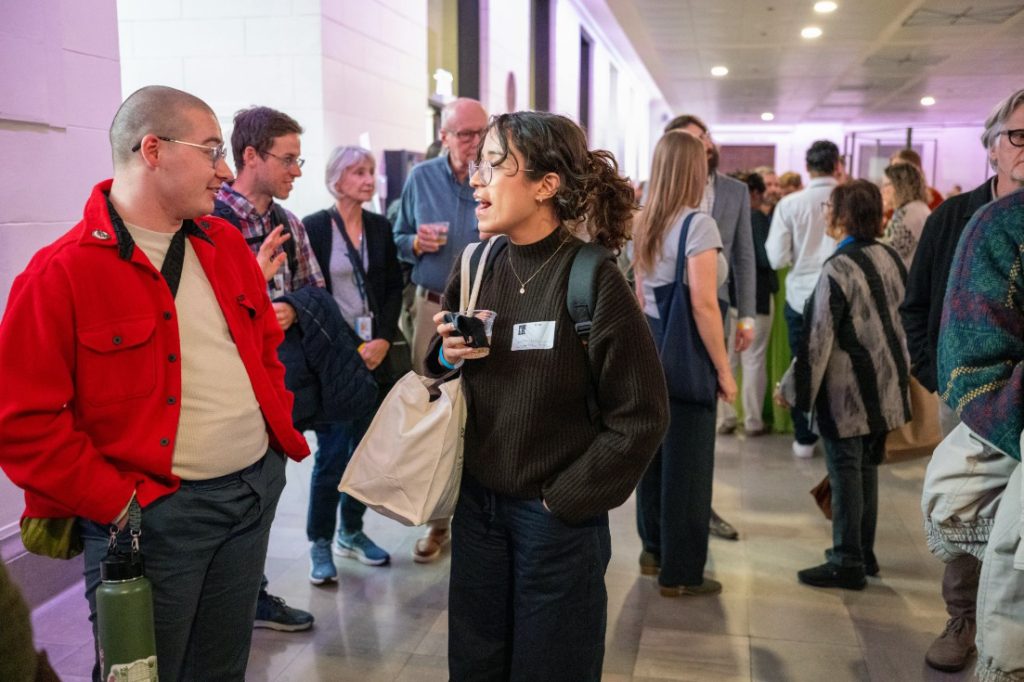
Attendees at Half-Earth Day 2025
Half-Earth Days have been held at the Field Museum, Smithsonian National Museum of Natural History, National Geographic Society, American Museum of Natural History, Royal Geographical Society, Eden Project, and University of California, Berkeley.