
Priority Places: 1622, 1619, 1627, 1625, 1618, 1623 (Tajikistan)
A story by Antonia Bolingbroke-Kent
A story of hope, against all the odds.
Last month I travelled to Tajikistan to make a radio documentary about one of Central Asia’s rarest mammals, an animal driven to the brink of oblivion by myths, misunderstandings and superstition. An animal almost wiped out because of false beliefs, and because, well, it’s a strange looking beast, in league with the dead.
For decades this species was presumed extinct in Tajikistan. Then, in 2017, a female and her cub showed up on a camera trap in the heat-hammered grasslands south of the capital, Dushanbe.
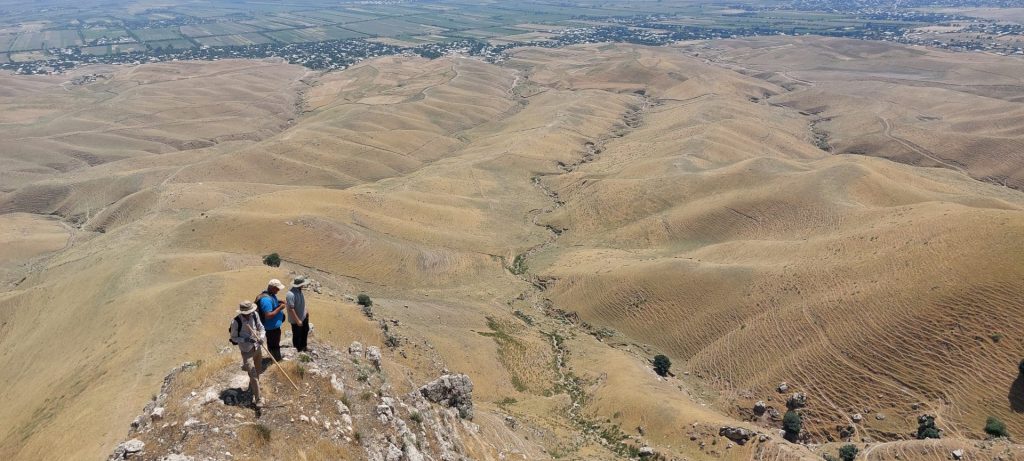
The animal I’m talking about is the striped hyena, of which there are as few as five thousand left worldwide, scattered across North Africa, the Middle East, India and Central Asia. Unlike the spotted hyena, famous for its cackling bark, this striped variety is solitary, and much less vocal. Hoping to see one of these elusive animals, I spent a week in the field with Ismoil Kholmatov and Mirzo Mirzoev from the Tajikistan Nature Foundation.
The story of the striped hyena here, at the far north-eastern tip of its range, mirrors Tajikistan’s turbulent recent history. First came collectivization, the Soviets transforming these once forested hills into intensively-cultivated collective farms, with hyenas, Persian leopards, wolves (and even the last Caspian tigers) hunted as pests. Then came the Tajik Civil War of the nineties, and a proliferation of guns. “There was no control anymore,” said Nazar, the old forester I mentioned in my last post. “People arrived with Kalashnikovs and shot everything. No one could stop them.”
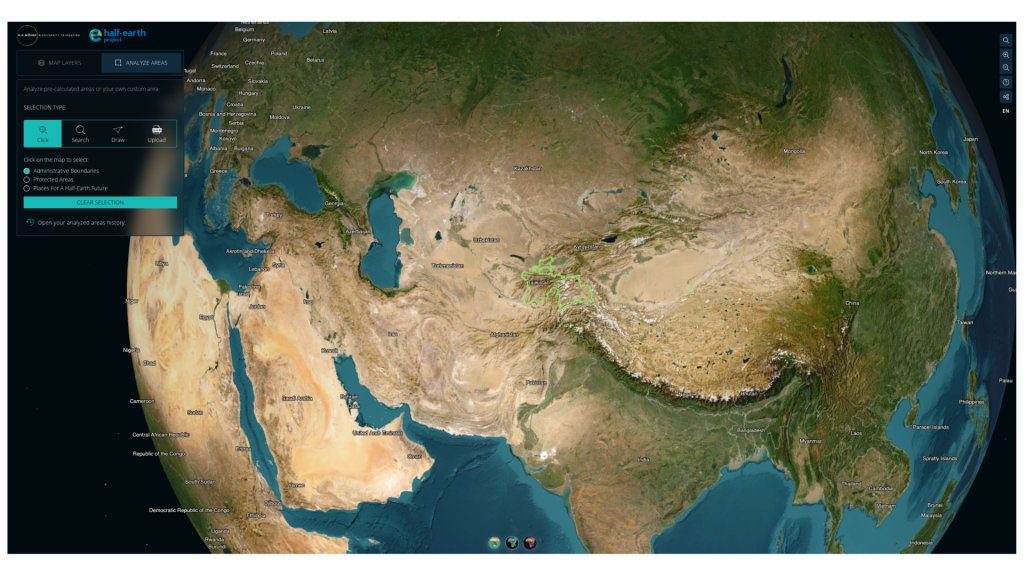
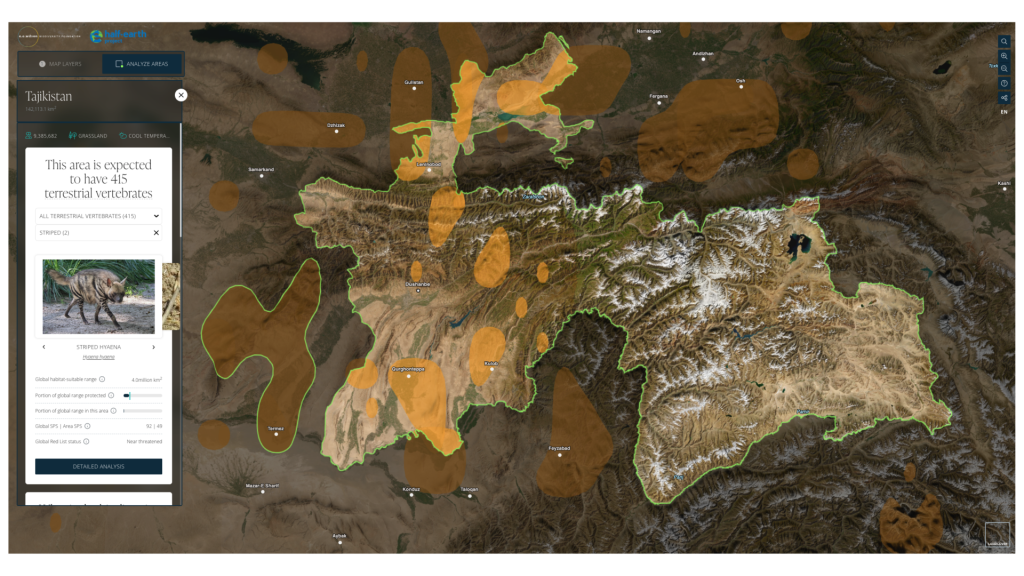
Extinction has a domino effect. The natural order of things is broken. Life tips out of balance. When humans drove the last Persian leopard from this area, sometime in the 1980s, the carrion-loving hyena could no longer feed on their kills. With no wilderness and little natural prey remaining, hyenas were forced to resort to the occasional theft of sheep and goats. It’s the same story the world over – the expansion of agricultural land into wild land, setting in motion a vicious cycle of human-wildlife conflict.
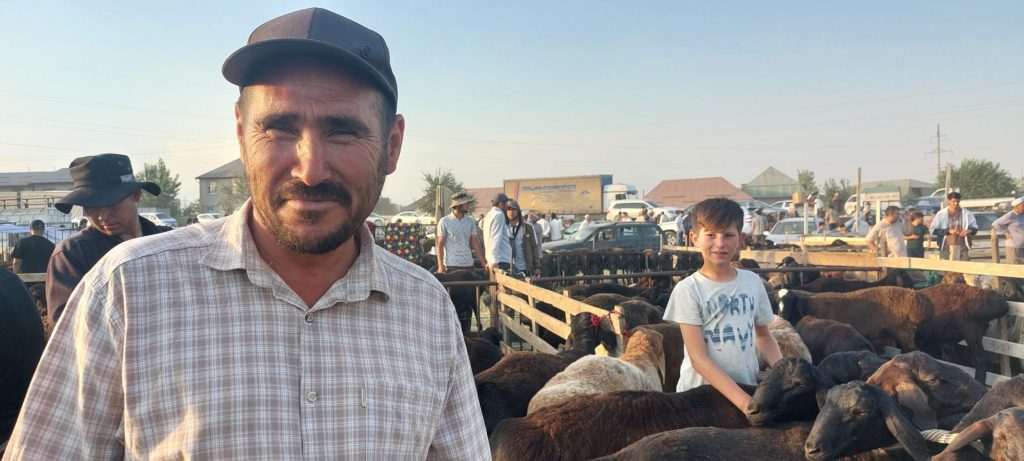
At a livestock market just south of Dushanbe, Alim, an ethnic Uzbek shepherd with a wide, gold-toothed smile, told me he’d seen a hyena take one of his lambs. They were pests, he said. No one liked them. Another man claimed a hyena had broken into his corral and killed dozens of sheep, something Ismoil, a wildlife biologist, said a hyena would never do. “They get blamed for a lot of crimes they don’t commit,” he added.
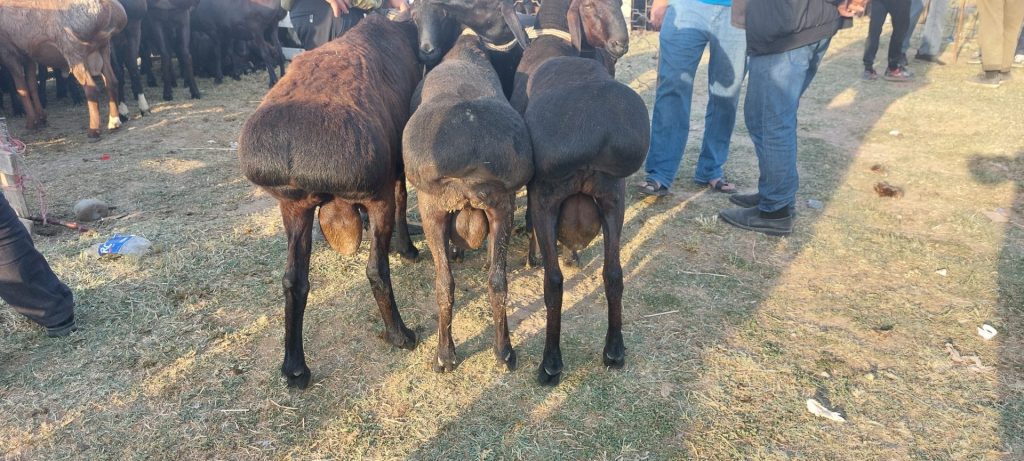
People also believed that hyenas dug up human corpses. “But that’s impossible,” said Ismoil, “because hyenas can’t dig.”
It was Ismoil who set that camera trap in 2017, and who’s since spent much of the last eight years searching these grasslands for hyenas and their dens. At times, with so much against the hyena, and so few people who care, he’s almost given up hope. Shepherds hate them. Hunters shoot them on sight. People block and set fire to their dens.
And then there are the folk beliefs. Striped hyena parts have been used as charms, medicines and aphrodisiacs for centuries, with spells and beliefs carried along the veins of the old Silk Road. Until recently, in neighboring Afghanistan, some mullahs would wear a hyena’s vulva under their armpit; it was said that any man who looked through it at the woman he desired would win her affection. In Dari and Pashto (both closely related to the Tajik language, where the word for hyena is kaftor) people still use the expression ‘kus-e kaftar,’ which loosely means: “It happened as smoothly as if you’d looked through the vulva of a striped hyena.”
Safarbek, an old hunter I met, told me a mullah in his village had bequeathed him an old leatherbound book called The Kashmir Science, which contained various preparations for the use of wildlife parts in traditional medicine. As if the vulva love-spell wasn’t bizarre enough, Safarbek said the book also suggested people pass sick babies through the mouth of a dead hyena.
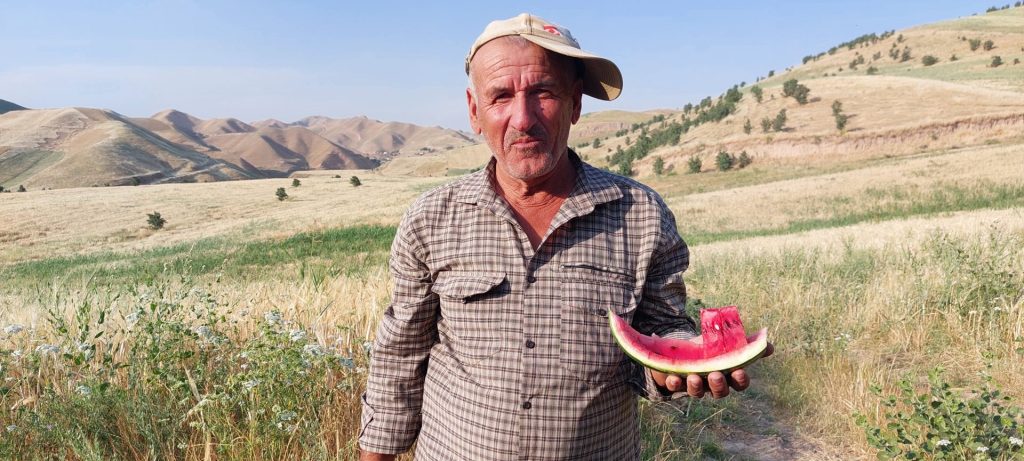
While these old folk practices may have died out, striped hyena parts are still widely available online. Back at his office in Dushanbe, Mirzo showed me Instagram posts and websites selling teeth, anal glands and musk, the latter being sold as an aphrodisiac. The poor, persecuted hyena, seen as both a curse and a blessing – though in each case to its own detriment.
The irony is that hyenas actually are good for our health. But not when dried and bottled. “Hyenas eat dead animals and clean the environment,” Ismoil told me, as we sheltered from the sun under a pistachio tree one afternoon. “Without such scavengers, infectious micro-organisms and zoonotic diseases would spread more widely.” He went on to explain that the hyena’s stomach is like an acid bath, killing any dangerous bacteria and preventing the spread of disease.
Vultures play a similar role in maintaining ecological balance. In parts of India where vultures have been wiped out, studies have shown that human deaths have increased by 4%.
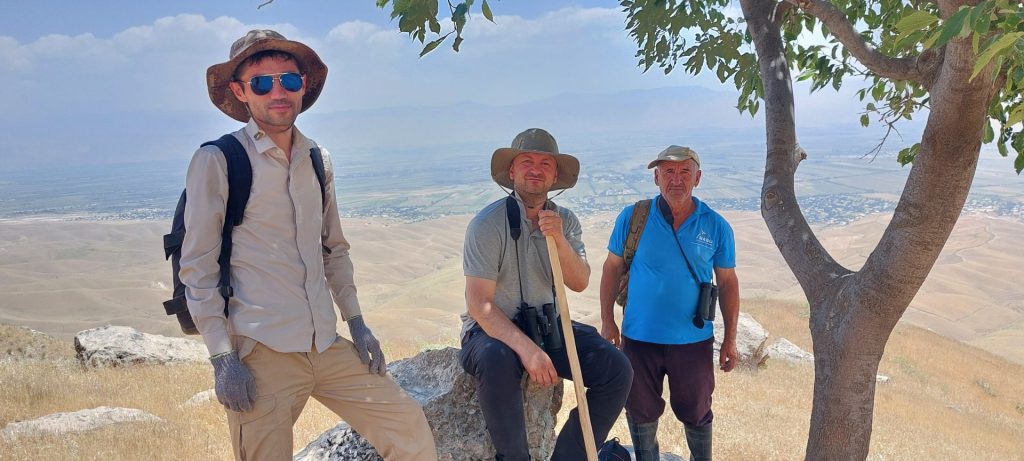
Despite everything, Ismoil and Mirzo are determined to carry on. “We must never give up hope. We have to carry on working. Carry on researching. Carry on monitoring,” Ismoil told me.
We’re living through the sixth mass extinction, and what the late US biologist E.O Wilson dubbed the ‘age of loneliness’, as humans take a wrecking ball to planetary biodiversity. At least in Ismoil and Mirzo, Tajikistan’s few dozen remaining hyenas have someone to fight their cause.
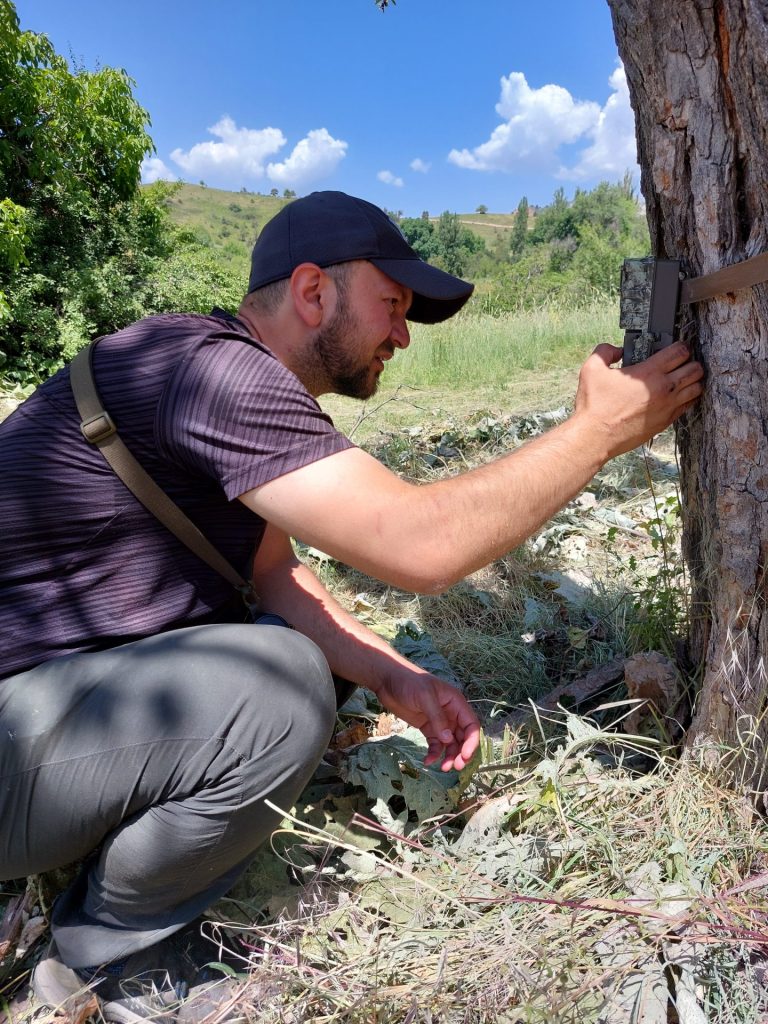
A message from Mirzo Mirzoev
The Tajikistan Nature Foundation, (TNF) is a grassroots conservation organization working across the most ecologically significant regions of Tajikistan. TNF focuses on protecting endangered species, including the snow leopard, mountain ungulates (Siberian ibex, Bukhara urial, Bukhara Markhor, and Argali), the striped hyena, and vultures. Through a combination of scientific research, community engagement, and sustainable livelihood initiatives such as nature-based tourism and beekeeping, TNF aims to foster coexistence between people and wildlife while preserving the country’s rich biodiversity.
We invite US-based zoos and conservation institutions to partner with TNF to enhance and support our efforts. Your involvement can make a significant difference—whether through funding field research, supporting community education programs, or helping us scale sustainable practices that reduce human-wildlife conflict and support conservation. Together, we can develop programs that not only protect wildlife but also empower local communities to participate in sustainable practices, ensuring long-term ecological balance and coexistence.
For more information about the Tajikistan Nature Foundation, email them at info@tajnaturefoundation.org or visit them on Facebook & Instagram.
To read more of Antonia Bolingbroke-Kent, see her substack here: https://substack.com/@antsbk