
E.O. Wilson Land Between the Rivers Preserve
Brooks Bonner, Program Director of the Places for a Half-Earth Future program, speaks with Kyle Lybarger of the Native Habitat Project. Together, they discuss the Native Habitat Project and the newly established E.O. Wilson Land Between the Rivers Preserve in southern Alabama. For the full story of the E.O. Wilson Land Between the Rivers Preserve and the Native Habitat Project, check out the story below.
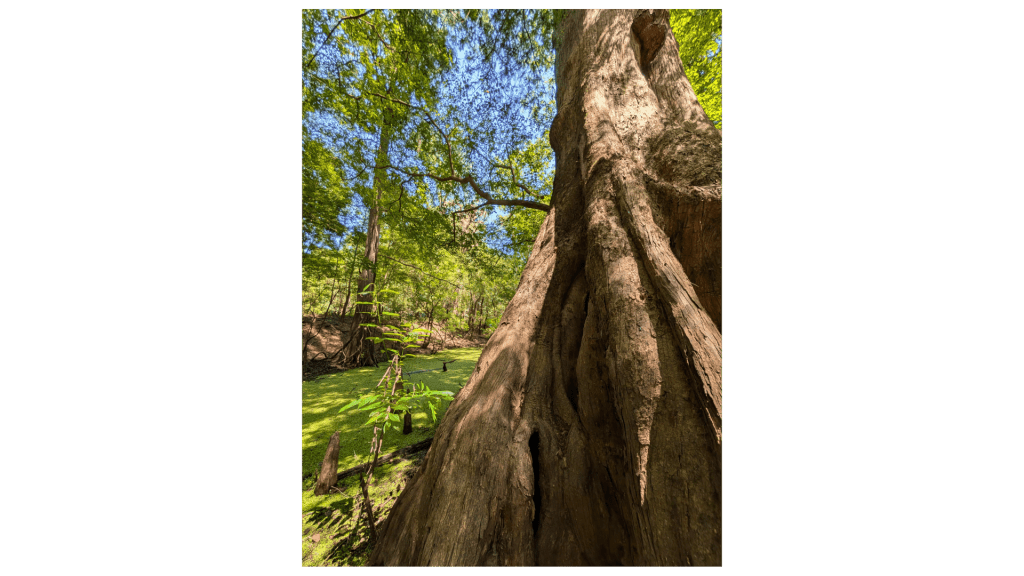
Creeping slowly through the parched swamps between the Tombigbee and Alabama rivers in southern Alabama, the air smells of damp earth and sunbaked reeds. The croak of hidden frogs echoes through the stillness, and the ground beneath your feet is cracked and warm. In a few months, the waters will return, rolling in with a slow, inevitable grace, swallowing the forest floor beneath 10 to 15 feet of dark, shimmering life. Towering bald cypress rise from the earth, their wide buttressed bases rooted like cathedral columns, knees jutting up around them like sentinels. Spanish moss drapes from their branches, swaying in the heavy air. At the border of a large oxbow lake, the ground is soft and shifting, part mud, part mirror, broken only by the ripple of an Alabama redbelly turtle sliding off a log or the splash of a startled heron lifting into the canopy. Sunlight filters through in shards, illuminating dragonflies skimming the surface and revealing schools of minnows darting in the shallows. Every step or paddle stroke is slow and careful; the swamp demands attention, offering glimpses of wildness that feel unchanged for centuries, a place where land and water blur and life thrives in the stillness. Welcome to the newly established E.O. Wilson Land Between the Rivers Preserve.
Places for a Half-Earth Future
In this episode of Places for a Half-Earth Future, we explore the dream of E.O. Wilson’s becoming a reality, the creation of a protected area in his honor, along with the story of another Alabamian, Kyle Lybarger, and how the Native Habitat Project is restoring and stewarding native ecosystems by creating wildlife-friendly landscapes, supporting biodiversity.
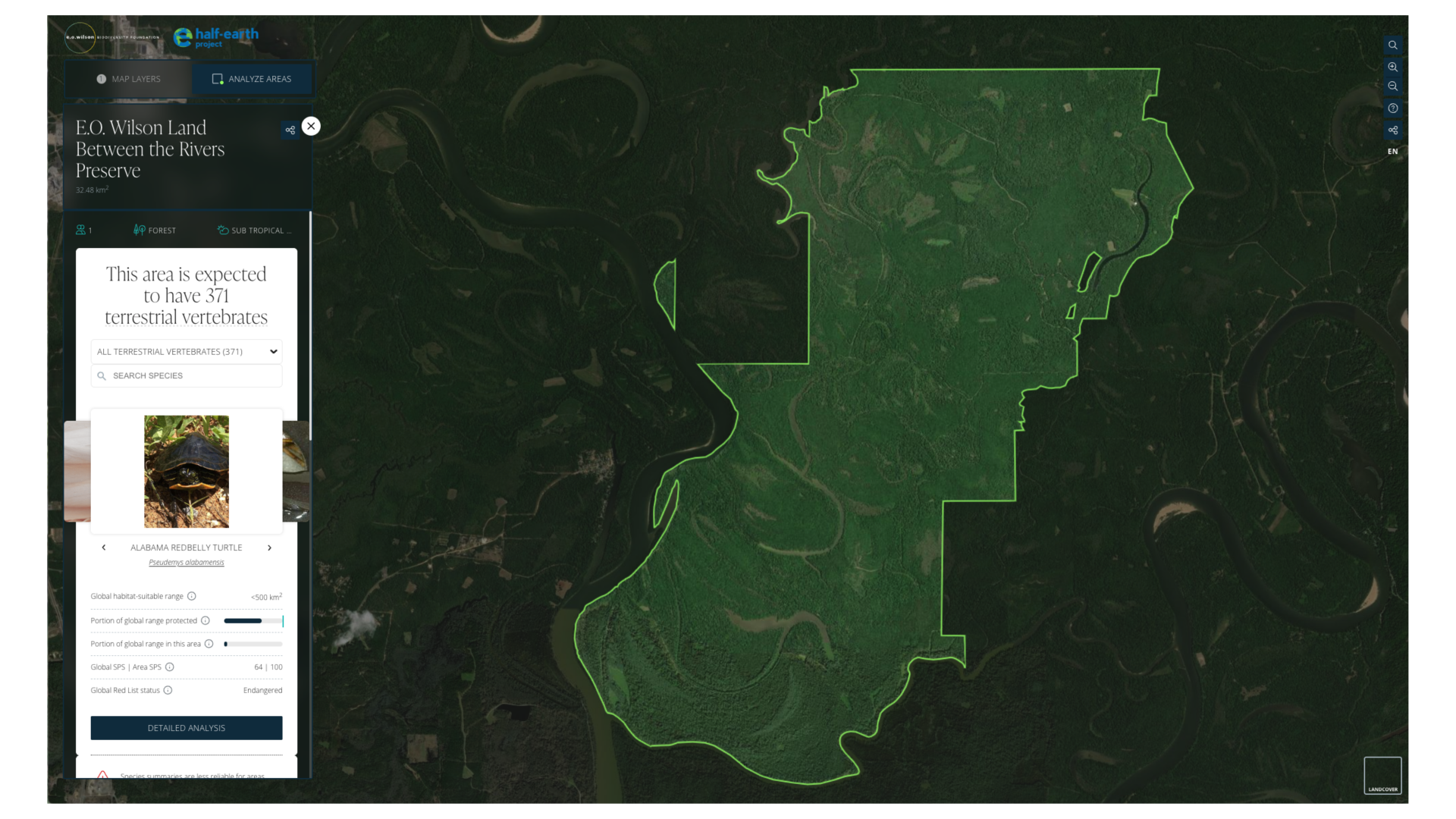
Just above the confluence of the Tombigbee and Alabama rivers, as they merge to create the Mobile-Tensaw River Delta, is North America’s center of aquatic biodiversity, and the childhood playground of naturalist E.O. Wilson. With its intricate network of waterways, wetlands, and forests harboring countless species, many rare or endemic, it was E.O. Wilson’s dream to create a nature park offering a vivid example of the ecological richness he argued must be protected to maintain the health of the planet. The E.O. Wilson Biodiversity Foundation, in partnership with The Nature Conservancy–Alabama, is protecting 8,000 acres of what is often called “America’s Amazon”.
On a visit to the preserve, Places for a Half-Earth Future Program Director Brooks Bonner and Kyle Lybarger of the Native Habitat Project were guided through the swamps and forests by staff from TNC-Alabama, who shared the history and ecological significance of this remarkable place. The preserve shelters some of the state’s most extraordinary trees, including Alabama’s largest Bald cypress (Taxodium distichum), a colossal figure rising from the wetlands, and the record-holding Nuttall oak (Quercus texana). These giants are more than natural wonders; they are anchors of an old-growth ecosystem, shaped by centuries of time, flooding, and resilience. Such ancient trees are critical to biodiversity, offering the layered habitats and stability that many species depend on but that younger forests cannot provide.
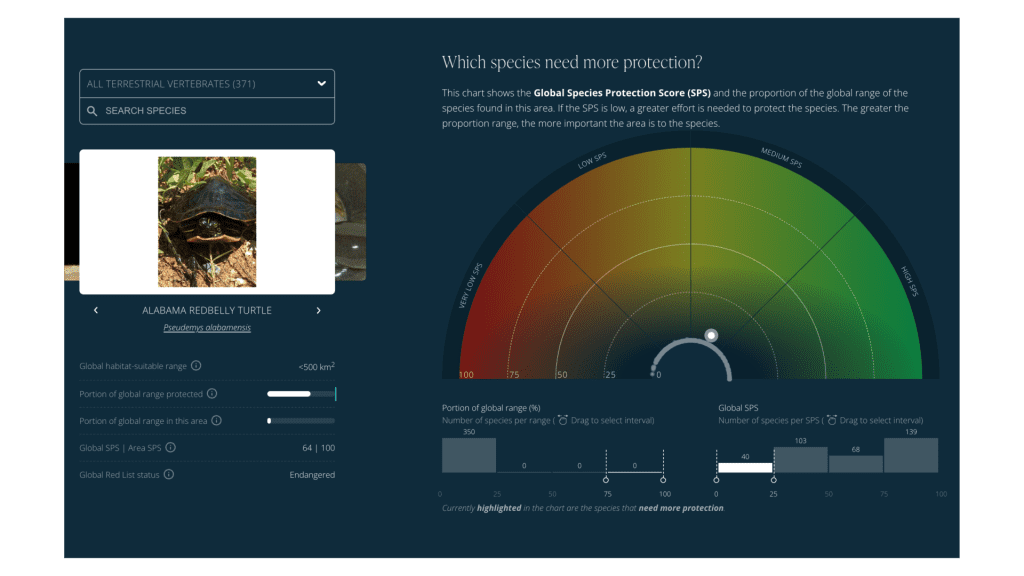
One species in particular, the Alabama red-bellied turtle (Pseudemys alabamensis), one of the rarest turtles in the United States, depends on healthy, intact wetlands and river backwaters for foraging, since it primarily feeds on aquatic vegetation that only thrives in clean, functioning waterways. Hatchlings and juveniles need connected, vegetated shallows that offer both food and cover from predators. When these habitats are degraded, through pollution, altered water flow, loss of wetlands, or encroaching infrastructure, the turtles lose the resources and refuge they need to survive. In this way, the Alabama red-bellied turtle serves as a living indicator of the health of the Mobile-Tensaw Delta and its surrounding ecosystems. If the turtle is thriving, the waterways and wetlands it calls home are thriving too. The species here still have more to teach us, uncover them here at the E.O. Wilson Land Between the Rivers Preserve on the Half-Earth Project Map.
The Native Habitat Project
A fellow Alabamian, Kyle Lybarger is a forester and conservationist from the northern part of the state, who founded the Native Habitat Project, a grassroots effort dedicated to restoring the state’s lost and fragmented ecosystems. While Alabama is one of the most biologically diverse places in the United States, much of its native landscape, i.e., prairies, longleaf pine savannas, wetlands, and meadows, has been cleared, planted over, or developed, leaving behind only scattered remnants.
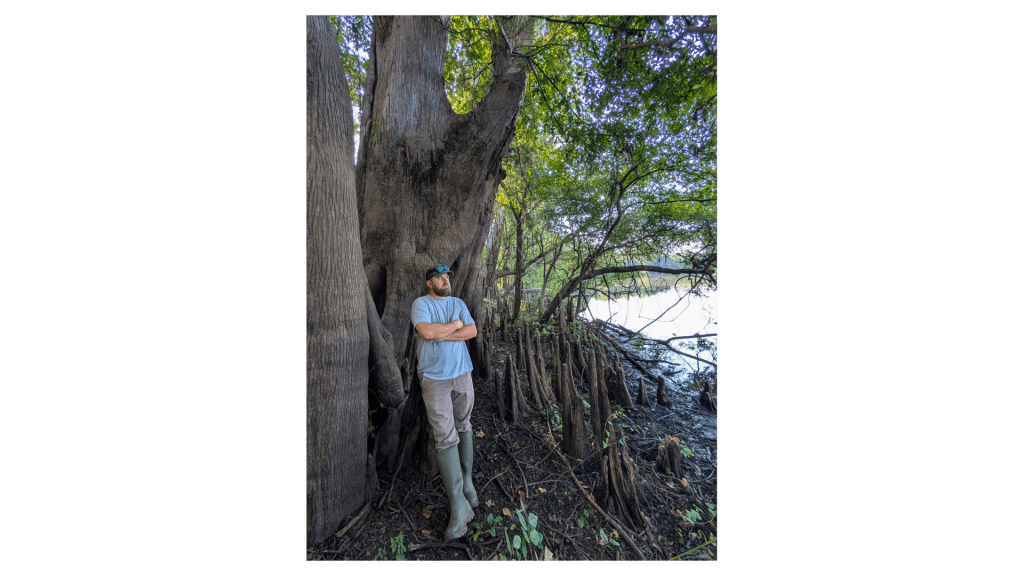
Lybarger recognizes that many people do not know what their native landscapes should look like, let alone how vital they are for pollinators, birds, and other wildlife. Through the Native Habitat Project, he works to change that by managing landscapes to promote rare native plant species, creating wildlife-friendly spaces, and educating the public through social media that reaches millions. His approach combines ecological restoration and conservation through the reintroduction of fire as a management tool to control fast-growing trees, like red cedar, and invasive species like privet.
He has become known not just for his ecological restoration work but also for the way he tells stories about the land and the plants that define it. He blends scientific knowledge with a deep respect for traditional uses of native plants, bringing forward the cultural memory tied to these landscapes. Lybarger doesn’t simply identify species; he explains how Indigenous peoples once relied on and managed them for food, medicine, building material, and everyday life. A grass isn’t just a grass; it’s the same switchgrass that provided forage and shelter for wildlife, or the rivercane that communities used to weave baskets. A tree isn’t just a tree; it’s the hickory tree that provides food and precious nutrition to wildlife and people. By weaving these narratives together, Lybarger helps people see that restoring native habitat isn’t only about saving wildlife, it’s also about recovering a living connection between people and place. His storytelling turns plants into characters with histories, making conservation personal, memorable, and rooted in both ecological and cultural continuity. In this way, he reminds us that we stand in a long line of stewards for the land, holding it in trust during our time, with the hope that many more will carry this responsibility forward in generations to come.
Shared Roots
Though from different generations and backgrounds, Kyle Lybarger and E.O. Wilson share a deeply kindred vision: that Alabama’s landscapes hold extraordinary biodiversity worth protecting, restoring, and celebrating. Wilson, through his science and writing, revealed the global significance of places like the Mobile-Tensaw Delta and urged humanity to safeguard half the planet for nature’s survival. Lybarger, through hands-on restoration and storytelling, brings that message home to communities by reintroducing native plants, reviving lost habitats, and showing people the cultural and ecological value of the species around them. Both men bridge the gap between knowledge and action, Wilson on the global stage through science and advocacy, and Lybarger on the ground through grassroots work, each inspiring others to see Alabama not as ordinary land, but as a living treasure of biodiversity.
Places for a Half-Earth Future Stories highlight the landscapes and people working towards tomorrow’s biodiversity legacy. Step into the E.O. Wilson Land Between the Rivers Preserve and walk alongside the Native Habitat Project, two forces working towards a biodiverse Alabama.
If you or your organization has an idea for a story like this or a question, please contact Brooks Bonner, Program Director of the Half-Earth Project at the E.O. Wilson Biodiversity Foundation, at bbonner@eowilsonfoundation.org.