
By: Paula J. Ehrlich
From a very young age, E.O. Wilson considered Nature a place of boundless adventure and sanctuary. He described its essence with the Latin word, solitudo. For him, the wilderness was a place of infinite freedom, rapturous privacy, and solace.
When he was 12, he found every opportunity he could to hop on his balloon-tired, single-gear Schwinn bicycle, and ride out to the riverfront of the Mobile-Tensaw Delta. There, he experienced the sheer joy of seeing the flash of the yellow wing of a butterfly he had never seen before – a prized discovery he could now add to his “butterfly life list”.
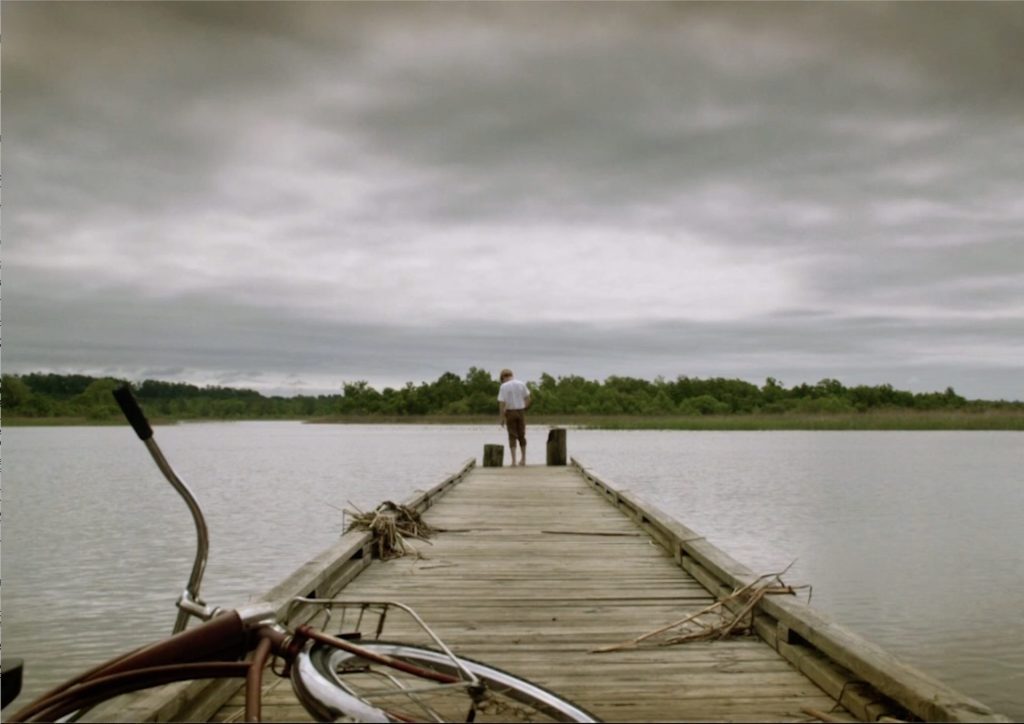
Throughout Ed’s life, he recounted his experience in the Delta like a hymnal for how we should all live and come to know the importance of a place and its protection. His sense was that if everyone, especially young students, participated in the thrill of discovering and understanding such places that it would be a transcendent moment for ourselves and for our planet.
He worked for many, many years to advance protection of the Mobile-Tensaw Delta, which has such exceptional biological diversity – including species found nowhere else in the world – it’s been dubbed “America’s Amazon”.
Ed carried the Delta’s exceptional natural richness with him everywhere, and it tugged him back at every opportunity. But there was something deeper, as well. He was fond of telling everyone who would listen, “I’m not a Harvard professor who was born and raised in Alabama, I’m an Alabamian who went up north to get work.”
This was his sacred place. His great-great-grandmother Mary was born alongside the Delta at the site of an emerging utopian town. His great-grandfather James swam across the Delta to escape the last major battle of the Civil War. He was rooted in the life of the Delta as inextricably as the rest the natural world there. It was home.
In the fall of 2021, alongside the E.O. Wilson Biodiversity Foundation’s scientific team, Ed and I poured over our Half-Earth Project maps, meticulously analyzing species data to identify the priority areas for conservation in Alabama, and particularly, to identify those places that were closest to his heart. They were all places of extraordinary biodiversity, and they were each associated with unique challenges and opportunities. After huddling around the maps and talking for hours, Ed didn’t hesitate when asked which place he would prioritize. Later that year, following his death, one of his neighbors and friends wrote me, “He once told us that he would attend the opening of the preserve that was being established in Alabama if he had to crawl.”
Ed would say that we are all citizens of the wilderness of places we love to visit and the places we call home. Our sense of these places is “part recorded fact, part memory, and part metaphor.” They are sanctuaries of our heritage and of our heart. He wrote, “The sturdiness of human nature is the reason people plant flowers, gods live on high mountains, and a lake is the eye of the world through which we can measure our own souls.” It’s our very human connection with places that most often fuels conservation success.
Today, on what would have been Ed’s 96th birthday, the E.O. Wilson Biodiversity Foundation, in partnership with The Nature Conservancy-Alabama, is thrilled to announce the naming of the E.O. Wilson Land Between the Rivers Preserve, a place of extraordinary biodiversity, on the northern edge of the Mobile-Tensaw Delta.
Paula J. Ehrlich is the President and CEO of the E.O. Wilson Biodiversity Foundation and co-founder of the Half-Earth Project.