
Nowhere in the world is the impact of climate change more profound than the world’s polar ends. Antarctica may not get the kind of media attention that polar bears of the Arctic do, but the impact of climate change to the biology of the South Pole is increasingly harsh, and that doesn’t account for the vast changes in ice levels and geography. What do the changes down there mean for us up here?
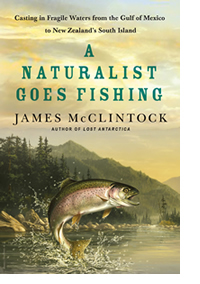 James McClintock, a member of the E.O. Wilson Biodiversity Foundation’s (EOWBF) Board of Advisors, was recently interviewed on these topics on NPR’s show The Source. He is a professor of biology at the University of Alabama at Birmingham and studies various aspects of marine biology in Antarctica. He is an authority on the effects of climate change in Antarctica which is detailed in his book Lost Antarctica – Adventures in a Disappearing Land. McClintock received his Bachelor’s degree from the University of California at Santa Cruz in 1978 and his Ph.D. from the University of South Florida in 1984. In 1987, after completing a National Science Foundation Postdoctoral Fellowship at the University of California at Santa Cruz, he joined the faculty of the Department of Biology at the University of Alabama at Birmingham and is the Endowed University Professor of Polar and Marine Biology. His upcoming book A Naturalist Goes Fishing – Casting in Fragile Waters from the Gulf of Mexico to New Zealand’s South Island will be released in October, 2015. The book features book jacket endorsements by Robert Redford, Elizabeth Kolbert, and E.O. Wilson.