
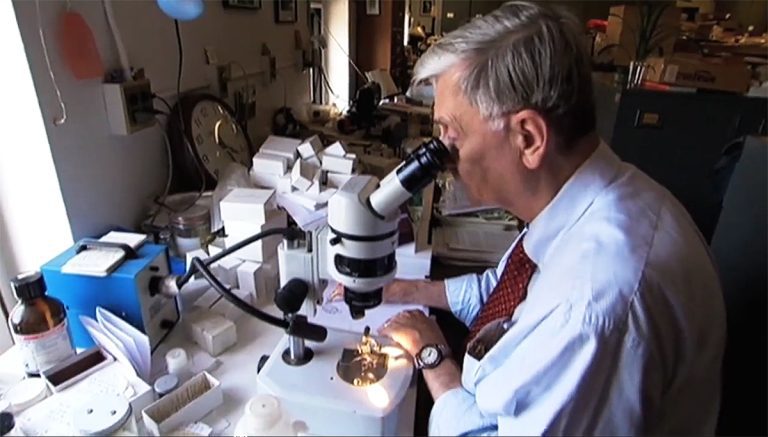
E.O. Wilson, one of the world’s greatest scientists, is also a Pulitzer Prize-winning author who has published over twenty-five books. Here David Attenborough and Harrison Ford introduce the breadth of Wilson’s vision.
Read More >
Edward O. Wilson has distilled sixty years of teaching into his new book for students, young and old. Reflecting on his coming-of-age in the South as a Boy Scout and a lover of ants and butterflies, Wilson threads these twenty-one letters, each richly illustrated, with autobiographical anecdotes that illuminate his career—both his successes and his failures—and his motivations for becoming a biologist.
Read More >
Life on Earth is an iBooks Textbook consisting of 41 chapters in 7 separate units and can be downloaded for free from the iBooks Store. The text provides a complete, original, standards-based, media-rich curriculum to give high school students a deep understanding of all of the central topics of introductory biology.
Read More >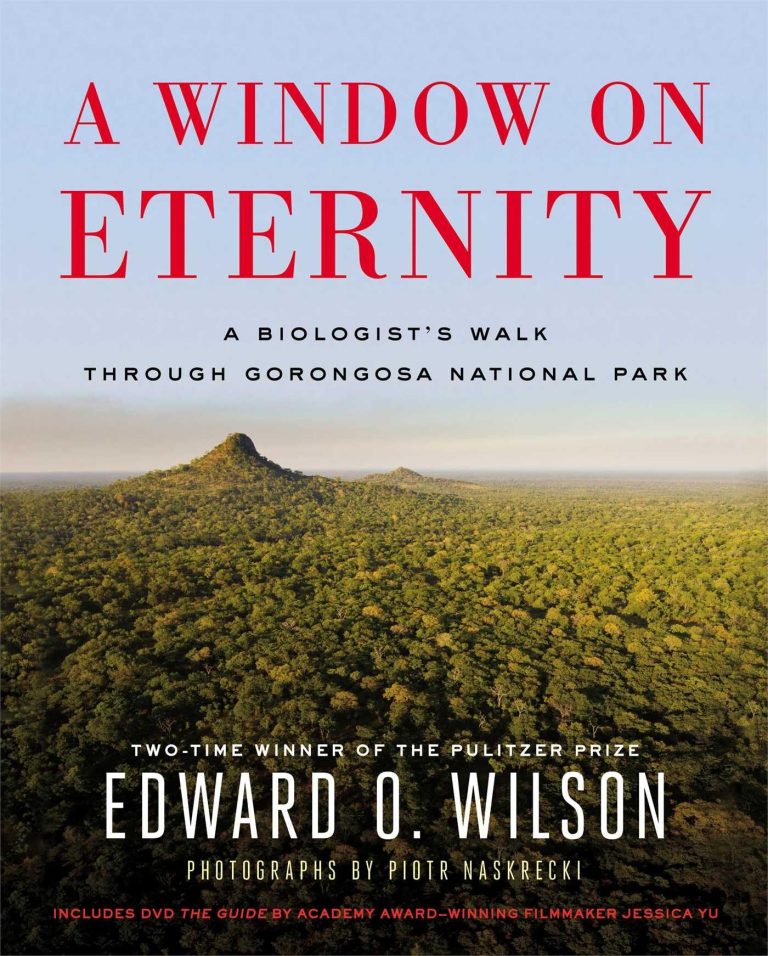
In his book A Window on Eternity: A Biologist’s Walk through Gorongosa National Park, Wilson shows why biodiversity is vital to the future of the Earth and to our own species through the story of Gorongosa National Park, which is located in Mozambique and is among the most diverse places on earth.
Read More >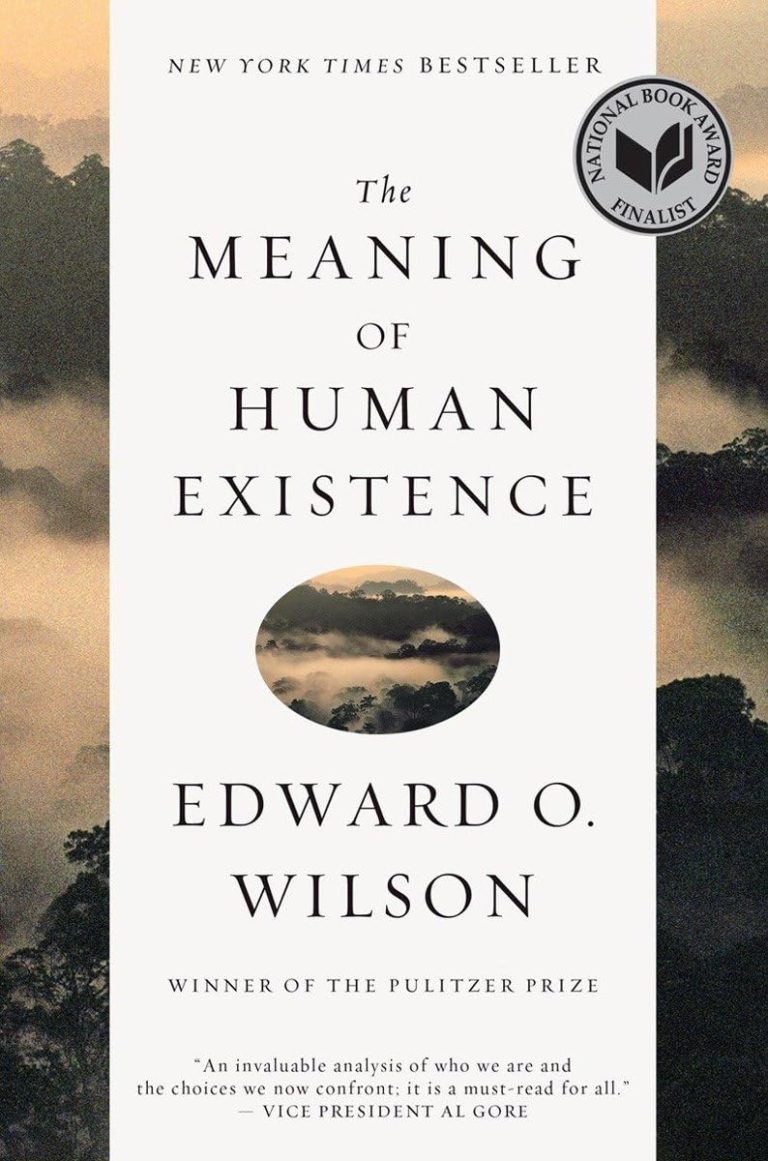
In The Meaning of Human Existence, finalist for the National Book Award and Pulitzer Prize–winning biologist Edward O. Wilson grapples with these and other existential questions, examining what makes human beings supremely different from all other species. Searching for meaning in what Nietzsche once called “the rainbow colors” around the outer edges of knowledge and imagination, Wilson takes his readers on a journey, in the process bridging science and philosophy to create a twenty-first-century treatise on human existence—from our earliest inception to a provocative look at what the future of mankind portends.
Read More >Half-Earth Book

Half-Earth proposes an achievable plan to save our imperiled biosphere: devote half the surface of the Earth to nature. In order to stave off the mass extinction of species, including our own, we must move swiftly to preserve the biodiversity of our planet, says Edward O. Wilson in his most impassioned book to date. Half-Earth argues that the situation facing us is too large to be solved piecemeal and proposes a solution commensurate with the magnitude of the problem: dedicate fully half the surface of the Earth to nature.
Read More >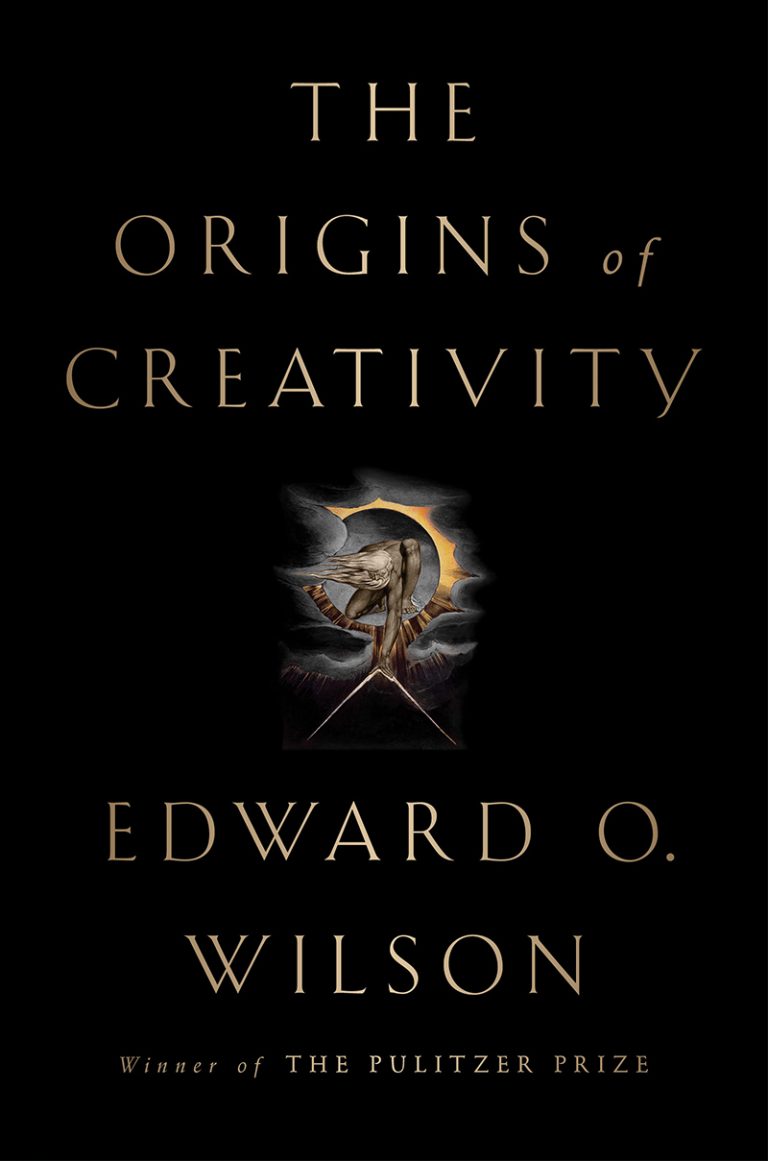
In his profound and lyrical book, “The Origins of Creativity”, E.O. Wilson offers a sweeping examination of the relationship between the humanities and the sciences: what they offer to each other, how they can be united, and where they still fall short. Both endeavours, he reveals, have their roots in human creativity—the defining trait of our species.
Read More >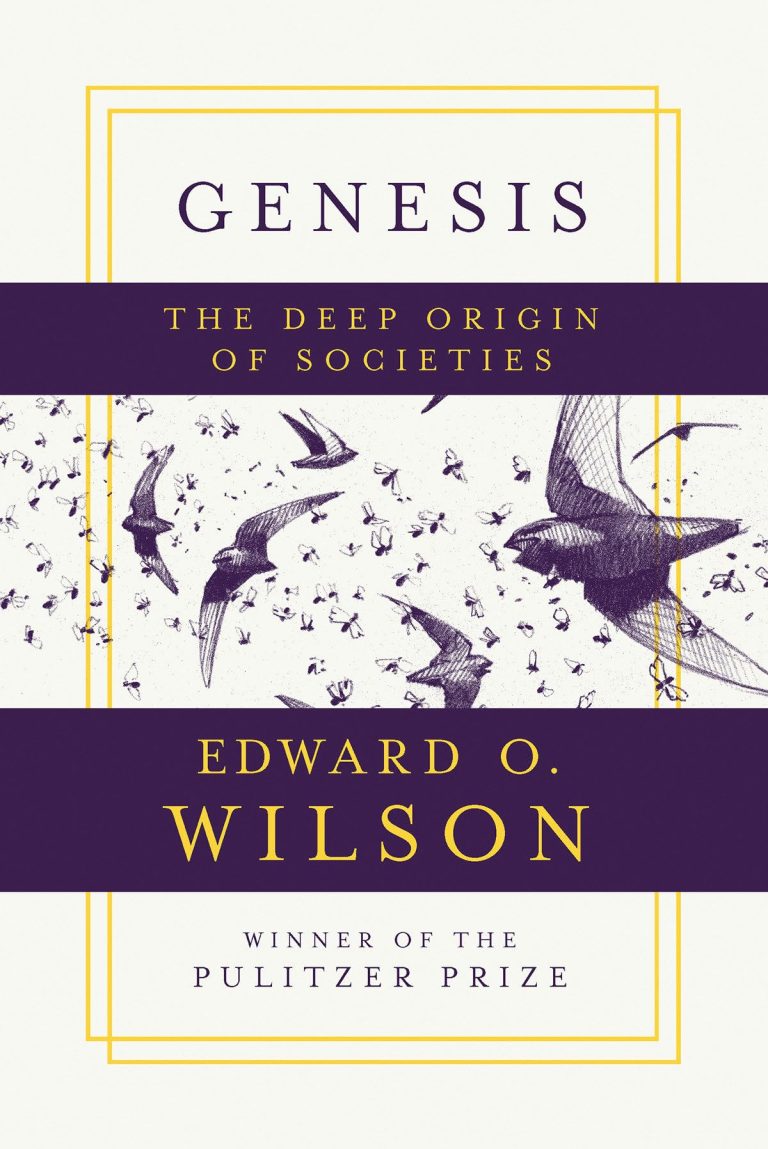
At almost 90 years old, Edward O. Wilson is our greatest living biologist. Ever passionate about exploring our origins on earth, he is back with GENESIS, an eloquent, enlightening survey of social behavior that traces humanity’s advanced capacity for language, empathy, and cooperation back to its single-celled bacterial roots.
Read More >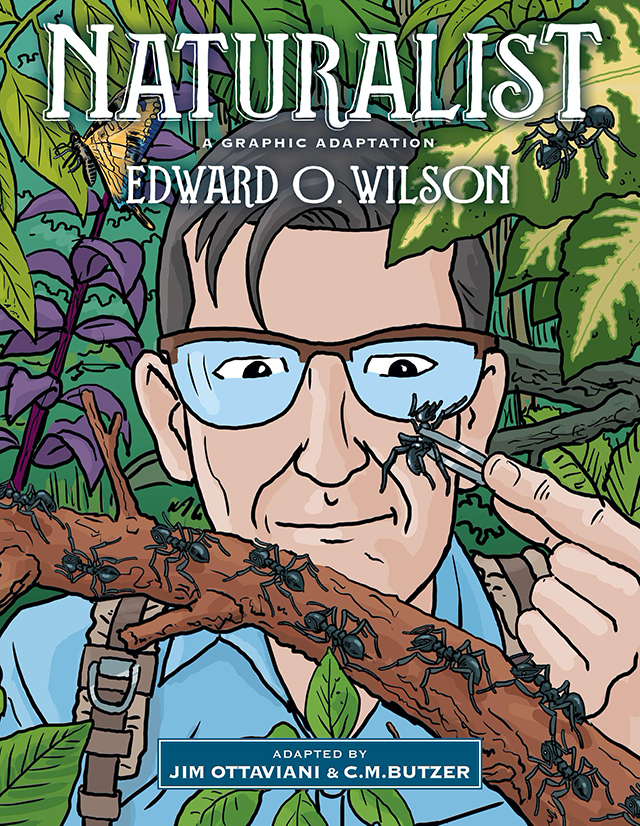
Regarded as one of the world’s preeminent biologists, Edward O. Wilson spent his boyhood exploring the forests and swamps of south Alabama and the Florida panhandle, collecting snakes, butterflies, and ants—the latter to become his lifelong specialty. His memoir Naturalist, called “one of the finest scientific memoirs ever written” by the Los Angeles Times, is an inspiring account of Wilson’s growth as a scientist and the evolution of the fields he helped define. This graphic edition, adapted by Jim Ottaviani and illustrated by C.M.Butzer, brings Wilson’s childhood and celebrated career to life through dynamic full-color illustrations and Wilson’s own lyric writing.
Read More >
Edward O. Wilson recalls his lifetime with ants, from his first boyhood encounters in the woods of Alabama to perilous journeys into the Brazilian rainforest.
Read More >Writing in the New York Times, E.O. Wilson reflects on his childhood and the great influence that the 1942 edition of Handbook for Boys, the official guide of the Boy Scouts of America, has had on his life.
Read More >In a New York Times Op-Ed, E.O. Wilson explains why we must vastly increase the area of protected natural reserves in order to conserve the immensity of life upon which we absolutely depend, and which depends upon us.In a New York Times Op-Ed, E.O. Wilson explains why we must vastly increase the area of protected natural reserves in order to conserve the immensity of life upon which we absolutely depend, and which depends upon us.
Read More >In this March 4, 2018 New York Times Sunday Review opinion piece, E.O. Wilson explains why species are the fundamental level of study that must be used to identify conservation priorities, and how the Half-Earth Project map is leading the way.
Read More >
To a teenage boy exploring its edges during the early 1940s, the Mobile-Tensaw Delta was a stream-laced wilderness, an impenetrable jungle, and a great forest magical to the imagination. I rode my bicycle back-and-forth over the eight-mile-long causeway that forms the southern boundary, wondering at some of the variety of birds that came from its interior and at stories I heard of bear, bobcats, alligators, and other wildlife living there, and of the legendary variety and abundance of fishes in the upstream waters.
Read More >